
Component Assembly Model
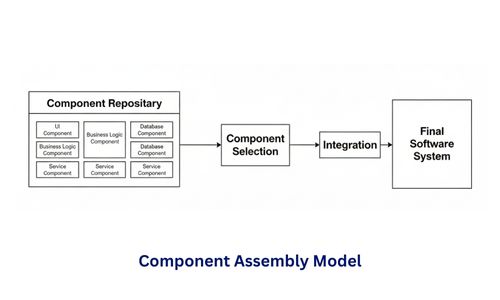
Component Assembly Model एक ऐसा software development approach है, जिसमें हम पहले से बने, reusable components का use करके नया software बनाते हैं।
Table of Contents
ToggleComponents को identify, customize और integrate करके पूरा system तैयार किया जाता है।
Key Points (मुख्य बिंदु)
- यह Reuse-based model है।
- Pre-developed और pre-tested components का use होता है।
- Development fast और cost-effective होता है।
- Software की reliability और quality better रहती है।
- Third-party components जैसे APIs, Libraries, SDKs ज्यादा use होते हैं।
- Integration phase सबसे critical होता है।
- Large और complex systems के लिए यह model अधिक suitable है।
- Maintenance आसान होता है, क्योंकि faulty component को replace किया जा सकता है।
Why Component Assembly Model is Needed?
(CAM की आवश्यकता क्यों है)
- Software Development Time कम करने के लिए
- Ready-made components available होते हैं।
- Zero से पूरा code लिखने की जरूरत नहीं।
- Project जल्दी complete हो जाता है।
- Development Cost कम करने के लिए
- Manpower और testing effort कम लगता है।
- इसलिए startups और IT companies इसे prefer करती हैं।
- Reusability बढ़ाने के लिए
- एक component को multiple projects में reuse किया जा सकता है।
- Repetitive work avoid होता है।
- Software Quality और Reliability बढ़ाने के लिए
- Pre-tested components में bugs कम होते हैं।
- System stable और reliable बनता है।
- Large और Complex Systems Manage करने के लिए
- Large software को छोटे components में divide किया जाता है।
- Development और maintenance आसान होती है।
- Easy Maintenance और Upgradation के लिए
- Faulty component को easily replace किया जा सकता है।
- पूरा system disturb नहीं होता।
- Time-to-Market कम करने के लिए
- Competitive market में product जल्दी launch करना जरूरी होता है।
- Component Assembly Model fast delivery में मदद करता है।
- Modern Technology Support के लिए
- APIs, Microservices और Cloud Services आसानी से integrate होते हैं।
- Modern software architecture को effectively support करता है।
Phases of Component Assembly Model
- Requirement Analysis Phase
- इस phase में client की requirements को clearly समझा जाता है।
- Software का purpose क्या है, यह decide किया जाता है।
- Required modules identify किए जाते हैं।
- यह check किया जाता है, कि existing components से requirements पूरी हो सकती हैं या नहीं।
- Component Identification Phase
- Decide करना कौन-से components available हैं, और कौन-से नए develop करने होंगे।
- Components के sources : Component Libraries, Open Source Repositories, Third-party Vendors
- यह phase reuse concept पर focus करता है।
- Component Evaluation & Selection Phase
- Available components को evaluate किया जाता है, क्योंकि सभी suitable नहीं होते।
- Evaluation parameters :
- Performance
- Security
- Compatibility
- Cost
- Reliability
- Component Adaptation / Customization Phase
- Selected components को project requirements के अनुसार modify किया जाता है।
- Minor changes, Interface adjustments और extra features add किए जाते हैं।
- Component Integration & Assembly Phase
- सभी components को integrate करके complete system बनाया जाता है।
- Interfaces define, Data flow और communication manage की जाती है।
- यह phase सबसे critical माना जाता है।
- Testing & Validation Phase
- Integrated system की testing की जाती है।
- Types of testing :
- Unit Testing
- Integration Testing
- System Testing
- Pre-tested components होने के कारण errors कम होते हैं।
- Deployment & Maintenance Phase
- Final software users के लिए deploy किया जाता है।
- Bugs fix, Components upgrade और performance improve की जाती है।
Advantages (लाभ)
- Faster Software Development
- Ready-made components का use होता है।
- Project जल्दी complete हो जाता है।
- Cost-Effective Development
- Overall development cost कम होती है।
- Manpower और testing effort कम लगता है।
- High Reusability
- एक component को multiple projects में reuse किया जा सकता है।
- Same functionality बार-बार develop करने की जरूरत नहीं रहती।
- Better Software Quality
- Components पहले से tested होते हैं।
- Bugs और errors comparatively कम होते हैं।
- Easy Maintenance
- Faulty component को आसानी से replace किया जा सकता है।
- पूरे system को disturb नहीं करना पड़ता।
- Scalability
- New features को नए components add करके implement किया जा सकता है।
- Suitable for Large Systems
- Banking, ERP, E-commerce जैसे large और complex systems के लिए suitable है।
Disadvantages (हानियाँ)
- Dependency on Third-Party Components
- External vendors पर dependency रहती है।
- Vendor support बंद होने पर problem हो सकती है।
- Integration Complexity
- Different components को integrate करना difficult हो सकता है।
- Interface mismatch की समस्या आती है।
- Security Risks
- Third-party components में hidden vulnerabilities हो सकती हैं।
- Limited Customization
- हर component को पूरी तरह modify नहीं किया जा सकता।
- Compatibility Issues
- Different platforms या technologies के साथ conflicts हो सकते हैं।
- Performance Overhead
- Multiple components use होने से system performance slow हो सकता है।
Capability Maturity Model
Capability Maturity Model (CMM) एक process improvement model है, जिसे Software Engineering Institute (SEI), Carnegie Mellon University (USA) ने develop किया।
यह model बताता है, कि कोई software organization अपने software development process को कितनी अच्छी तरह plan, manage, control और improve कर रही है।
Key Points
- CMM एक process-based model है, product-based नहीं
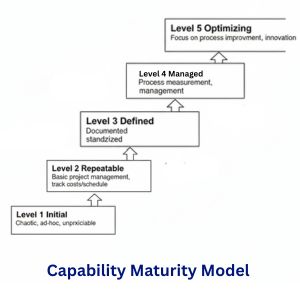
- CMM में कुल 5 Maturity Levels होते हैं
- हर level organization की process maturity को show करता है
- इसका main focus software quality improvement पर होता है
- यह model step-by-step improvement पर work करता है
- CMM mainly software development organizations के लिए use होता है
Why Capability Maturity Model is Needed?
(CMM की आवश्यकता क्यों है)
Capability Maturity Model (CMM) की आवश्यकता इसलिए पड़ी क्योंकि, पहले software development process unstructured, unpredictable और inconsistent थी। Projects अक्सर time, cost और quality goals achieve नहीं कर पाते थे।
मुख्य कारण
- Lack of Defined Software Process
- Software development ad-hoc तरीके से होती थी।
- standard process या documented procedures नहीं होते थे।
- Success individual developer skills पर depend करती थी।
- Poor And Unpredictable Software Quality
- Software में bugs और defects ज्यादा होते थे।
- Testing activities properly follow नहीं होती थीं।
- Quality consistent नहीं रहती थी।
- Project Delays And Cost Overruns
- Time estimation inaccurate होती थी।
- Budget control difficult होता था।
- Rework की वजह से cost बढ़ जाती थी।
- No Clear Process Improvement Path
- Organizations को नहीं पता होता था कि improvement कहाँ से शुरू करें।
- Random changes से desired results नहीं मिलते थे।
- Difficulty in Managing Large & Complex Projects
- Large systems जैसे ERP, Banking, Defense software difficult to manage होते थे।
- Small process mistake से heavy loss हो सकता था।
- Need for Global Standards & Trust
- International clients process maturity check करते हैं।
- एक well-defined, stable और predictable software process, जो organization की credibility और trust को दर्शाता हैं।
Levels of Capability Maturity Model
| Level | Name (नाम) | Focus (मुख्य विशेषताएँ) | Example (उदाहरण) |
|---|---|---|---|
| 1 | Initial | – Process chaotic और unpredictable होती है – Success mainly individuals पर depend करता है – Documentation और standards almost absent होते है | Small startup जहाँ developer resign कर दे तो project ruk जाता है |
| 2 | Repeatable | – Basic project management practices लागू होती हैं – Planning, tracking, requirements management होती है – Past experience से processes improve किए जाते हैं | Sale planning – previous experience use करके next planning |
| 3 | Defined | – Organization-wide standard processes implemented – Training और documentation compulsory – Process proactive और uniform होती है | Infosys – Coding standards, training programs, proper documentation |
| 4 | Managed | – Processes measured और controlled होती हैं – Metrics, KPIs, defect tracking use होता है – Performance predictable होती है | ISRO – Mission success probability calculated, every stage measured |
| 5 | Optimizing | – Continuous process improvement होती है – Defect prevention और innovation focus – New technologies adopt होती हैं | Google / Microsoft – Continuous improvement, DevOps, AI analytics |
Advantages (लाभ)
- Improves Software Quality
- CMM की मदद से organization की software development process structured और disciplined बनती है।
- Result : Bugs कम, software reliable और high-quality बनता है।
- Better Project Planning & Predictability
- Time और cost estimation accurate हो जाता है।
- Projects late या over-budget कम होते हैं।
- Process Standardization
- Organization-wide standardized processes implement होते हैं।
- Everyone follows same coding standards, documentation और testing rules।
- Continuous Improvement
- Higher maturity levels पर processes continuously improve होते हैं।
- Innovation और new technologies adopt करना आसान होता है।
- Customer Satisfaction
- Reliable और timely delivery से client trust बढ़ता है।
- Projects में defect कम होने से customer complaints भी कम होती हैं।
- Better Risk Management
- Defects, schedule, cost और resources की problems को early stage में identify किया जा सकता है।
Limitations (सीमाएँ)
- Implementation Costly
- Small organizations के लिए CMM implement करना expensive और time-consuming होता है।
- Documentation Heavy
- हर process, standard और training document करना mandatory है।
- कभी-कभी यह over-bureaucratic और slow development बनाता है।
- Time-Consuming
- Higher maturity levels (Level 4 & 5) तक पहुंचने में बहुत समय लगता है।
- Focus More on Process than People
- CMM mainly processes पर focus करता है।
- Skilled developers या team motivation पर कम ध्यान जाता है।
- Not a Guarantee of Success
- CMM follow करने से project success 100% guaranteed नहीं होता।
- Still skilled manpower और proper management चाहिए।
- Rigid for Small Projects
- Small projects या startups के लिए CMM framework बहुत rigid और complex हो सकता है।