


Test Metrics
Test Metrics वो measurable parameters और standards हैं, जो software testing process की effectiveness, efficiency और quality को quantify करने के लिए use किए जाते हैं।
Table of Contents
ToggleKey Points
- Test Metrics quantitative data provide करते हैं, जिससे decisions data-driven हो।
- यह software quality और testing process effectiveness को measure करती हैं।
- Decision making और process improvement में मदद करते हैं
- Project stakeholders (Developer, Tester, Manager) के लिए transparency लाते हैं
Importance of Test Metrics (टेस्ट मेट्रिक्स का महत्व)
- Quality Measurement
- Test Metrics हमें बताते हैं, कि software कितने bugs-free और reliable है।
- Defect Density, Defect Severity, DRE जैसे metrics के द्वारा हम software quality quantify कर सकते हैं।
- Process Improvement
- Metrics दिखाते हैं, कि कौनसे modules या areas testing में कमजोर हैं।
- Test Coverage और Defect Removal Efficiency (DRE) जैसे metrics से पता चलता है, कि testing process effective है, या नहीं।
- Project Tracking & Monitoring
- Metrics project manager को बताते हैं, कि कितने test cases executed, passed, failed हुए, और defects का status क्या है।
- इससे project deadlines और release planning आसान हो जाती हैं।
- Data-Driven Decision Making
- Metrics personal opinion पर depend नहीं करती, बल्कि data और numbers के आधार पर decisions लेती हैं।
- Severity vs Priority, DRE, Test Coverage metrics से तय होता है, कि कौनसे defects तुरंत fix होंगे, कौनसे postpone होंगे।
- Continuous Improvement
- Test Metrics trend analysis से दिखाती हैं, कि time के साथ software और testing process की quality कैसे improve हो रही है।
- Regression testing और defect trend metrics future testing के लिए guide करती हैं।
- Risk Management
- Metrics से यह समझा जा सकता है, कि कितना risk है, release में failures का।
- Defect density, severity index और defect aging metrics risk evaluate करने में मदद करते हैं।
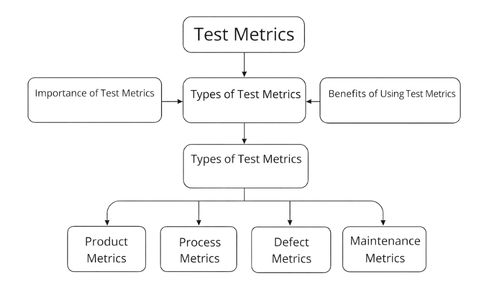
Types of Test Metrics (टेस्ट मेट्रिक्स के प्रकार)
Software Testing Metrics को उनके focus area के हिसाब से अलग-अलग types में divide किया जाता है। मुख्य रूप से चार प्रमुख प्रकार हैं :
- Product Metrics
- Process Metrics
- Defect Metrics
- Maintenance Metrics
1. Product Metrics
- Product Metrics वो measurable parameters हैं, जो software product की quality, reliability और defects को assess करने में मदद करते हैं।
- Product metrics से यह पता चलता है कि software कितना stable और error-free है।
Common Product Metrics
Metric | Formula / Meaning | Example |
Defect Density | Total Defects / KLOC (Lines of Code) | Flipkart app: 50 defects / 100 KLOC = 0.5 defects/KLOC |
Defect Severity Index | Weighted measure of defect impact (Critical=3, Major=2, Minor=1) | IRCTC booking error affecting payments → Critical severity |
Defect Discovery Rate | Number of defects found per unit time | 10 defects/day during testing |
2. Process Metrics
- Process metrics testing process की effectiveness और efficiency को measure करती हैं।
- Process metrics से team को process में weak areas identify और improve करने में मदद मिलती है।
Common Process Metrics
Metric | Formula / Meaning | Example |
Test Execution Metrics | Total executed, passed, failed, blocked test cases | 1000 test cases: 950 executed, 900 pass, 30 fail, 20 blocked |
Test Coverage | (Tested Requirements / Total Requirements) × 100 | Paytm UPI feature: 48/50 requirements tested → 96% coverage |
Defect Removal Efficiency (DRE) | (Defects found during testing / Total defects including post-release) × 100 | 80 found during testing, 20 post-release → DRE = 80% |
3. Defect Metrics
- Defect metrics software में defects की संख्या, type और trend को track करती हैं।
- Defect metrics से testing focus decide और defects जल्दी fix करने में मदद मिलती है।
Metric | Meaning | Example |
Defect Count | Total defects found | Flipkart delivery module: 50 defects found |
Defect Aging | Time defect remains open | Bug reported 1-Jan, fixed 5-Jan → Aging = 4 days |
Reopened Defects | Fix किए गए defects जो फिर से open हुए | IRCTC: 2 reopened defects in last release |
Severity vs Priority | Severity = impact, Priority = fix urgency | Critical bug → high severity, high priority |
4. Maintenance Metrics
- Maintenance metrics measure करती हैं, कि software update/fix के बाद quality कैसी है।
- Maintenance metrics से post-release defects control और software stability maintain होती है।
Common Maintenance Metrics
Metric | Meaning | Example |
Regression Defects | नई release में पुरानी functionalities break हुईं | Flipkart app update → 2 old features fail |
Mean Time to Repair (MTTR) | Average time to fix defects after detection | IRCTC booking bug fix average 2 hours |
Reopened Defects | Previously fixed defects जो reopen हुए | Payment gateway bug reopened 1 time |
Benefits of Using Test Metrics (लाभ)
- Quality Improvement : Defects और bugs identify करने से software की overall quality और reliability बढ़ती है।
- Better Planning : Metrics से resources, manpower और timelines plan करना आसान होता है।
- Process Improvement : Testing process के weak areas और low efficiency modules पता चलते हैं, जिन्हें future में improve किया जा सकता है।
- Stakeholder Confidence : Management और clients को reliable, data-driven reports मिलती हैं, जिससे उनका trust बढ़ता है।
- Early Risk Detection : Metrics की मदद से production में critical failures और downtime कम किया जा सकता है।
Challenges in Test Metrics (चुनौतियाँ)
- Accurate data collection is difficult : अगर defect tracking या test execution properly record नहीं हो रहा है, तो metrics reliable नहीं रहेंगे।
- Over-reliance on Numbers : केवल numbers पर depend करने से qualitative aspects ignore हो सकते हैं।
- Pay attention to the Project Context
- Metrics को हर project में उसी तरह interpret नहीं किया जा सकता।
- Small-scale app और enterprise system के metrics अलग-अलग interpret होते हैं।
- Misleading Results : अगर data incomplete या inaccurate हो तो metrics गलत conclusions दे सकते हैं।
Conclusion (निष्कर्ष)
Test Metrics सिर्फ numbers नहीं हैं। यह software testing की soul और foundation हैं। ये हमें बताते हैं, कि software कितना reliable, efficient और bugs-free है, और testing process कितनी effective रही।
Proper Test Metrics use करने से :
- Project managers और testers को data-driven decisions लेने में मदद मिलती है।
- Weak areas और process inefficiencies identify कर process improvement possible होती है।
- Developers और QA team को guidance मिलती है, जिससे high-quality, stable और user-friendly product deliver किया जा सके।
अक्सर पूछे जाने वाले प्रश्न (FAQ) –
Q1. Test Metrics क्यों जरूरी हैं?
- यह testing की effectiveness measure करता है, और software quality improve करता है।
Q2. Defect Density क्या है?
- एक module में defects की संख्या को code size से divide करके calculate किया जाता है।
Q3. Test Coverage कैसे measure करते हैं?
- Requirement coverage या code coverage metrics से measure किया जाता है।
Q4. DRE (Defect Removal Efficiency) क्या बताता है?
- यह बताता है, कि testing के दौरान कितने defects successfully detect और fix हुए।
Q5. Mean Time to Failure (MTTF) क्या है?
- यह average समय है, जब तक system crash नहीं होता।
Q6. कौन से tools Test Metrics में मदद करते हैं?
- Tools जैसे JIRA, Quality Center, TestRail, SonarQube, Selenium reports आदि।