
Software Change Management क्या है?
Software Change Management (SCM) एक systematic और controlled process है, जिसके द्वारा software में होने वाले सभी प्रकार के changes (जैसे bug fixing, new feature addition, security update, performance improvement आदि) को plan, approve, implement, test और document किया जाता है।
Table of Contents
ToggleKey Points
- Software में होने वाले हर change को formally handle किया जाता है।
- Change से पहले उसका Impact Analysis किया जाता है
- Changes बिना approval के implement नहीं किए जाते
- Proper testing की जाती है, ताकि new bugs न आएँ।
- Old और new versions को track करने के लिए Version Control use होता है।
- पूरा process documented होता है, जिससे future में reference मिल सके।
- System की stability, security और quality maintain रहती है।
Need for Software Change Management
(क्यों जरूरी है?)
- Software में आने वाले bugs और errors को safely और systematically fix करने के लिए।
- New features (जैसे Online Payment, OTP Login, Cloud Backup आदि) को बिना system disturb किए smoothly add करने के लिए।
- User की changing requirements के अनुसार software को time-to-time update करने के लिए।
- Security threats, viruses और cyber attacks से protection के लिए timely security patches और updates apply करने के लिए।
- System की stability, reliability और performance को maintain रखने के लिए।
- Multiple versions (old, current, updated) को properly control और track करने के लिए Version Control का उपयोग करने के लिए।
- Large और distributed teams के बीच better coordination और communication ensure करने के लिए।
- Uncontrolled या unplanned changes से होने वाले risks, failures और data loss को कम करने के लिए।
- Project में cost overrun और time delay से बचने के लिए proper change planning और approval process follow करने के लिए।
- Complete documentation और future maintenance, audit तथा reference के लिए records maintain करने के लिए।
Types of Software Changes (सॉफ्टवेयर परिवर्तन के प्रकार)
Software में अलग-अलग reasons से बदलाव किए जाते हैं। Software Engineering में इन्हें मुख्य रूप से चार categories में divide किया जाता है :
1. Corrective Changes
जब software में errors या bugs पाए जाते हैं, और उन्हें fix किया जाता है, तो उसे Corrective Change कहते हैं।
Purpose
- User complaints बढ़ जाती हैं
- System गलत output देने लगता है
- Business loss होने का risk रहता है
Key Points
- Existing functionality को correct किया जाता है
- Bug Tracking Tools (JIRA, Bugzilla) का उपयोग किया जाता है
- Regression Testing बहुत जरूरी होता है |
2. Adaptive Changes
जब software को नए environment, hardware या technology के अनुसार modify किया जाता है, तो उसे Adaptive Change कहते हैं।
Purpose
- New Operating System आने पर
- Hardware upgrade होने पर
- Database या Network platform change होने पर
Key Points
- External environment के साथ compatibility बनाए रखना
- Logic में कम, platform में ज्यादा change
- Performance और Stability Testing जरूरी
3. Perfective Changes
जब software सही काम कर रहा हो, लेकिन उसे और बेहतर बनाना हो, तब Perfective Change किया जाता है।
Purpose
- Performance improve करना
- User Interface को attractive बनाना
- New features add करना
Key Points
- User satisfaction बढ़ाना
- Competition में टिके रहना
- Usability और Scalability improve करना
4. Preventive Changes
Future में आने वाली problems से बचने के लिए पहले से किए गए changes को Preventive Change कहते हैं।
Purpose
- Software के old होने पर maintenance कठिन हो जाती है
- Technical debt बढ़ती है
- Security risks future में attack का कारण बन सकते हैं
Key Points
- Future maintenance आसान बनाना
- Failure और risk की possibility कम करना
- Long-term stability और security Ensure करना
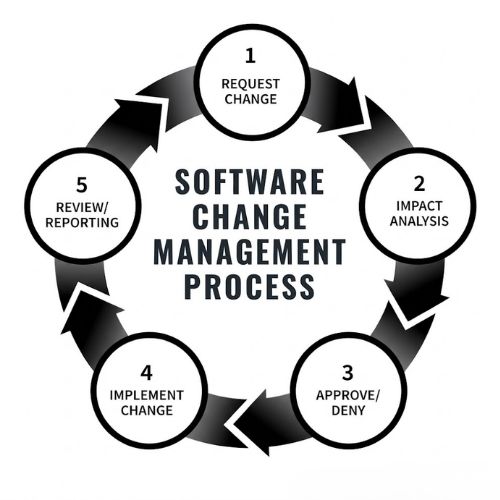
Software Change Management Process (Steps)
- Change Request
- सबसे पहले user, client या developer की तरफ से Change Request (CR) आती है।
- Change का reason लिखा जाता है
- Priority (High, Medium, Low) decide होती है
- Request formally document की जाती है
- सबसे पहले user, client या developer की तरफ से Change Request (CR) आती है।
- Impact Analysis
- इस step में यह analyze किया जाता है, कि proposed change से :
- कौन-से modules affect होंगे?
- Cost कितनी बढ़ेगी?
- Time कितना लगेगा?
- Risk क्या-क्या हो सकते हैं?
- इस step में यह analyze किया जाता है, कि proposed change से :
- Change Approval
- Change Control Board (CCB) या Project Manager decide करता है:
- Change accept किया जाए या नहीं
- Priority क्या होगी
- कब implement होगा
- Change Control Board (CCB) या Project Manager decide करता है:
- Planning & Scheduling
- अब detailed plan बनाया जाता है:
- कौन developer करेगा?
- कौन test करेगा?
- किस date को release होगा?
- यह step confusion और delay से बचाता है।
- अब detailed plan बनाया जाता है:
- Implementation
- Developer actual code में change करता है।
- New feature develop
- Bug fix
- Security patch apply
- Version Control Tools (Git, SVN) का use होता है।
- Testing
- Change के बाद testing बहुत जरूरी है:
- Unit Testing
- Integration Testing
- Regression Testing
- Change के बाद testing बहुत जरूरी है:
- Deployment (Release)
- Successfully tested change को Live server, Production environment में release किया जाता है।
- Documentation & Review
- Change details record की जाती हैं
- Version history update होती है
- Lessons learned note किए जाते हैं
Advantages (लाभ)
- Software की overall Quality, Reliability और Maintainability में सुधार होता है।
- Bugs और errors को planned और controlled तरीके से fix किया जाता है।
- System की Stability, Performance और Availability बनी रहती है।
- Timely patches और updates से Security risks कम हो जाते हैं।
- Development, Testing और Maintenance teams के बीच बेहतर coordination और communication होता है।
- Complete और proper documentation future reference, audit और maintenance में helpful होती है।
- Version Control की मदद से old, current और new releases को आसानी से manage किया जा सकता है।
- Change planning से project में unnecessary cost और time overrun कम होता है।
- Improved functionality और quality के कारण User/Customer satisfaction बढ़ती है।
- Large और complex software systems को systematic तरीके से handle करना आसान हो जाता है।
Challenges (चुनौतियां)
- बार-बार changes होने से project schedule और planning disturb हो सकती है।
- Detailed testing और review process में ज्यादा time लगने से delivery में delay हो सकता है।
- Change resistance users या team members नए system या process को accept करने में hesitate करते हैं।
- Repeated modifications से development और maintenance cost बढ़ सकती है।
- Large या remote teams में communication gap के कारण misunderstanding की possibility रहती है।
- Approval और review process complex होने से decision making slow हो जाती है।
- एक change के कारण related modules में नए bugs introduce होने का risk रहता है।
- Proper SCM tools की absence में version tracking और change control difficult हो जाता है।
- Emergency या urgent changes में standard process skip होने का खतरा रहता है।
- Incomplete या poor documentation future maintenance और troubleshooting को difficult बना देती है।
Conclusion (निष्कर्ष)
SCM के through changes को plan, approve, test और document किया जाता है, जिससे quality बनी रहती है और future maintenance आसान हो जाता है।
अक्सर पूछे जाने प्रश्न (FAQ)
- क्योंकि यह software में होने वाले changes को controlled तरीके से implement करने में मदद करता है और system failure से बचाता है।
Q2. Change Request क्या होती है?
- User या developer द्वारा दिया गया वह formal request जिसमें software में किसी बदलाव की जरूरत बताई जाती है।
Q3. Change Control Board (CCB) का काम क्या है?
- Changes को approve/reject करना और उनकी priority decide करना।
Q4. SCM में testing का क्या role है?
- Testing यह सुनिश्चित करती है कि नया change पुराने functions को खराब न करे और system error-free रहे।
Q5. Software Change Management और Version Control में अंतर?
- Version Control code के versions track करता है, जबकि SCM पूरे change process को manage करता है।
Q6. Emergency change क्या होता है?
- जब तुरंत fix जरूरी हो (जैसे security breach), तब fast-track process से change किया जाता है।