
Stack Organization (Stack Organization क्या है?)
Stack Organization एक memory organization technique है, जिसमें data को stack नाम की data structure में store किया जाता है। इसमें data access केवल stack के top से possible होती है।
यह LIFO (Last In First Out) principle पर आधारित होती है और इसके मुख्य operations push और pop के माध्यम से perform किए जाते हैं।
Table of Contents
ToggleKey Points
- Data access सिर्फ Top of Stack (TOS) से होता है
- LIFO (Last In First Out) rule follow करता है
- Direct random access allowed नहीं होता
- Temporary data storage के लिए best होता है
- CPU architecture और instruction execution में important role है
Principle of Stack Organization – LIFO
Stack Organization का पूरा system एक fundamental principle पर based होता है, जिसे LIFO (Last In First Out) कहा जाता है। इस principle के अनुसार stack में जो data सबसे Last में insert किया जाता है, वही data सबसे पहले remove किया जाता है। मतलब data का entry और exit दोनों ही सिर्फ Top of Stack (TOS) से possible होता है। यही rule stack को अन्य memory organization techniques से अलग बनाता है।
Computer Architecture में यह principle इसलिए important है, क्योंकि CPU को temporary data को fast और systematic तरीके से manage करना होता है। जब कोई instruction execute होती है, function call आता है, या interrupt generate होता है, तो उससे related information (जैसे return address, local variables, registers की value) stack में push कर दी जाती है। जैसे ही वह task complete होता है, वही information reverse order में pop हो जाती है।
इसके अलावा, recursion, nested function calls, और expression evaluation (postfix expression) जैसी processes पूरी तरह LIFO principle पर depend करती हैं। अगर stack LIFO follow न करे, तो program execution incorrect हो सकता है और system crash जैसी problems भी आ सकती हैं।
Types of Stack Organization (स्टैक ऑर्गनाइज़ेशन के प्रकार)
1. Register Stack Organization (रजिस्टर स्टैक ऑर्गनाइज़ेशन)
Register Stack Organization एक stack-based architecture है, जिसमें stack के elements को main memory (RAM) में store करने के जगह सीधे CPU registers में रखा जाता है। इसका main purpose high-speed data access और fast instruction execution provide करना होता है।
Computer Architecture में registers सबसे fast memory होते हैं। इसलिए जब stack को registers के form में implement किया जाता है, तो push और pop operations बहुत जल्दी execute हो जाते हैं। लेकिन registers की संख्या limited होती है, इसलिए इस type का stack size छोटा और fixed होता है।
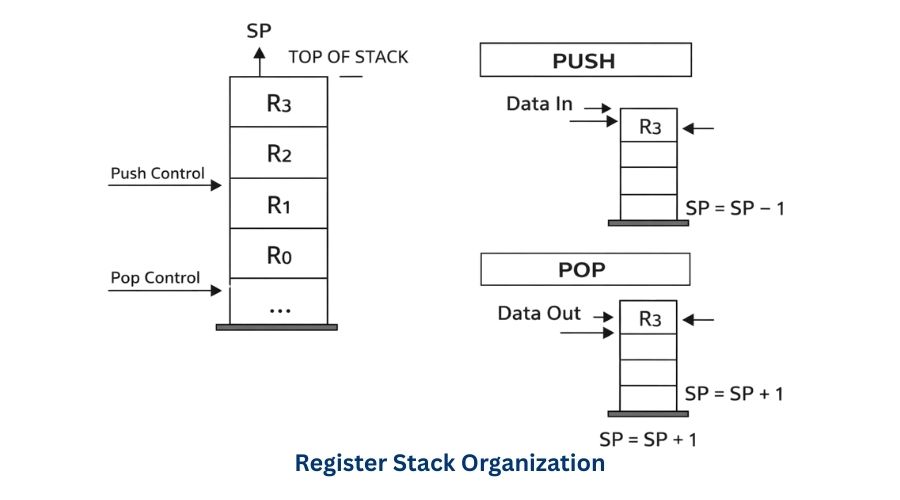
Working of Register Stack Organization
- CPU के अंदर कुछ registers को stack के रूप में reserve किया जाता है
- एक special register जिसे Stack Pointer (SP) कहते हैं, stack के top register को track करता है
- Push operation में नया data next available register में store होता है
- Pop operation में topmost register का data remove हो जाता है
Key Characteristics
- Stack elements सीधे CPU registers में store होते हैं
- Very high access speed, क्योंकि memory access नहीं होता
- Stack size fixed और limited होता है
- Overflow जल्दी हो सकता है
- Instruction execution simple और fast होता है
Advantages
- Arithmetic और Logical operations बहुत fast होते हैं
- Instruction execution time कम हो जाता है
- Zero-address instruction format को support करता है
- Overall CPU performance improve होती है
Disadvantages
- Limited stack size होने के कारण large programs के लिए suitable नहीं होता
- Registers का hardware cost बहुत high होता है
- Complex function calls और deep recursion में problem आती है
2. Memory Stack Organization (मेमोरी स्टैक ऑर्गनाइज़ेशन)
Memory Stack Organization एक ऐसी stack-based technique है, जिसमें stack के elements को CPU registers के जगह main memory (RAM) में store किया जाता है। इस technique का use उन situations में किया जाता है, जहाँ large data, multiple function calls, और recursion जैसी complex operations को handle करना जरूरी होता है।
इस stack organization में एक special register होता है, जिसे Stack Pointer (SP) कहते हैं। SP हमेशा Top of Stack (TOS) का memory address hold करता है। Push और Pop operations के दौरान SP continuously update होता रहता है।
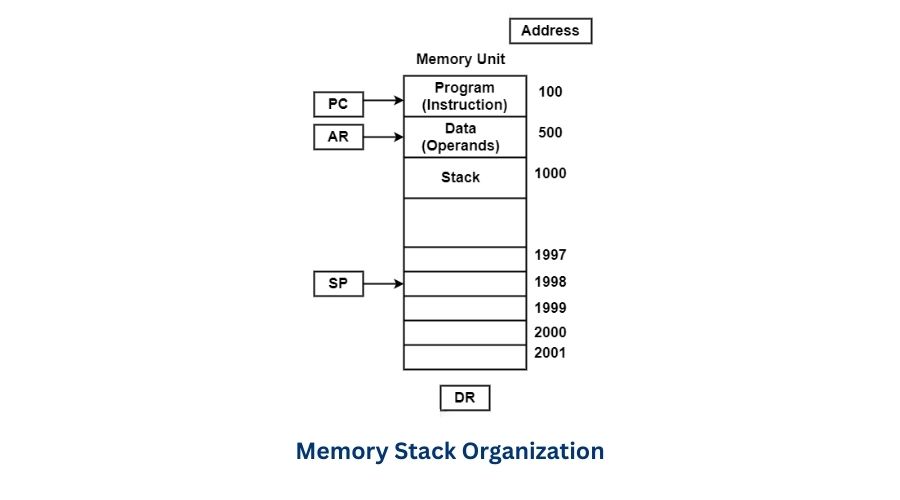
Working of Memory Stack Organization
- Stack के लिए RAM में एक specific memory block allocate किया जाता है
- Stack Pointer (SP) उस memory location को point करता है जहाँ top element store होता है
- Push Operation
- SP को update किया जाता है
- New data memory में store किया जाता है
- Pop Operation
- Data memory से read किया जाता है
- SP reverse direction में move करता है
Key Characteristics
- Stack elements main memory (RAM) में store होते हैं
- Stack size comparatively large और flexible होता है
- Access speed register stack की तुलना में कम होती है
- Overflow और Underflow conditions possible होती हैं
- Structure scalable और flexible होता है
Advantages
- Large stack size को support करता है
- Complex programs और deep recursion के लिए suitable है
- Function calls और interrupt handling में efficient है
- Modern computers में widely used technique है
Disadvantages
- Memory access होने के कारण speed थोड़ी slow होती है
- Deep recursion में stack overflow का risk रहता है
- Proper memory management की आवश्यकता होती है
Advantages of Stack Organization (लाभ)
- Fast Data Access
- Register Stack में CPU registers use होने की वजह से push/pop operations बहुत जल्दी होते हैं।
- Efficient Instruction Execution
- Zero-address instruction format को support करता है।
- Arithmetic और logical operations fast होते हैं।
- Supports Function Calls & Recursion
- Memory Stack में return address, local variables, और function parameters easily store होते हैं।
- Scalable & Flexible
- Memory Stack में stack size relatively large होता है, इसलिए complex programs handle कर सकते हैं।
- Widely Used
- Modern CPUs, JVM, OS process management, embedded systems में use होता है।
- Improves CPU Performance
- Especially register stack में fast access के कारण overall execution तेज होती है।
Disadvantages of Stack Organization (हानियाँ)
- Limited Size
- Register Stack में registers की संख्या limited होती है।
- Memory Stack में भी deep recursion या large function calls से stack overflow हो सकता है।
- Speed Constraints
- Memory Stack में RAM access required होता है, इसलिए register stack के मुकाबले slower होता है।
- High Hardware Cost
- Register Stack implement करने के लिए CPU में ज्यादा registers लगाने पड़ते हैं।
- Complex Management
- Deep recursion, interrupt handling या large programs में stack को properly manage करना ज़रूरी होता है।
- Overflow & Underflow Risk
- Stack full होने पर overflow, और empty होने पर underflow problem आती है।
Conclusion (निष्कर्ष)
Stack Organization Computer Architecture और Data Structure का एक बहुत ही महत्वपूर्ण concept है। यह LIFO (Last In First Out) principle पर आधारित है और data को efficiently manage करने में मदद करता है।
- Stack Organization function calls, recursion, expression evaluation, interrupt handling, और temporary data storage में extensively use होती है।
- इसके operations Push और Pop सरल हैं, और CPU execution को fast और organized बनाते हैं।
- Stack का structure simple होने से यह modern computing systems में critical role निभाता है।
- limited access (only top element), debugging difficulty और large programs में performance issues जैसी कुछ limitations भी हैं।
अक्सर पूछे जाने वाले प्रश्न (FAQ)
Q1. Stack Organization क्या है?
- Stack Organization एक memory organization technique है, जिसमें data को stack structure में store किया जाता है और access केवल Top of Stack (TOS) से possible होता है।
Q2. LIFO principle क्या है?
- LIFO (Last In First Out) का मतलब है, कि stack में जो data सबसे last insert हुआ, वही सबसे पहले remove होता है।
Q3. Stack के मुख्य operations कौन से हैं?
- Push → Stack में नया data insert करना
- Pop → Stack से top element remove करना
Q4. Stack Pointer (SP) क्या होता है?
- Stack Pointer एक special CPU register है, जो stack के top element का address hold करता है और push/pop operations के दौरान continuously update होता है।
Q5. Stack Overflow और Underflow क्या हैं?
- Stack Overflow: जब stack full हो और push operation attempt किया जाए।
- Stack Underflow: जब stack empty हो और pop operation attempt किया जाए।
Q6. Register Stack और Memory Stack में क्या अंतर है?
- Register Stack: CPU registers में store, very fast, limited size, low latency
- Memory Stack: Main memory (RAM) में store, moderate speed, large size, flexible
https://computerhindinotes.com/stacks-adt-implementations-benefits-drawbacks/