
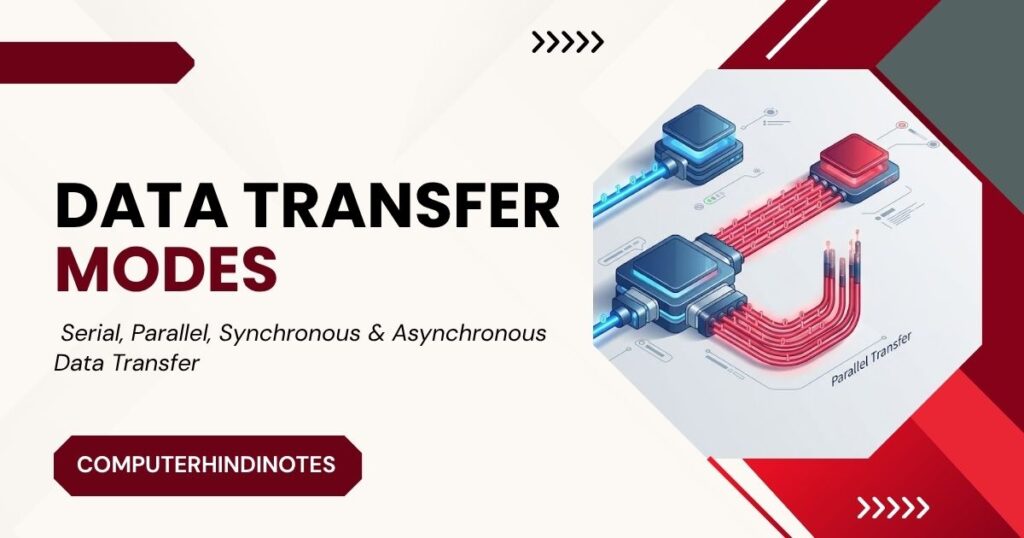
Data Transfer
Data Transfer वह Process है, जिसके माध्यम से data, information या signals एक device, system या location से दूसरे device या system तक भेजे जाते हैं।
Computer System में जब CPU, Memory, I/O Devices, Storage Devices या Network के बीच bits (0 और 1) के रूप में information भेजी जाती है, इसे Data Transfer कहा जाता है।
Table of Contents
ToggleKey Points
- Data हमेशा Binary format (0 और 1) में भेजा जाता है।
- यह CPU, Memory और I/O devices के बीच communication के लिए उपयोग होता है।
- Data transfer wired (USB, LAN) या wireless (Wi-Fi, Bluetooth) हो सकता है।
- यह Serial या Parallel mode में होता है।
- Timing के आधार पर Synchronous या Asynchronous भी हो सकता है।
- Data transfer speed को Data Rate या Bandwidth कहा जाता है (जैसे Mbps, Gbps)।
- Error detection और correction techniques का इस्तेमाल किया जाता है।
- Modern Computer Networks और Internet पूरी तरह Data Transfer पर आधारित हैं।
Components of Data Transfer (मुख्य घटक)
1. Sender
- Sender वह device या system है, जो data भेजता है।
- यह source के रूप में काम करता है।
2. Receiver
- Receiver वह device है जो data प्राप्त करता है।
- यह destination के रूप में काम करता है।
3. Transmission Medium
- यह वह रास्ता है जिस पर data travel करता है।
- यह physical या wireless हो सकता है।
4. Protocol
- Data transfer के नियम और procedures को protocol कहते हैं।
- यह sender और receiver के बीच communication को standardized बनाता है।
5. Control Signals
यह signal data transfer की timing और synchronization नियंत्रित करता है।
6. Buffer / Storage
यह data को temporary store करता है ताकि sender और receiver के speed mismatch को handle किया जा सके।
Modes of Data Transfer (डेटा ट्रांसफर के प्रकार)
Data Transfer को मुख्यतः दो आधार पर classify किया जा सकता है :
- Data Transmission Method के आधार पर
- Serial Data Transfer
- Parallel Data Transfer
- Timing Coordination के आधार पर
- Synchronous Data Transfer
- Asynchronous Data Transfer
1. Serial Data Transfer
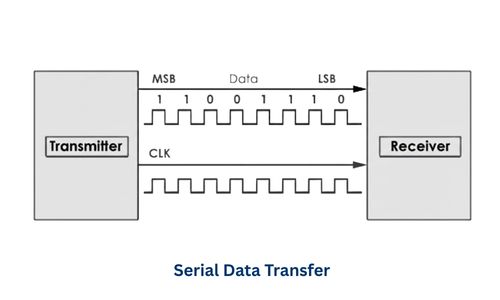
Serial Data Transfer वह method है, जिसमें data को एक समय में एक bit (1 bit at a time) के रूप में एक device से दूसरे device तक भेजा जाता है।
यदि 8-bit data भेजना है, तो उसे 8 अलग-अलग clock cycles या signals में sequentially transmit किया जाएगा।
उदाहरण :
- 8-bit data → 10110010
Serial transmission में यह इस प्रकार भेजा जाएगा:
- 1 → 0 → 1 → 1 → 0 → 0 → 1 → 0
Receiver इन्हें उसी क्रम में प्राप्त करता है।
Working Process
- Sender data को binary form (0 और 1) में convert करता है।
- Bits sequential order में भेजे जाते हैं।
- Transmission line से data travel करता है।
- Receiver bits को receive करके original data बनाता है।
Characteristics of Serial Data Transfer (Serial Data Transfer की विशेषताएँ)
- Single Communication Line : Data भेजने के लिए केवल एक wire या channel का उपयोग होता है।
- Bit-by-Bit Transmission : Data sequential order में एक-एक bit के रूप में transfer होता है।
- Less Hardware Requirement : Parallel transfer की तुलना में कम cables और connectors की जरूरत होती है।
- Suitable for Long-Distance Communication : Serial transmission लंबी दूरी पर भी reliable रहता है।
- Less Noise & Crosstalk : Single line होने के कारण signal interference कम होता है।
- High Reliability : Data loss की संभावना कम होती है।
- Cost Effective : कम wiring और simple design होने से cost कम होती है।
- Modern High-Speed Support : USB, SATA, PCIe जैसी modern technologies serial communication पर आधारित हैं।
- Easy Maintenance & Installation : कम cables होने से setup आसान होता है।
- Suitable for Networking & Internet Communication : Internet, mobile data, Bluetooth आदि serial transmission का उपयोग करते हैं।
Advantages (लाभ)
- High Speed Data Transfer : Continuous data flow होने के कारण data बहुत तेज़ी से transmit होता है।
- Efficient Communication : Start और Stop bits की जरूरत नहीं होती, जिससे bandwidth का बेहतर उपयोग होता है।
- Ideal for Large Data Transfer : बड़ी मात्रा में data को block form में आसानी से भेजा जा सकता है।
- Better Synchronization : Clock signal sender और receiver को perfectly synchronize रखता है।
- Reduced Error Chances : Timing synchronization होने से data loss और transmission errors कम होते हैं।
- Suitable for Real-Time Applications : Live streaming, networking, industrial control systems में उपयोगी हैं।
- Continuous Data Flow : Data बिना interruption के transmit होता रहता है।
Disadvantages (हानियाँ)
- Clock Synchronization Required : Sender और receiver के बीच clock match होना जरूरी है।
- High Hardware Complexity : Clock management और synchronization के लिए complex circuitry चाहिए।
- Higher Cost : Asynchronous communication की तुलना में implementation cost अधिक होती है।
- Setup Can Be Difficult : Proper synchronization setup करना technical expertise मांगता है।
2. Parallel Data Transfer
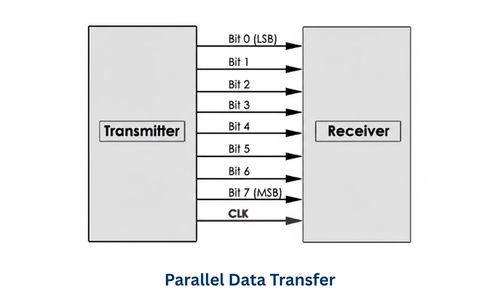
Parallel Data Transfer वह method है, जिसमें multiple bits एक ही समय में transfer होते हैं।
मतलब अगर 8-bit data भेजना है, तो 8 अलग-अलग wires के माध्यम से 8 bits एक ही clock cycle में भेजे जाते हैं।
Example :
- Data = 11010110
- 8 bits → 8 wires simultaneously
Working (Parallel Data Transfer कैसे काम करता है?)
- Data को bits में divide किया जाता है।
- हर bit को अलग communication line (wire) assign किया जाता है।
- सभी bits एक ही समय में transfer होते हैं।
- Receiver सभी lines से bits collect करता है और original data reconstruct करता है।
Characteristics (मुख्य विशेषताएँ)
- Multiple Data Lines : हर bit के लिए अलग wire या line का उपयोग किया जाता है।
- Simultaneous Transmission : Data bits एक साथ parallel lines में transmit होते हैं, जिससे speed बढ़ती है।
- High-Speed Communication : Short distance में बहुत तेजी से data transfer होता है।
- Ideal for Short Distance : Long distance पर signal interference और crosstalk के कारण reliable नहीं होता।
- Suitable for Large Data Block Transfer : बड़ी मात्रा में data block efficiently transfer किया जा सकता है।
- Easy Synchronization : Single clock या control signal से सभी lines synchronize हो जाती हैं।
- High Bandwidth Available : एक साथ multiple bits send होने से bandwidth बढ़ जाती है।
- Simple Data Reconstruction : Receiver सभी lines से bits collect करके original data आसानी से reconstruct कर सकता है।
Advantages (लाभ)
- High Speed Data Transfer : Multiple bits एक साथ भेजे जाते हैं, इसलिए transmission तेज़ होती है।
- Efficient for Short Distance : Short distance communication में reliable और fast होता है।
- Large Data Block Transfer Possible : बड़ी मात्रा में data block efficiently send किया जा सकता है।
- Simple Synchronization : Single clock या control signal से सभी lines synchronize हो जाती हैं।
- High Bandwidth Availability : Multiple bits एक साथ भेजने के कारण bandwidth बढ़ जाती है।
- Ideal for internal CPU-memory communication : Computer की internal processing के लिए suitable है।
Disadvantages (हानियाँ)
- Multiple Wires Required : हर bit के लिए separate line → hardware और cost बढ़ती है।
- Crosstalk / Signal Interference : Multiple parallel lines में signal interference होने का खतरा रहता है।
- Not Suitable for Long Distance : Signal degradation और timing mismatch लंबी दूरी पर problem पैदा करता है।
- Complex Cabling : Large systems में wiring और layout complex हो जाता है।
- Higher Cost Implementation : Synchronous या serial transmission के comparison में अधिक महंगा होता है।
3. Synchronous Serial Transmission
Synchronous Serial Communication वह serial communication method है, जिसमें sender और receiver दोनों एक common clock signal का उपयोग करते हैं, जिससे data transfer सही timing और synchronization के साथ हो सके।
Working (Synchronous Serial Transmission कैसे काम करता है?)
- System में एक clock signal generate होती है।
- Sender clock pulses के साथ data भेजता है।
- Receiver उसी clock timing के अनुसार data receive करता है।
- Data continuous stream में transfer होता रहता है।
Features of Synchronous Serial Transmission (विशेषताएँ)
- Common Clock Signal : Sender और receiver दोनों एक ही clock signal का उपयोग करते हैं।
- Synchronized Data Transfer : Data भेजने और प्राप्त करने की timing पूरी तरह synchronized रहती है।
- Continuous Data Flow : Data बिना रुकावट के continuous stream में भेजा जाता है।
- High-Speed Communication : Continuous transfer होने से data बहुत तेज़ी से transmit होता है।
- High Efficiency : Overhead bits नहीं होने के कारण bandwidth का बेहतर उपयोग होता है।
- Reduced Error Chances : Synchronization होने से data loss और timing errors कम होते हैं।
- Suitable for Real-Time Systems : Live streaming, networking और real-time processing में उपयोगी हैं।
- Precise Timing Control : Clock pulses data transmission को accurate timing प्रदान करते हैं।
Advantages (लाभ)
- High Speed Data Transfer : Continuous data flow होने के कारण data बहुत तेज़ी से transmit होता है।
- Efficient Communication : Start और Stop bits की जरूरत नहीं होती, जिससे bandwidth का बेहतर उपयोग होता है।
- Ideal for Large Data Transfer: बड़ी मात्रा में data को block form में आसानी से भेजा जा सकता है।
- Better Synchronization : Clock signal sender और receiver को perfectly synchronize रखता है।
- Reduced Error Chances : Timing synchronization होने से data loss और transmission errors कम होते हैं।
- Suitable for Real-Time Applications : Live streaming, networking, industrial control systems में उपयोगी हैं।
- Continuous Data Flow : Data बिना interruption के transmit होता रहता है।
Disadvantages (हानियाँ)
- Clock Synchronization Required : Sender और receiver के बीच clock match होना जरूरी है।
- High Hardware Complexity : Clock management और synchronization के लिए complex circuitry चाहिए।
- Higher Cost : Asynchronous communication की तुलना में implementation cost अधिक होती है।
- Setup Can Be Difficult : Proper synchronization setup करना technical expertise मांगता है।
4. Asynchronous Serial Transmission
Asynchronous Serial Transmission वह data transfer method है, जिसमें sender और receiver एक common clock share नहीं करते। Data को छोटे packets या characters में भेजा जाता है और हर packet के साथ start और stop bits जुड़ी होती हैं, जो transmission को synchronize करती हैं।
Working (Asynchronous Communication कैसे काम करता है?)
- Sender data को binary form में convert करता है।
- प्रत्येक data unit (character) के पहले Start bit भेजता है।
- Data bits transmit होती हैं।
- Data unit के अंत में Stop bit भेजा जाता है।
- Receiver start bit detect करता है और data read करता है।
- Stop bit detect करके unit को complete मानता है।
Features of Asynchronous Serial Transmission (विशेषताएँ)
- No Clock Signal Required : Sender और receiver के बीच किसी common clock की जरूरत नहीं होती, इसलिए दोनों independently operate कर सकते हैं।
- Character-wise Data Transfer : Data छोटे units (characters या bytes) में भेजा जाता है, जिससे transmission flexible बनता है।
- Use of Start and Stop Bits : प्रत्येक data unit के साथ start और stop bits जुड़ी होती हैं, ताकि receiver यह समझ सके कि data कहाँ शुरू और कहाँ खत्म हुआ।
- Flexible Timing : Data transmission sender और receiver के independent timing पर निर्भर करता है।
- Simple Hardware Design : Clock synchronization circuitry की आवश्यकता नहीं होने से hardware design आसान और simple रहता है।
- Low Cost Implementation : Synchronous transmission की तुलना में कम महंगा और cost-effective है।
- Easy to Install and Maintain : कम hardware और simple wiring होने के कारण setup और maintenance आसान है।
- Slower than Synchronous Communication : Continuous clock signal न होने के कारण high-speed data transfer के लिए suitable नहीं है।
Advantages (लाभ)
- Simple Hardware Design : Clock synchronization की जरूरत नहीं होने से hardware design आसान होता है।
- Low Cost : Implementation सस्ता और cost-effective होता है।
- Flexible Timing : Sender और receiver independent timing पर operate कर सकते हैं।
- Character-wise Transmission : छोटे data units में transfer होने के कारण intermittent communication के लिए ideal होता है।
- Easy Installation and Maintenance : कम hardware और simple wiring के कारण setup आसान और maintenance सरल होता है।
- Widely Used for Low-Speed Communication : Keyboard, serial ports, UART devices में common उपयोग होता है।
Disadvantages (हानियाँ)
- Slower Speed : Continuous clock signal नहीं होने के कारण high-speed applications के लिए suitable नहीं।
- Extra Bits Overhead : हर data unit के साथ start और stop bits जुड़ी होती हैं, जिससे bandwidth थोड़ा कम efficient होता है।
- Less Efficient for Large Data Transfer : बड़ी मात्रा में data भेजने पर time ज्यादा लगता है।
- Not Ideal for Real-Time Applications : Real-time या high-speed applications में errors या delays हो सकते हैं।
Difference Between Serial and Parallel Transmission
| Feature | Serial Transmission | Parallel Transmission |
|---|---|---|
| Data Transfer Method | Data bit-by-bit sequentially एक single wire/channel से भेजा जाता है। | Multiple bits एक साथ different wires/channels से भेजे जाते हैं। |
| Transmission Lines | Single wire, less hardware required | Multiple wires, 1 wire per bit → more hardware |
| Speed | Generally slower per bit, लेकिन long-distance के लिए reliable | High speed per clock cycle, suitable for short-distance communication |
| Distance | लंबी दूरी तक reliable, signal degradation कम | Long distance में signal loss और crosstalk अधिक होता है |
| Synchronization / Timing | Bit-by-bit sequential, simple timing | All bits transmit simultaneously, complex synchronization required |
| Cost | Low cost, fewer cables | High cost due to multiple wires और complex design |
| Hardware Complexity | Simple hardware, easy setup | Complex wiring, connectors और synchronization circuitry जरूरी |
| Noise & Interference | कम noise, low crosstalk | ज्यादा noise और signal interference का risk |
| Applications | Long-distance communication, USB, SATA, PCIe, Internet, Bluetooth, Modems | Short-distance, internal CPU-Memory communication, printer ports, high-speed internal buses |
| Advantages | – कम hardware और wiring की जरूरत – Long distance reliable – Low cost and easy maintenance | – High-speed transfer – Multiple bits transmit simultaneously – Suitable for large data blocks |
| Disadvantages | – Data transfer slower per bit – Single line limits bandwidth | – Signal interference और crosstalk – Long distance unreliable – High hardware cost |
Conclusion (निष्कर्ष)
Data Transfer Computer System का मूल आधार है। CPU, Memory और Input/Output Devices के बीच data का सही और तेज आदान-प्रदान system performance के लिए जरूरी है।
- Serial और Parallel Modes डेटा भेजने के physical तरीके को दर्शाते हैं।
- Synchronous और Asynchronous Modes डेटा भेजने के समय (timing) और coordination को निर्धारित करते हैं।
- Serial transfer long-distance और modern interfaces (USB, SATA, PCIe) के लिए suitable है।
- Parallel transfer short-distance और high-speed internal communication के लिए ideal है।
- Synchronous method continuous और high-speed real-time data के लिए best है।
- Asynchronous method flexible timing और low-cost communication के लिए अच्छा है।
अक्सर पूछे जाने वाले प्रश्न (FAQ)
Q1. Data Transfer क्या है?
- Data Transfer वह प्रक्रिया है जिसमें information (0 और 1 के रूप में) एक device या system से दूसरे तक भेजी जाती है।
Q2. Serial और Parallel Data Transfer में क्या फर्क है?
- Serial: Data bit-by-bit एक ही line से भेजा जाता है। लंबी दूरी के लिए suitable।
- Parallel: Multiple bits एक साथ अलग lines से भेजे जाते हैं। Short distance और high-speed transfer के लिए ideal।
Q3. Synchronous और Asynchronous Data Transfer में अंतर क्या है?
- Synchronous: Sender और receiver एक common clock से sync होते हैं। High-speed, continuous data के लिए suitable।
- Asynchronous: कोई common clock नहीं। Start और stop bits से data synchronize होता है। Flexible और low-cost applications के लिए suitable।
Q4. Data Transfer की speed को कैसे मापा जाता है?
- Data rate या bandwidth (जैसे Mbps, Gbps) से मापा जाता है।
Q5. Serial Communication क्यों modern systems में अधिक use होती है?
- कम wiring, कम noise, long-distance capability, और high-speed support (USB, PCIe, SATA) की वजह से।
Q6. Parallel Data Transfer कब use होती है?
- Short distance, large data blocks और internal CPU-Memory communication के लिए।
Q7. Asynchronous Communication की मुख्य limitation क्या है?
- High-speed data transfer के लिए suitable नहीं, क्योंकि continuous clock signal नहीं होता और extra start/stop bits overhead बनाते हैं।