

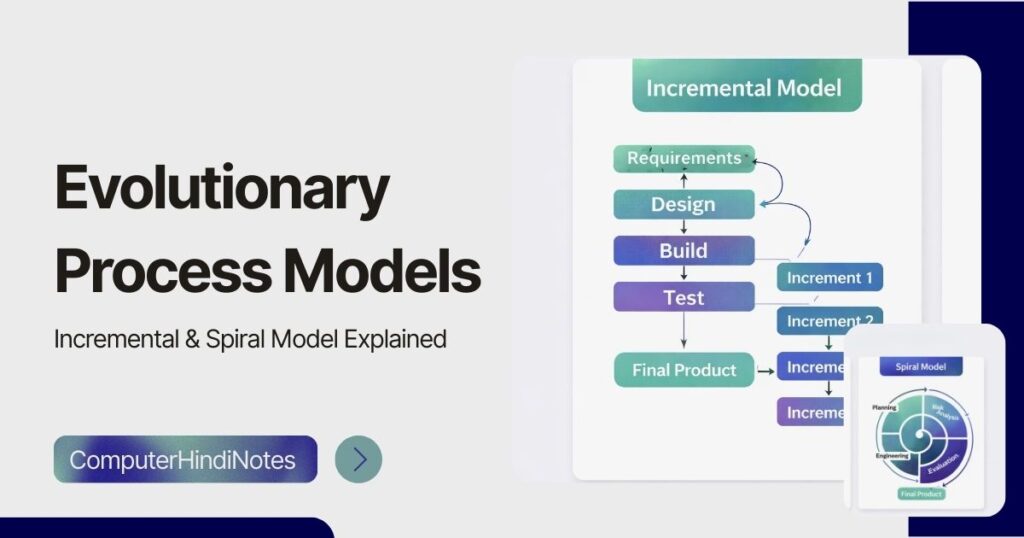
Evolutionary Process Models
Evolutionary Process Models ऐसे software development models हैं, जिनमें software को step-by-step, iterative और incremental approach में develop किया जाता है। इसमें initial version जल्दी release किया जाता है और फिर user feedback के आधार पर continuously improve किया जाता है।
Table of Contents
ToggleKey Points (मुख्य बिंदु)
- Software step-by-step evolve होता है।
- Requirements पूरी तरह clear न होने पर भी development possible है।
- Prototype या incremental system जल्दी deliver किया जाता है।
- Users का feedback हर phase में लिया जाता है।
- User requirements के अनुसार changes आसानी से implement किए जा सकते हैं।
- हर iteration में testing और validation होती है।
Phases of Evolutionary Process Models
Evolutionary Process Models में software development को phases में divide किया जाता है, लेकिन traditional Waterfall की तरह linear नहीं होता। यहाँ phases iterative और incremental होते हैं।
- Requirement Gathering & Analysis
- सबसे पहला phase है, requirements समझना और document करना।
- हर increment या iteration के लिए high-level requirements define की जाती हैं।
- Detailed requirements gradually हर increment में define होती हैं।
- System Design
- Requirements के आधार पर software architecture और module design तैयार किया जाता है।
- Incremental approach में design modular होता है, ताकि नए increments आसानी से add किए जा सकें।
- Implementation / Development
- Actual coding और module development होती है।
- हर increment या spiral loop में working functionality deliver की जाती है।
- Testing & Verification
- हर increment / iteration के बाद unit, integration और system testing होती है।
- Testing ensures कि software correct और reliable है।
- Evaluation / Feedback
- Users और stakeholders से feedback लिया जाता है।
- Spiral Model में हर spiral loop के अंत में evaluation phase होती है।
Types of Evolutionary Process Models
Evolutionary Models को मुख्यतः 2 types में classify किया जा सकता है |
- Incremental Model
- Spiral Model
1. Incremental Model
Incremental Model एक evolutionary software development model है, जिसमें software को छोटे-छोटे modules या increments में develop किया जाता है। हर increment में एक working functionality होती है, जिसे user को deliver किया जाता है। बाद में हर increment को integrate करके final system तैयार किया जाता है।
Key Points
- Software step-by-step / increment-wise develop होता है।
- Working software जल्दी deliver किया जा सकता है।
- Feedback के आधार पर improvements implement होते हैं।
- Requirements बदलने पर changes आसानी से apply किए जा सकते हैं।
- Risk कम होता है क्योंकि critical modules पहले develop किए जाते हैं।
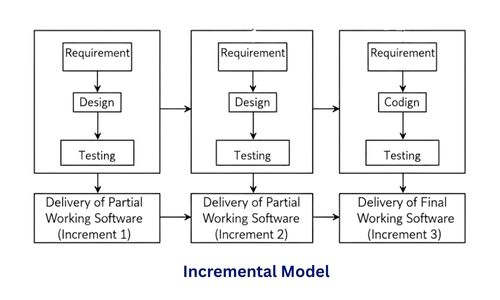
Phases of Incremental Model
- Requirement Analysis
- High-level Requirements Identify की जाती हैं।
- सभी Details अभी जरूरी नहीं होती।
- System Design
- पूरे System को Module-wise Divide किया जाता है।
- हर Increment के लिए Detailed Design तैयार किया जाता है।
- Implementation of Increment
- Core और जरूरी functionality पहले develop की जाती है।
- Module Complete होने के बाद Testing की जाती है।
- Testing & Feedback
- हर Increment की Unit Testing और Integration Testing होती है।
- User Feedback के आधार पर Improvements किए जाते हैं।
- Next Increment Development
- अगले Module को Develop करके Integrate किया जाता है।
- Process तब तक Repeat होता है जब तक पूरा Software Ready न हो जाए।
Advantages
- Early Delivery of Software
- Core functionality वाले Modules पहले Develop और Deliver किए जाते हैं।
- Flexibility in Requirements
- Requirements बदलने पर easily incorporate किया जा सकता है।
- Lower Initial Cost
- पूरा Project एक साथ Develop करने की बजाय Modules में Develop होता है।
- Risk Reduction
- High-risk Components पहले Develop किए जाते हैं।
- Bugs और Issues जल्दी Identify और Fix हो जाते हैं।
- Customer Feedback Integration
- हर Increment के बाद User Feedback लिया जाता है।
- इससे Satisfaction और Quality दोनों बढ़ती हैं।
- Ease of Maintenance
- Module-wise Development होने के कारण Future Maintenance आसान होता है।
Limitations
- Requires Good Planning
- Proper module division और integration plan होना चाहिए।
- Integration Problems
- अलग-अलग modules combine करने में complications आ सकते हैं।
- Not Suitable for Small Projects
- Incremental approach छोटे/simple projects में overhead बढ़ा देता है।
- Dependency on Earlier Modules
- अगर Initial Module में Problem है, तो आगे के Modules पर Impact पड़ता है।
- Management Complexity
- Multiple increments manage करना difficult हो सकता है।
2. Spiral Model
Spiral Model एक Evolutionary / Iterative Software Development Model है, जिसे Barry Boehm (1986) ने Introduce किया था।
इस Model में Software Development को Spiral Cycles में Divide किया जाता है। हर Cycle में Risk Assessment, Planning, Prototyping और Evaluation होती है। Focus हमेशा Risk Reduction और Customer Feedback पर होता है। यह Model High-Risk और Large Projects के लिए सबसे उपयुक्त है।
Key Points
- हर iteration में risks identify और manage किए जाते हैं।
- Software step-by-step और increment-wise develop होता है।
- Requirement changes आसानी से next iteration में incorporate किए जा सकते हैं।
- Early prototype और user feedback software को बेहतर बनाते हैं।
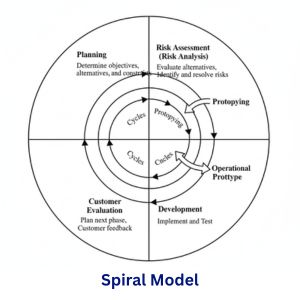
Phases of Spiral Model
- Planning Phase
- Requirements gather और high-level planning की जाती है।
- Project scope और objectives decide किए जाते हैं।
- Risk Analysis Phase
- Technical, operational और schedule risks identify किए जाते हैं।
- Prototype develop करके risk evaluate किया जाता है।
- Engineering Phase
- Prototype के आधार पर actual development और testing करना।
- Prototype से final system तैयार करना।
- Evaluation Phase
- Customer / user feedback collect किया जाता है।
- Changes और improvements apply किए जाते हैं।
- Next spiral के लिए plan तैयार किया जाता है।
Advantages
- High-Risk Handling
- Spiral Model Risk-Driven होता है।
- High-Risk Components पहले Identify और Prototype बनाकर Test किए जाते हैं।
- Customer Feedback Integration
- हर Spiral Cycle के बाद User Feedback लिया जाता है।
- Required Changes तुरंत Implement किए जा सकते हैं।
- Iterative & Incremental Development
- Software छोटे छोटे Cycles में Develop होता है।
- धीरे-धीरे Complete System बनता है।
- Flexibility in Requirements
- Requirements बदलने पर Spiral Model आसानी से Adapt कर सकता है।
- Early Detection of Problems
- Prototype और Risk Analysis के कारण Issues जल्दी Identify होते हैं।
Limitations
- High Cost
- Risk Analysis और Multiple Iterations के कारण Cost बहुत बढ़ जाती है।
- Complex Management
- Spiral Cycles, Feedback और Prototype Management करना Difficult होता है।
- Not Suitable for Small Projects
- Small Projects में Overhead और Extra Cost होता है।
- Time Consuming
- Iterative Cycles और Risk Analysis के कारण Development Time ज्यादा होता है।
- Requires Expertise
- Risk Analysis और Spiral Management के लिए Experienced Team जरूरी है।
Incremental Model vs Spiral Model
| Basis / Feature | Incremental Model | Spiral Model |
|---|---|---|
| Approach | Increment-by-Increment Software Development | Iterative And Risk-Driven Development |
| Development Style | Software छोटे-छोटे Modules (Increments) में Develop होता है | Software Spiral Cycles में Develop होता है |
| Risk Handling | Low to Medium Risk Projects के लिए Suitable | High Risk Projects के लिए Best |
| Risk Analysis | Explicit Risk Analysis नहीं होता | हर Spiral Cycle में Risk Analysis किया जाता है |
| Customer Feedback | हर Increment के बाद Feedback लिया जाता है | हर Spiral Cycle के बाद Feedback लिया जाता है |
| Requirement Changes | Requirements में Changes आसानी से Handle होते हैं | Requirements Changes को बहुत अच्छी तरह Handle करता है |
| Cost | Relatively Low Cost | High Cost (Risk Analysis और Prototyping के कारण) |
| Project Size | Medium Size Projects के लिए Suitable | Large और Complex Projects के लिए Suitable |
| Management Complexity | Moderate | High (Complex Planning और Control) |
| Time Consumption | Comparatively कम समय लगता है | ज्यादा समय लगता है |
| Prototyping | जरूरी नहीं | Risk Reduction के लिए जरूरी |
| Best Use Case | Business Applications, Web Apps | Banking Systems, Air Traffic Control, ISRO Projects |
| Example | Paytm App, Flipkart Website | Core Banking Software, Defense Systems |