
What is Signed Bit? (Signed Bit क्या होता है?)
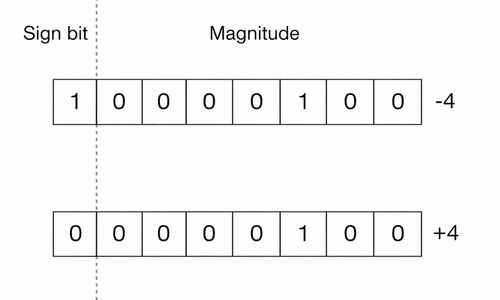
Signed Bit वह Most Significant Bit (MSB) होती है, जो किसी binary number के sign (चिन्ह) को represent करती है। यह bit यह बताती है, कि दिया गया number Positive (+) है या Negative (–)।
Table of Contents
ToggleKey Points
- Signed Bit हमेशा left-most bit (MSB – Most Significant Bit) होती है।
- यह bit number का sign (positive या negative) decide करती है।
- 0 → Positive number को represent करता है।
- 1 → Negative number को represent करता है।
- Signed Bit का use Signed Numbers representation के लिए किया जाता है।
- Computer Signed Bit की help से Addition और Subtraction operations perform करता है।
- 2’s Complement System में Signed Bit का role बहुत ही important होता है।
- Signed Bit की वजह से computer real-world values जैसे profit–loss, temperature, bank balance आदि को correctly handle कर पाता है।
Example :
Binary Number | Signed Bit | Decimal Meaning |
0101 | 0 | +5 |
1101 | 1 | –5 |
Representation of Signed Numbers
(Signed Numbers को Represent करने के तरीके)
Computer signed numbers को represent करने के लिए mainly 3 methods use करता है :
- Sign Magnitude Representation
- 1’s Complement Representation
- 2’s Complement Representation (Most important)
1. Sign-Magnitude Representation
Sign Magnitude Representation signed binary number को represent करने की एक method है, जिसमें सबसे left-most bit (MSB) को Sign Bit के रूप में use किया जाता है, और Remaining bits number की magnitude (actual value) को show करती हैं।
Example
+5 → 0 101
−5 → 1 101
Limitations :
- +0 और −0 दोनों possible होते हैं
- Arithmetic operations complex हो जाते हैं
2. 1’s Complement Representation
1’s Complement Representation signed binary numbers को represent करने की एक method है, जिसमें negative number को पाने के लिए उसके positive binary form की सभी bits को invert (0 → 1 और 1 → 0) कर दिया जाता है।
Example
+5 → 0101
−5 → 1010
Limitations
- +0 (0000) और −0 (1111) दोनों exist करते हैं
- Addition में end-around carry handle करनी पड़ती है
3. 2’s Complement Representation
2’s Complement Representation signed binary numbers को represent करने की सबसे popular और widely used method है, जिसमें negative number को पाने के लिए पहले 1’s complement लिया जाता है और फिर उसमें 1 add किया जाता है।
Example
+5 = 0101
1’s complement = 1010
2’s complement = 1010 + 1 = 1011
−5 → 1011
Advantages
- Single zero representation
- Addition और Subtraction आसान हो जाता है
- Hardware implementation simple होता है
Addition on Signed Bit (Signed Binary Addition)
Signed Binary Addition वह process है, जिसमें signed binary numbers (positive और negative numbers) को binary addition rules के अनुसार जोड़ा जाता है। इसमें number का sign (positive या negative) सबसे left-most bit (Signed Bit / MSB) से determine किया जाता है।
- Binary bits को normal addition की तरह add किया जाता है
- Carry out from MSB को ignore किया जाता है
- Result का sign MSB (Signed Bit) से decide होता है
- Overflow check करना जरूरी होता है
- Signed addition usually 2’s Complement method से perform होती है
Why Signed Binary Addition is Important?
Handles Positive & Negative Numbers
• Signed Binary Addition की मदद से computer positive और negative दोनों numbers को जोड़ या घटा सकता है।Real-World Applications
• Accounting, banking, scientific calculations और sensor data जैसी real-world values process करने के लिए उपयोगी है |Arithmetic Operations in CPU
• CPU signed bit और 2’s complement system का use करके addition और subtraction efficiently perform करता है।
• Signed binary addition की मदद से subtraction भी addition में convert करके आसानी से किया जा सकता है।Overflow Detection
• Signed Binary Addition से CPU आसानी से overflow condition detect कर सकता है।Supports Multi-Bit Numbers
• Large numbers, registers और memory में stored signed numbers के साथ addition करना possible बनाता है।Foundation for Complex Arithmetic
• Multiplication, division, floating-point arithmetic और complex number operations के लिए base operation है।
Possible Cases in Signed Binary Addition
Signed numbers के addition में mainly तीन cases होते हैं :
Case 1: Positive + Positive (जब दोनों numbers positive हों।)
Example : (+3)+(+2)
0011
+ 0010
——-
0101 → Result = +5
Case 2: Negative + Negative (जब दोनों numbers negative हों।)
Example : (−3) + (−2)
2’s complement representation
- –3 = 1101
- –2 = 1110
1101
+ 1110
———–
1 1011
- Carry ignore → 1011
- MSB = 1 (Negative)
- 2’s complement of 1011 = 0101 = 5
- Result = –5
Case 3: Positive + Negative (जब एक number positive और दूसरा negative हो।)
Example : (+5) + (−3)
0101
+ 1101
——–
0010 → Result = +2
Subtraction on Signed Bit
Signed Binary Subtraction वह process है, जिसमें signed binary numbers (positive और negative) का subtraction किया जाता है।
Formula : A − B = A + (2’s Complement of B)
Why 2’s Complement is Used? (2’s Complement क्यों Use होती है?)
- Converts subtraction into addition
- Computer सीधे subtraction नहीं करता।
- इसी कारण से same adder circuit से addition और subtraction दोनों perform किए जा सकते हैं।
- Hardware remains simple
- Separate subtraction hardware की आवश्यकता नहीं होती।
- ALU (Arithmetic Logic Unit) design आसान और efficient हो जाता है।
- Fast Computation
- Arithmetic operations fast और reliable होते हैं।
- End-around carry या extra logic की जरूरत नहीं होती।
- Only One Representation of Zero
- 2’s complement में 0 का केवल एक form (0000) होता है।
- Sign magnitude और 1’s complement में two zeros होते हैं, जो confusion create कर सकते हैं।
- Widely Used in Modern Computers
- Intel, AMD, ARM processors में standard method है।
- Embedded systems, ALU, और microprocessor arithmetic में extensively use होती है।
Possible Cases in Signed Binary Subtraction
Case 1: Positive – Positive
Example : (+7) − (+3)
- +7 = 0111
- +3 = 0011 → 2’s complement = 1101
0111
+ 1101
———
1 0100 → Carry ignore → 0100
Result = +4
Case 2: Positive – Negative
Rule : A − ( −B ) = A + B
Example : (+5) − (−3)
- +5 = 0101
- +3 = 0011
0101
+ 0011
———
1000
Case 3: Negative – Positive
Example : (−5) − (+3)
- –5 = 1011
- +3 → 2’s complement = 1101
1011
+ 1101
———
1 1000 → Carry ignore → 1000
Result = –8
Case 4: Negative – Negative
Example : (−7) − (−3)
- –7 = 1001
- –3 → 2’s complement of –3 = 0011
1001
+ 0011
———-
1100
Result = –4
Advantages of Signed Bit Arithmetic (लाभ)
- Handles positive and negative numbers
- Real-world values जैसे profit-loss, bank balance, temperature आसानी से process किए जा सकते हैं।
- Hardware Efficient
- Addition और Subtraction same ALU circuit से possible हैं।
- Separate subtraction hardware की जरूरत नहीं होती।
- Faster Computation
- Arithmetic operations quick और reliable होते हैं।
- End-around carry या extra logic की जरूरत minimal होती है।
- Single Zero Representation (2’s Complement)
- 0 का केवल एक form (0000) होता है।
- Confusion avoid होता है।
- Easy Overflow Detection
- Overflow आसानी से detect किया जा सकता है।
- Rules :
- Positive + Positive → Negative → Overflow
- Negative + Negative → Positive → Overflow
- Widely Used in Modern Computers
- Intel, AMD, ARM processors, Embedded systems, ALU में standard method है।
Disadvantages (हानि)
- Fixed Range
- Overflow के कारण numbers representable range से बाहर जा सकते हैं।
- Arithmetic Complexity (Sign Magnitude & 1’s Complement में)
- Subtraction और addition के rules थोड़े complex होते हैं।
- End-around carry या extra steps की आवश्यकता होती है।
- Confusing for Beginners
- Signed Bit और 2’s Complement का logic initial learning में confusing लगता है।
- Hardware Logic for Non-2’s Complement Systems
- Sign Magnitude और 1’s Complement में complex hardware design की जरूरत होती है।
Addition and Subtraction Algorithm and Flow Chart
1. Addition Algorithm for Binary Digits
Addition एक arithmetic operation है, जिसका use numbers को जोड़ने के लिए किया जाता है। Computer में addition process CPU के ALU (Arithmetic Logic Unit) द्वारा perform की जाती है।
Binary Addition Rules
| A | B | Sum | Carry |
|---|---|---|---|
| 0 | 0 | 0 | 0 |
| 0 | 1 | 1 | 0 |
| 1 | 0 | 1 | 0 |
| 1 | 1 | 0 | 1 |
Steps for Binary Addition Algorithm (Step-by-Step)
- Step 1: दो binary numbers select करें, मान लें A और B।
- Step 2: LSB (Least Significant Bit) से addition शुरू करें।
- Step 3: Current bits A[i] और B[i] को add करें।
- Step 4: यदि previous carry है तो उसे भी add करें।
- Step 5: Sum निकालें और carry generate करें अगर needed हो।
- Step 6: Next higher bit में move करें और repeat करें।
- Step 7: सभी bits add होने के बाद final carry को most significant bit (MSB) के आगे रखें।
- Step 8: Result को output करें।
Example of Binary Addition
A = 1011 B = 1101
- LSB: 1 + 1 = 0, carry = 1
- Next: 1 + 0 + carry(1) = 0, carry = 1
- Next: 0 + 1 + carry(1) = 0, carry = 1
- MSB: 1 + 1 + carry(1) = 1, carry = 1
Binary Sum : 11000
2. Subtraction Algorithm for Binary Digits
Binary Subtraction दो binary digits (0 और 1) के बीच difference निकालने की process है।
- Binary subtraction में borrow का concept होता है।
- अगर minuend digit < subtrahend digit → borrow लिया जाता है।
- Negative numbers के लिए 2’s complement method use होता है।
Binary Subtraction Rules
| Minuend (A) | Subtrahend (B) | Difference | Borrow |
|---|---|---|---|
| 0 | 0 | 0 | 0 |
| 0 | 1 | 1 | 1 |
| 1 | 0 | 1 | 0 |
| 1 | 1 | 0 | 0 |
Steps for Binary Subtraction Algorithm
- Step 1: दो binary numbers choose करें – Minuend (A) और Subtrahend (B)।
- Step 2: LSB (Least Significant Bit) से subtraction शुरू करें।
- Step 3: Current bit में subtraction करें: Difference = A[i] – B[i] – borrow
- Step 4: अगर A[i] < B[i] + borrow → borrow = 1, और A[i] में 2 add करें।
- Step 5: Next higher bit में move करें और repeat करें।
- Step 6: सभी bits process करने के बाद result output करें।
Example of Binary Subtraction
A = 10101
B = 1100
- LSB : 1 – 0 = 1 → borrow = 0
- Next : 0 – 0 = 0 → borrow = 0
- Next : 1 – 1 = 0 → borrow = 0
- Next : 0 – 1 → borrow needed → 10 – 1 = 1, borrow = 1
- MSB : 1 – 0 – borrow(1) = 0
Binary Difference : 01101
Conclusion (निष्कर्ष)
Signed Bit Arithmetic computer arithmetic का एक महत्वपूर्ण concept है। यह हमें positive और negative numbers को represent और process करने का तरीका समझाता है।
- Sign Magnitude, 1’s Complement, और 2’s Complement methods signed numbers को represent करने के लिए use होते हैं।
- Modern computers में 2’s Complement सबसे ज्यादा preferred है क्योंकि यह:
- Subtraction को addition में convert करता है
- Hardware को simple और efficient बनाता है
- Arithmetic operations को fast और reliable बनाता है
- इस method से overflow detection, single zero representation, और real-world value handling आसान हो जाता है।
अक्सर पूछे जाने वाले प्रश्न (FAQ)
Q1. Signed Bit क्या है?
- Signed Bit वह MSB (Most Significant Bit) है जो किसी binary number के sign (positive या negative) को indicate करता है।
Q2. Addition में carry क्यों आता है?
- जब current bit का sum ≥ 2 (binary) या ≥ 10 (decimal) होता है, तब carry generate होता है।
Q3. Subtraction में borrow क्यों लिया जाता है?
- जब minuend digit < subtrahend digit + previous borrow, तब borrow लिया जाता है।
Q4. Binary addition और subtraction real life में कहाँ use होते हैं?
- Computers, digital electronics, ATMs, Flipkart/Paytm, networking, ISRO calculations में।
Q5. Decimal और Binary subtraction में क्या difference है?
- Decimal subtraction 0–9 digits पर based है, Binary 0–1 digits पर। Binary में borrow और 2’s complement method use होता है।
Q6. 2’s complement subtraction क्यों important है?
- Negative numbers efficiently handle करने के लिए 2’s complement method जरूरी है।