

Architectural Views क्या हैं?
Architectural Views software system को अलग-अलग perspectives (दृष्टिकोण) से देखने का तरीका हैं। ये views system के structure, behavior और functionality को समझने में मदद करते हैं। इनके माध्यम से complex system को छोटे, manageable और समझने योग्य हिस्सों में divide किया जा सकता है।
Table of Contents
ToggleKey Points
- प्रत्येक view system के कुछ specific aspects पर focus करता है।
- Views अलग-अलग stakeholders (जैसे Developers, Testers, Project Managers) के लिए useful होते हैं।
- Complex system को visualize और analyze करना आसान बनाता है।
- System के structure, components, interactions और data flow को clearly समझने में मदद करता है।
- Documentation और communication को improve करता है।
- System को flexible बनाता है ताकि future changes और upgrades आसानी से implement किए जा सकें।
Importance of Architectural Views
(आर्किटेक्चरल व्यूज़ का महत्व)
- Complex Systems को समझना आसान बनाता है
- बड़े software systems में कई modules, components और processes होते हैं।
- Architectural Views system को छोटे और manageable parts में divide करके easily समझने योग्य बनाते हैं।
- Stakeholders के बीच communication improve करता है
- Developers, testers, project managers और clients के पास अलग-अलग perspective होते हैं।
- Views के जरिए सभी stakeholders system को एक common language में समझ सकते हैं।
- System documentation में मदद करता है
- Architectural Views system की proper documentation तैयार करने में मदद करते हैं।
- यह future maintenance और updates के लिए reference के रूप में काम आता है।
- Design flaws और errors जल्दी detect करना possible
- Views system के अलग-अलग aspects को analyze करने में मदद करते हैं।
- इससे bugs, performance issues और design flaws early stage में पता लग जाते हैं।
- Flexibility और scalability बढ़ाता है
- Architectural Views से system को future upgrades और changes के लिए flexible बनाया जा सकता है।
- Modular system design possible होता है।
- Reusability और modularity को promote करता है
- Components और modules को आसानी से reuse किया जा सकता है।
- Development efficiency बढ़ती है और duplicate work कम होता है।
Types of Architectural Views (आर्किटेक्चरल व्यूज़ के प्रकार)
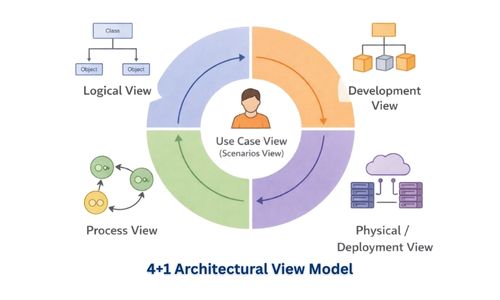
Software architecture को समझने के लिए अलग-अलग views बनाए जाते हैं। सबसे popular और widely used framework है, 4+1 Architectural View Model। इसके अलावा कुछ और views भी होते हैं, जो complex systems में use होते हैं।
- Logical View (लॉजिकल व्यू)
- Logical View system के functional requirements और logical structure को दर्शाता है। यह यह बताता है, कि system क्या करता है और system के modules और classes कैसे organized हैं।
- Development View (डिवेलपमेंट व्यू)
- Development view system के software modules और code organization को दिखाता है। यह mainly developers और programmers के लिए useful है।
- Process View (प्रोसेस व्यू)
- Process view system के dynamic aspects और runtime behavior को दर्शाता है। यह system की execution और interaction between processes दिखाता है।
- Physical / Deployment View (फिजिकल / डिप्लॉयमेंट व्यू)
- Physical view system के hardware और network deployment को represent करता है। यह बताता है, कि system के components कहाँ और कैसे deploy किए गए हैं।
- Scenarios / Use Case View (सिनेरियो / यूज़ केस व्यू)
- Use case view system की functional requirements और user interactions को दिखाता है।
Other Popular Views
View Type | Focus | Real-life Example |
Module View | System के modules और hierarchy को दिखाना | ISRO के telemetry और payload modules |
Layered View | System को layers में divide करना (Presentation, Business Logic, Data Access) | Banking App: UI layer, Business layer, Database layer |
Component & Connector View | Modules के बीच interactions और communication दिखाना | Flipkart के microservices के interactions |
Context View | System का external environment और interfaces दिखाना | IRCTC app interacting with Bank APIs और SMS Gateway |
Advantages of Architectural Views (लाभ)
- Complex Systems Made Easy : System को छोटे और understandable parts में divide करता है।
- Communication Improve : Developers, testers, managers और clients system को common language में समझ सकते हैं।
- Assists in Documentation : Proper documentation तैयार करने में मदद करता है।
- Early Detection of Design Flaws : System के अलग-अलग aspects analyze करके bugs और errors जल्दी पकड़ में आते हैं।
- Flexibility and Scalability : Modular design और views system को future upgrades के लिए flexible बनाते हैं।
- Reusability and Modularity : Components और modules को आसानी से reuse किया जा सकता है।
Limitations of Using Architectural Views (सीमाएँ)
- Time-consuming process : Views तैयार करना और maintain करना बहुत समय ले सकता है।
- Potential for over-documentation : कभी-कभी बहुत ज्यादा diagrams और views बन जाने से confusion हो सकता है।
- Difficult for beginners : Initial learning curve ज्यादा होता है क्योंकि multiple views को समझना होता है।
- Views may overlap : कभी-कभी different views के information overlap कर सकते हैं, जिससे clarity कम हो सकती है।
- Maintenance required : System बदलते समय views को update करना जरूरी होता है, outdated information हो सकती है।
Conclusion (निष्कर्ष)
Architectural Views software architecture को समझने और design करने का एक powerful तरीका हैं। ये complex software systems को अलग-अलग perspectives में divide करके developers, testers, managers और clients सभी के लिए system को clear और understandable बनाते हैं।
4+1 Architectural View Model जैसे frameworks system के structure, behavior, deployment और user interaction को effectively represent करने में मदद करते हैं।
Architectural Views न केवल documentation और communication को improve करते हैं, बल्कि early stage पर design flaws, performance issues और scalability problems को identify करने में भी सहायक होते हैं। हालांकि इन्हें maintain करना time-consuming हो सकता है, लेकिन long-term में ये system को flexible, reusable और future-ready बनाते हैं।
इसलिए, large और complex software projects के लिए Architectural Views का उपयोग अत्यंत आवश्यक और beneficial होता है।
Important Questions
Q1. Architectural Views क्या हैं? इनके उपयोग का मुख्य उद्देश्य क्या है?
- Architectural Views software system को अलग-अलग perspectives से दिखाते हैं, ताकि structure, behavior और functionality को आसानी से समझा जा सके।
Q2. 4+1 Architectural View Model क्या है?
- 4+1 Model में Logical View, Development View, Process View, Physical/Deployment View और Use Case (Scenario) View शामिल होते हैं।
Q3. Logical View और Development View में क्या अंतर है?
- Logical View system के functional behavior और classes पर focus करता है, जबकि Development View code organization और software modules पर।
Q4. Architectural Views system की scalability और flexibility को कैसे improve करते हैं?
- Modular design और clear separation of concerns के कारण future upgrades और changes आसानी से implement किए जा सकते हैं।
Q5. Architectural Views की limitations क्या हैं?
- Time-consuming process, over-documentation, beginners के लिए complexity, views overlap और continuous maintenance इसकी मुख्य सीमाएँ हैं।