
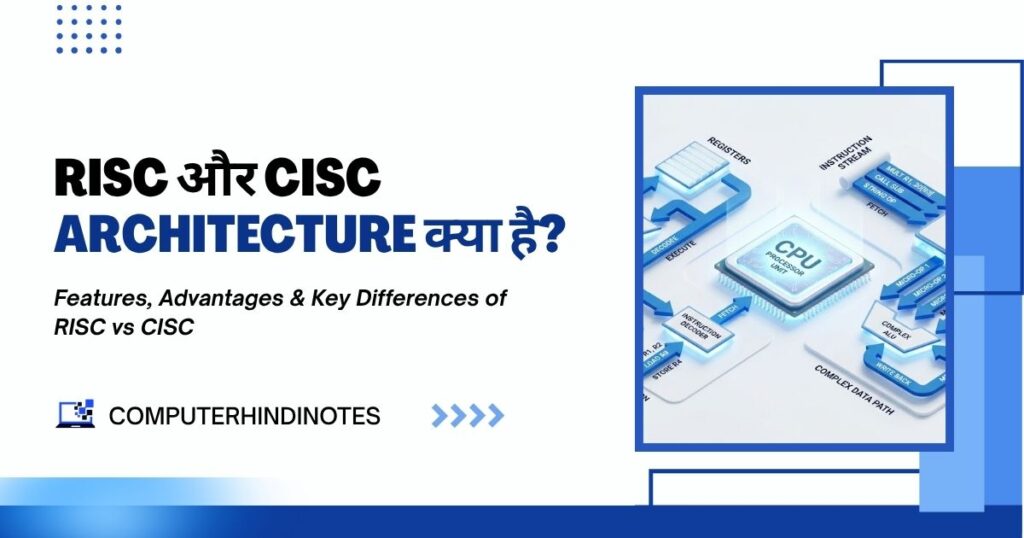
RISC Architecture? (RISC क्या है?)
RISC का पूरा नाम Reduced Instruction Set Computer है। यह एक प्रकार की CPU architecture होती है, जिसमें processor को इस तरह design किया जाता है, कि वह कम और सरल instructions का उपयोग करके data processing करे।
Table of Contents
Toggleइस architecture का मुख्य उद्देश्य है, कि अगर instructions simple हों तो processor उन्हें जल्दी execute कर सकता है। RISC processors में instructions सामान्यतः एक clock cycle में execute होने के लिए design की जाती हैं, जिससे system की overall performance बेहतर हो जाती है।
RISC architecture का उपयोग उन systems में ज्यादा किया जाता है, जहाँ speed और efficiency महत्वपूर्ण होती है, जैसे mobile processors, embedded systems और कुछ modern computing devices।
मुख्य बिंदु
- RISC में instruction set छोटा होता है।
- Instructions simple होती हैं और जल्दी execute हो जाती हैं।
- कई instructions एक clock cycle में complete हो सकती हैं।
- Instruction format सामान्यतः fixed होता है।
- Processor में registers ज्यादा होते हैं।
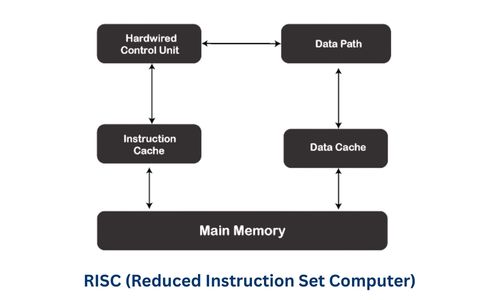
- Memory access सीमित होता है और केवल load तथा store instructions के द्वारा होता है।
- Pipelining technique आसानी से implement होती है।
Features of RISC Architecture
(RISC Architecture की मुख्य विशेषताएँ)
- Simple Instructions
- RISC architecture में instructions ज्यादा complex नहीं होतीं। यही कारण है, कि processor उन्हें जल्दी समझकर execute कर सकता है।
- Fixed Instruction Length
- अधिकतर RISC processors में instruction length समान होती है। इससे instruction decoding process आसान हो जाता है।
- Large Number of Registers
- Registers की संख्या ज्यादा होने से processor data को जल्दी access कर सकता है, और memory पर निर्भरता कम हो जाती है।
- Load / Store Mechanism
- RISC architecture में processor सीधे memory पर operations perform नहीं करता। पहले data को register में load किया जाता है, और बाद में store instruction के द्वारा memory में वापस भेजा जाता है।
- Better Pipelining
- Instructions simple होने के कारण CPU एक ही समय में कई instructions के अलग-अलग stages को process कर सकता है।
- One Instruction per Clock Cycle
- अधिकांश RISC processors को इस तरह design किया जाता है, कि एक instruction एक ही clock cycle में execute हो सके।
- Reduced Memory Access
- अधिकतर operations registers में होने के कारण memory access कम होता है, जिससे processing speed बढ़ती है।
RISC Architecture Working Concept
RISC (Reduced Instruction Set Computer) architecture का working concept simple और fast execution पर आधारित होता है। इसमें processor कम लेकिन simple instructions का उपयोग करता है, जिससे हर instruction जल्दी execute हो जाती है। RISC processors में अधिकांश operations registers के अंदर होते हैं, और memory access केवल Load और Store instructions के माध्यम से किया जाता है।
Working Process (कार्य करने की प्रक्रिया)
RISC architecture में instruction execution सामान्यतः निम्न steps में होता है :
- Instruction Fetch (IF) :
सबसे पहले CPU memory से instruction को fetch करता है। - Instruction Decode (ID) :
इसके बाद control unit instruction को decode करता है और समझता है कि कौन-सा operation करना है। - Register Access :
आवश्यक data को CPU के registers से access किया जाता है। - Execution (EX) :
ALU (Arithmetic Logic Unit) instruction के अनुसार arithmetic या logical operation perform करता है। - Write Back / Store :
Operation का result register में store कर दिया जाता है या memory में भेज दिया जाता है।
RISC Processor Examples
आज कई modern processors RISC concept का उपयोग करते हैं।
popular examples :
- ARM Processor
- MIPS Processor
- SPARC Processor
- PowerPC
Advantages of RISC Architecture (लाभ)
- High Speed Processing
Simple instructions होने के कारण execution बहुत तेज होता है। - Efficient Pipelining
RISC processors में pipelining आसानी से implement की जा सकती है, जिससे CPU performance बढ़ती है। - Simple CPU Design
Instruction set कम होने से processor का hardware design simple और efficient होता है। - Low Power Consumption
RISC processors कम power consume करते हैं, इसलिए smartphones और embedded systems में इनका ज्यादा उपयोग होता है। - Better Performance for Repetitive Tasks
Simple instructions के कारण repetitive calculations जल्दी पूरी होती हैं।
Disadvantages of RISC Architecture (कमियाँ)
- Large Program Size
Simple instructions होने के कारण program को पूरा करने के लिए instructions की संख्या ज्यादा हो सकती है। - Higher Memory Usage
Instructions अधिक होने से memory usage बढ़ सकता है। - Compiler Dependency
RISC architecture में efficient execution के लिए powerful compiler की आवश्यकता होती है। - Complex Software Development
कई complex operations को पूरा करने के लिए multiple instructions लिखनी पड़ती हैं।
CISC Architecture (CISC क्या है?)
CISC का पूरा नाम Complex Instruction Set Computer है। यह भी एक प्रकार की CPU architecture है, लेकिन इसमें processor को इस तरह design किया जाता है, कि वह complex instructions को execute कर सके।
CISC architecture का मुख्य उद्देश्य यह होता है, कि एक instruction के माध्यम से कई operations पूरे किए जा सकें। इससे program में instructions की संख्या कम हो जाती है, और coding अपेक्षाकृत आसान हो जाती है।
मुख्य बिंदु
- CISC processors में instructions की संख्या अधिक होती है।
- एक instruction कई operations perform कर सकती है।
- CISC architecture में instructions की length fixed नहीं होती, यह अलग-अलग हो सकती है।
- CISC processors सीधे memory से memory operations कर सकते हैं।
- Complex instructions होने के कारण execution में कई clock cycles लग सकते हैं।
- CISC processors में registers की संख्या comparatively कम होती है।
- Complex instructions होने के कारण program size छोटा हो सकता है।
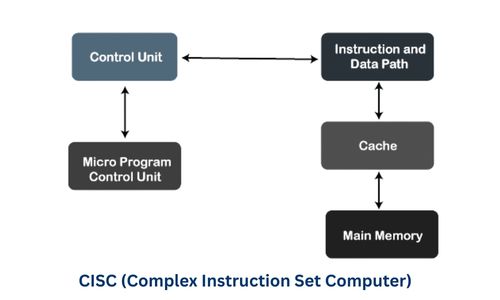
Features of CISC Architecture
(CISC Architecture की मुख्य विशेषताएँ)
- Large Instruction Set
CISC architecture में instructions की संख्या बहुत अधिक होती है। - Complex Instructions
एक ही instruction कई operations (जैसे calculation, memory access) को एक साथ perform कर सकती है। - Variable Instruction Length
CISC processors में instructions की length fixed नहीं होती, बल्कि अलग-अलग हो सकती है। - Memory-to-Memory Operations
CISC architecture में processor सीधे memory से memory operations perform कर सकता है। - Less Number of Registers
CISC processors में registers की संख्या comparatively कम होती है। - Multiple Clock Cycles
Complex instructions को execute करने में अक्सर कई clock cycles लगते हैं। - Complex CPU Design
बड़ी और complex instruction set के कारण processor का hardware design अधिक complex होता है।
CISC Architecture Working Concept
CISC (Complex Instruction Set Computer) architecture में processor को इस तरह design किया जाता है कि वह complex instructions को execute करके एक ही instruction में कई operations perform कर सके। इसका मुख्य उद्देश्य है, कि program में कम instructions लिखकर ज्यादा काम किया जा सके।
Working Process (कार्य करने की प्रक्रिया)
CISC architecture में instruction execution सामान्यतः निम्न steps में होता है:
- Instruction Fetch :
सबसे पहले CPU memory से instruction को fetch करता है। - Instruction Decode :
Control Unit instruction को decode करता है और समझता है कि कौन-सा operation करना है। - Memory Access :
CISC processors में instruction सीधे memory से data access कर सकती है। - Execution :
ALU instruction के अनुसार arithmetic या logical operation perform करता है। - Store Result :
Operation का result memory या register में store कर दिया जाता है।
CISC Processor Examples : famous CISC processors
- Intel x86
- AMD processors
- VAX
Advantages of CISC Architecture (लाभ)
- Shorter Programs :
Complex instructions होने के कारण program को पूरा करने के लिए कम instructions की आवश्यकता होती है। - Easy Programming :
Complex instructions होने से programmer को कम code लिखना पड़ता है, जिससे programming आसान हो जाती है। - Less Memory Requirement :
Instructions की संख्या कम होने के कारण program को कम memory की आवश्यकता होती है। - Powerful Instructions :
एक ही instruction कई operations perform कर सकती है, जिससे complex tasks आसानी से पूरे हो जाते हैं।
Disadvantages of CISC Architecture (कमियाँ)
- Complex CPU Design :
बड़ी और complex instruction set के कारण processor का hardware design जटिल हो जाता है। - Slower Execution :
Complex instructions को execute करने में कई clock cycles लग सकते हैं। - Difficult Pipelining :
Instructions complex होने के कारण pipelining technique को efficiently implement करना कठिन होता है। - Higher Power Consumption :
Complex hardware design के कारण power consumption अधिक हो सकता है।
Difference Between RISC and CISC
(RISC और CISC में अंतर)
Basis | RISC (Reduced Instruction Set Computer) | CISC (Complex Instruction Set Computer) |
Instruction Set | Instructions की संख्या कम होती है | Instructions की संख्या अधिक होती है |
Instruction Type | Instructions simple होती हैं | Instructions complex होती हैं |
Execution Time | अधिकांश instructions एक clock cycle में execute होती हैं | Instructions को execute करने में कई clock cycles लग सकते हैं |
Instruction Length | Instruction length generally fixed होती है | Instruction length variable होती है |
Registers | Registers की संख्या अधिक होती है | Registers की संख्या comparatively कम होती है |
Memory Access | Memory access कम होता है | Memory access अधिक होता है |
Program Size | Program size बड़ा हो सकता है | Program size छोटा होता है |
CPU Design | Processor design simple होता है | Processor design complex होता है |
Pipelining | Pipelining आसानी से implement होती है | Pipelining implement करना कठिन होता है |
Examples | ARM, MIPS, SPARC | Intel x86, AMD |
Conclusion (निष्कर्ष)
- RISC और CISC दोनों ही महत्वपूर्ण Computer Architecture designs हैं, जिनका उपयोग CPU को efficient बनाने के लिए किया जाता है।
- RISC (Reduced Instruction Set Computer) में instructions कम और simple होती हैं, जिससे execution speed तेज होती है।
- CISC (Complex Instruction Set Computer) में instructions complex और ज्यादा होती हैं, जिससे एक instruction कई tasks perform कर सकती है।
- RISC architecture में pipelining और performance बेहतर होती है।
- CISC architecture में program size छोटा और programming आसान होती है।
- Modern processors में अक्सर RISC और CISC दोनों concepts का combination देखने को मिलता है।
FAQ (अक्सर पूछे जाने वाले प्रश्न)
1. RISC का पूरा नाम क्या है?
- RISC का पूरा नाम Reduced Instruction Set Computer है।
2. CISC का पूरा नाम क्या है?
- CISC का पूरा नाम Complex Instruction Set Computer है।
3. RISC architecture का मुख्य उद्देश्य क्या है?
- RISC architecture का मुख्य उद्देश्य simple instructions के माध्यम से fast processing करना है।
4. CISC architecture का मुख्य उद्देश्य क्या है?
- CISC architecture का उद्देश्य कम instructions में ज्यादा काम करना है।
5. Smartphones में कौन सा architecture ज्यादा उपयोग होता है?
- Smartphones में अधिकतर RISC architecture (ARM processors) का उपयोग होता है।
6. Desktop computers में कौन सा architecture उपयोग होता है?
- Desktop और laptops में अधिकतर CISC architecture (Intel और AMD processors) का उपयोग होता है।