

What is Software Modeling?
(Software Modeling क्या है?)
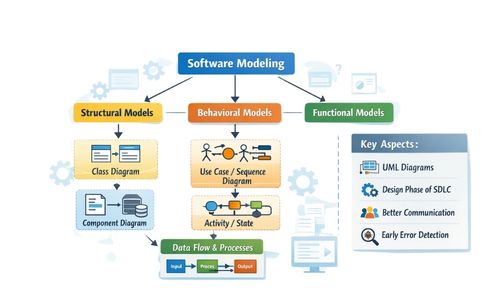
Software Modeling वह process है, जिसमें किसी software system को diagram, symbols और abstract models के रूप में represent किया जाता है, ताकि उसके structure, behavior और functionality को आसानी से समझा और design किया जा सके।
Table of Contents
ToggleKey Points
- Software Modeling system का visual representation देता है।
- यह UML diagrams (Use Case, Class, Sequence, Activity आदि) की मदद से किया जाता है।
- Complex system को simple और understandable बनाता है।
- Developers, Designers और Clients के बीच better communication में help करता है।
- Errors को coding से पहले early stage पर detect करने में मदद मिलती है।
- यह Design Phase of SDLC का important part है।
- Large systems जैसे Banking, Railway, ERP, E-commerce में बहुत useful होता है।
Need of Software Modeling
(Software Modeling की जरूरत क्यों?)
Software Modeling की जरूरत इसलिए पड़ती है, क्योंकि यह software system को develop करने से पहले clear planning और understanding provide करता है।
Key Points
- Requirement Clarity
- User की requirements को clearly समझने और represent करने में मदद करता है।
- It reduces complexity
- Large और complex systems को छोटे-छोटे understandable parts में divide करता है।
- Better Communication
- Developers, Designers और Clients के बीच common visual language (UML) provide करता है।
- Error Detection (Early Stage)
- Coding से पहले design-level mistakes पकड़ में आ जाती हैं।
- Time और Cost Saving
- Later changes और rework कम हो जाता है, जिससे project cost कम होती है।
- Documentation Support
- Future maintenance और training के लिए proper documentation मिलती है।
- Design Validation
- यह check करने में मदद करता है, कि proposed system logically और technically feasible है या नहीं।
- Support for Testing & Maintenance
- Test cases design करने और system को upgrade करने में आसानी होती है।
Types of Software Models (Software Models के प्रकार)
Software Modeling में अलग-अलग purpose के लिए अलग-अलग types के models बनाए जाते हैं। ये models system को समझने, design करने और explain करने में help करते हैं।
1. Structural Models
Structural Models वे software models होते हैं, जो system के static structure को represent करते हैं। ये यह बताते हैं, कि system किन-किन components से बना है, और उनके बीच क्या relationships हैं।
Key Characteristics :
- System का static view देते हैं।
- Classes, objects, components और their relationships को show करते हैं।
- Database structure और module organization समझने में helpful हैं।
2. Behavioral Models
Behavioral Models वे software models होते हैं, जो system के dynamic behavior को represent करते हैं। ये यह बताते हैं, कि system run time पर कैसे काम करता है, events पर क्या response देता है, और components एक-दूसरे से कैसे interact करते हैं।
Key Characteristics :
- System का dynamic view provide करते हैं।
- User और system के बीच interaction को clearly show करते हैं।
- Events, messages, control flow और state changes को represent करते हैं।
3. Functional Models
Functional Models वे software models होते हैं जो यह बताते हैं, कि system क्या–क्या functions perform करेगा और data एक process से दूसरे process तक कैसे flow करेगा।
Key Characteristics :
- System के functions और operations को show करते हैं।
- Input, Process और Output के बीच relation समझाते हैं।
- User requirements को functional form में represent करते हैं।
UML in Software Modeling
UML (Unified Modeling Language) एक standard visual modeling language है, जिसका use software system की structure, behavior और interaction को diagrams के रूप में represent करने के लिए किया जाता है।
UML Views (UML के विभिन्न Views)
- Logical View (Logical / Design View)
- Logical View software system की internal structure और classes के relationships को show करता है।
- Process View (Dynamic / Behavioral View)
- Process View system के runtime behavior, processes, threads और concurrency को represent करता है।
- Development View (Implementation View)
- Development View software के modules, packages और components organization को show करता है।
- Physical View (Deployment View)
- Physical View software के hardware deployment और network architecture को represent करता है।
- Use Case View (User View)
- Use Case View system की functional requirements और user interactions को show करता है।
UML Diagram Types
UML diagrams को mainly दो broad categories में divide किया जाता है :
1. Structural Diagrams
Structural Diagrams UML के वे diagrams होते हैं, जो किसी software system की static structure को represent करते हैं। ये diagrams यह दिखाते हैं कि system के अंदर कौन-कौन से components, classes, objects, packages और hardware nodes हैं और उनके बीच क्या relationships हैं।
Structural Diagrams के Types
- Class Diagram
- Class Diagram system की classes, उनके attributes, methods और relationships (inheritance, association, aggregation, composition) को show करता है।
- Object Diagram
- Object Diagram किसी particular time पर classes के real objects और उनके links का snapshot दिखाता है।
- Component Diagram
- Component Diagram software के physical components (modules, libraries, services) और उनके dependencies को represent करता है।
- Deployment Diagram
- Deployment Diagram software को hardware nodes (server, client, device) पर कैसे deploy किया गया है, यह दिखाता है।
2. Behavioral Diagrams
Behavioral Diagrams UML के वे diagrams होते हैं, जो किसी software system के dynamic behavior को represent करते हैं। ये diagrams यह दिखाते हैं, कि system run-time पर कैसे behave करता है, objects एक-दूसरे से कैसे interact करते हैं, और events के response में system का flow क्या होता है।
- Use Case Diagram
- Use Case Diagram user (actor) और system के बीच functional interaction को show करता है।
- Sequence Diagram
- Sequence Diagram objects के बीच message passing को time order में दिखाता है।
- Activity Diagram
- Activity Diagram किसी process या workflow का step-by-step flow दिखाता है, जैसे flowchart।
- State Chart Diagram
- State Diagram किसी object के different states और events के कारण होने वाले transitions को represent करता है।
Advantages of Software Modeling
- Better Understanding
- System की structure और behavior आसानी से समझ में आता है।
- Developer, tester और client सभी same page पर होते हैं।
- Early Error Detection
- Design phase में ही flaws और inconsistencies identify हो जाती हैं।
- Coding में आने वाली errors कम होती हैं।
- Improved Communication
- Diagrams और models graphical representation provide करते हैं।
- Team members और stakeholders के बीच confusion कम होता है।
- Cost and Time Saving
- Early modeling से rework कम होता है।
- Project timeline और budget में efficiency आती है।
- Documentation
- Future maintenance और system upgrades के लिए proper documentation ready रहती है।
- Quality Improvement
- Well-modeled software अधिक reliable, maintainable और reusable होता है।
Challenges of Software Modeling
- Time-Consuming
- Modeling phase में काफी समय लगता है।
- Small projects में extra time और effort waste हो सकता है।
- Requires Skilled Designers
- Accurate और effective modeling के लिए experienced designers चाहिए।
- Beginners गलत या incomplete models बना सकते हैं।
- Over-Modeling / Complexity
- बहुत detailed models system को unnecessarily complex बना सकते हैं।
- Over-documentation से confusion और maintenance problem हो सकती है।
- May Not Capture All Real-World Scenarios
- कुछ dynamic या unexpected behavior diagrams में represent नहीं हो पाता।
- Rare cases में actual system behavior अलग हो सकता है।
- High Cost in Initial Phase
- Tools, training और modeling efforts की वजह से cost increase हो सकती है।
- Frequent Changes Require Updates
- Requirements change होने पर diagrams और models को बार-बार update करना पड़ता है।
- Agile environment में lightweight modeling की जरूरत होती है।
Conclusion (निष्कर्ष)
Software Modeling software development का एक बहुत ही महत्वपूर्ण हिस्सा है, जो system को develop करने से पहले उसकी clear planning और visualization प्रदान करता है। UML diagrams और different models की मदद से system की structure, behavior और functionality को आसानी से समझा जा सकता है। यह developers, designers और clients के बीच effective communication बनाता है और design phase में ही errors को identify करने में मदद करता है।
हालाँकि modeling में समय और skilled resources की जरूरत होती है, फिर भी large और complex systems के लिए यह process software की quality, reliability और maintainability को काफी improve करता है। सही और balanced modeling approach अपनाकर time, cost और effort को काफी हद तक reduce किया जा सकता है।
Important Questions
Q1. Software Modeling क्या है?
- Software Modeling वह process है, जिसमें किसी software system को diagrams, symbols और abstract models की मदद से represent किया जाता है। इसका उद्देश्य system की structure, behavior और functionality को आसानी से समझना और design करना होता है। यह mainly Design Phase of SDLC में उपयोग किया जाता है और UML diagrams की सहायता से किया जाता है।
Q2. Software Modeling की जरूरत क्यों होती है?
- Software Modeling की जरूरत इसलिए होती है, क्योंकि यह software develop करने से पहले system की clear planning और understanding provide करता है। इसके मुख्य कारण हैं :
User requirements को clearly समझने में मदद
Large और complex system को simple parts में divide करना
Developers, designers और clients के बीच better communication
Coding से पहले early stage पर errors detect करना
Time, cost और rework को reduce करना
Future maintenance के लिए proper documentation provide करना
Q3. Structural Models और Behavioral Models में अंतर बताइए।
| Structural Models | Behavioral Models |
|---|---|
| System का static structure दिखाते हैं | System का dynamic behavior दिखाते हैं |
| Classes, objects और components को represent करते हैं | Runtime interaction और message flow दिखाते हैं |
| “System किससे बना है” यह बताते हैं | “System कैसे काम करता है” यह बताते हैं |
| Example: Class Diagram, Component Diagram | Example: Use Case, Sequence Diagram |
Q4. UML क्या है और Software Modeling में इसका क्या role है?
- UML (Unified Modeling Language) एक standard visual modeling language है, जिसका use software system की structure, behavior और interaction को diagrams के रूप में represent करने के लिए किया जाता है।
UML की मदद से developers और stakeholders एक common visual language में system को समझ सकते हैं। UML के different views जैसे Logical View, Process View, Development View, Physical View और Use Case View software modeling को complete और clear बनाते हैं।
Q5. Software Modeling के advantages और challenges लिखिए।
- Advantages :
System की better understanding
Early error detection
Improved communication
Time और cost saving
Proper documentation
Software quality और maintainability में improvement
- Challenges :
Modeling process time-consuming होता है
Skilled designers की जरूरत होती है
Over-modeling से complexity बढ़ सकती है
Frequent requirement changes में models update करने पड़ते हैं
Initial phase में cost ज्यादा हो सकती है