
Greedy Strategy (Greedy Strategy क्या है?)
Greedy Strategy एक algorithm design technique है, जिसमें problem को solve करते समय हर step पर सबसे अच्छा (locally optimal) decision लिया जाए। यह algorithm यह मानकर चलता है, कि अगर हर छोटे step पर सही choice की जाएगी, तो अंत में पूरी problem का best (globally optimal) solution अपने आप मिल जाएगा।
Table of Contents
Toggleइस approach में future possibilities के बारे में deep analysis नहीं किया जाता, बल्कि condition के अनुसार सबसे profitable या suitable option चुना जाता है। Greedy Algorithm का main उद्देश्य solution को simple, fast और efficient बनाना होता है, जिससे complex calculations और unnecessary processing से बचा जा सके।
यह technique Especially पर उन problems के लिए useful होती है, जहाँ local optimum decisions global optimum तक पहुँचने में मदद करते हैं, जैसे optimization और scheduling related problems।
Key point :
- Greedy algorithm का main objective fast decision making और simple implementation होता है।
- Greedy approach future consequences को analyze नहीं करता, सिर्फ current benefit पर focus करता है।
- यह technique optimization problems (minimum cost, maximum profit) के लिए ज्यादा useful होती है।
- Time complexity generally low होती है, इसलिए real-time systems में use की जाती है।
- Greedy Strategy backtracking नहीं करती, यानी एक बार decision लेने के बाद change नहीं होता।
- हर problem के लिए Greedy algorithm suitable नहीं होता, क्योंकि global optimal solution guarantee नहीं करता।
- Important Greedy algorithms: Dijkstra, Kruskal, Prim, Huffman Coding।
Why Greedy Strategy is Important?
(Greedy Strategy की Importance)
- Fast Decision Making : Greedy algorithm हर step पर तुरंत decision लेता है, इसलिए execution time कम होता है।
- Simple Logic & Easy Implementation : Coding beginners के लिए Greedy Strategy समझना आसान होता है क्योंकि इसमें complex recursion या heavy memory use नहीं होता।
- Less Time Complexity : Dynamic Programming की तुलना में Greedy algorithms generally कम time लेते हैं। यही कारण है कि real-time systems में इन्हें prefer किया जाता है।
- Memory Efficient : Greedy Strategy में extra tables या large storage की जरूरत नहीं होती, इसलिए memory usage कम रहता है।
- Useful in Real-Life Problem Solving : Daily life decisions Greedy thinking पर based होते हैं—
- Instant discount (Flipkart, Amazon)
- First available seat booking (IRCTC)
- Best cashback option (Paytm)
- Foundation for Advanced Algorithms : कई popular algorithms जैसे Dijkstra’s Algorithm, Kruskal’s Algorithm, Prim’s Algorithm, Huffman Coding Greedy Strategy पर based हैं।
Characteristics of Greedy Strategy (मुख्य विशेषताएँ)
1. Local Optimization
- हर step पर algorithm सबसे बेहतर तुरंत (local) choice चुनता है।
- यह मानता है, कि हर छोटे decision में सही choice लेने से अंतिम solution भी optimal होगा।
2. Simple and Easy to Implement
- Greedy algorithms implement करना आसान होता है, क्योंकि इसमें complex recursion या memory tables की जरूरत नहीं होती।
3. Fast Execution
- Backtracking या exhaustive search की जरूरत नहीं होती, इसलिए time complexity कम रहती है।
4. Memory Efficient
- Extra memory या large storage की आवश्यकता नहीं होती।
- Problem को step-by-step solve किया जाता है, इसलिए memory usage कम रहता है।
5. No Backtracking
- एक बार decision लेने के बाद backtracking नहीं होती।
- यह property इसे fast बनाती है, लेकिन कभी-कभी optimal solution guarantee नहीं करती।
6. Works Well on Problems with Optimal Substructure
- Greedy Strategy तभी perfect काम करती है, जब problem के sub-problems का optimal solution, final solution में contribute करे।
7. Not Always Optimal
- हर problem में Greedy solution सही नहीं होता।
- Problem के nature पर depend करता है कि local optimum global optimum बन पाए या नहीं।
8. Used in Real-Life Applications
- Daily life decisions में Greedy thinking common है।
- Examples :
- Flipkart/Amazon offers choose करना
- IRCTC Tatkal ticket booking
- Shortest path navigation (Google Maps)
How Greedy Strategy Works?
(Greedy Strategy कैसे काम करती है?)
Step-wise Working :
- Problem को Analyze करना – पहले problem को समझा जाता है और सभी possible options identify किए जाते हैं।
- Best Local Choice Select करना – हर step पर सबसे profitable या suitable option चुना जाता है।
- Decision Commit करना – चुनी हुई choice को final माना जाता है और backtracking नहीं होती।
- Next Step पर Move करना – अगले step पर वही process repeat होता है।
- Solution Complete करना – जब सारे steps complete हो जाते हैं, तो final solution बन जाता है।
Generic Greedy Algorithm – Pseudocode
GreedyAlgorithm(a[], n)
1. Sort the array a[] according to selection criteria (optional)
2. Initialize solution S = {}
3. For i = 0 to n-1
If a[i] can be added to S without violating constraints
Add a[i] to S
4. Return S
a[]→ input array या data setn→ size of array या number of elements
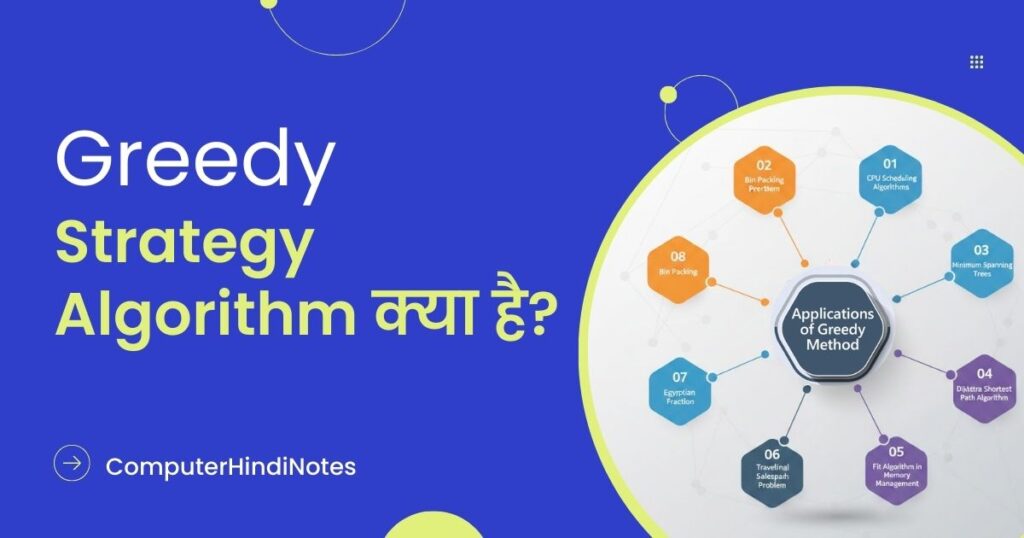
Applications of Greedy Strategy
1. Graph Algorithms
- Prim’s Algorithm : Minimum Spanning Tree find करने के लिए।
- Kruskal’s Algorithm : Edge selection में minimum weight edge choose करना।
- Dijkstra’s Algorithm : Shortest path find करने में।
2. Scheduling Problems
- Task को earliest deadline first strategy से schedule करना।
- Example : Railway platform allocation – सबसे जल्दी available platform select करना।
3. Resource Allocation
- Limited resources को maximum profit के लिए distribute करना।
- Example : Cloud computing servers में high priority tasks पहले allocate करना।
4. Huffman Coding
- Data compression के लिए use होता है।
- सबसे कम frequency वाले characters को greedy approach से tree में place किया जाता है।
5. Daily Life Applications
- IRCTC seat booking (fastest available seat choose करना)
- Paytm/PhonePe cashback selection (best offer first)
- Flipkart/Amazon delivery slot selection (fastest delivery choose करना)
Advantages of Greedy Strategy (लाभ)
1. Simple and Easy to Understand
- Greedy algorithms design करना आसान होता है।
- हर step में सिर्फ best local choice select करना होता है।
2. Fast Execution
- Complex recursive या backtracking calculations की जरूरत नहीं।
- हर step पर local optimum choose करके time-efficient solution मिलता है।
3. Memory Efficient
- Step-wise decision लेने के लिए बहुत ज्यादा memory की जरूरत नहीं होती।
- Backtracking या DP table create करने की जरूरत नहीं होती।
4. Effective in Practical Applications
- Real-life problems में आसानी से apply हो सकती है।
- Examples :
- IRCTC seat booking में fastest available seat select करना
- Paytm cashback selection में highest instant offer choose करना
5. Guaranteed Optimal for Certain Problems
- कुछ problems में greedy approach हमेशा optimal solution देती है।
- Examples :
- Fractional Knapsack Problem
- Activity Selection Problem
- Huffman Coding Algorithm
6. Step-by-Step Problem Solving Approach
- Problem को छोटे, manageable steps में divide करता है।
- हर step पर decision लेने से complex problems आसानी से solve हो जाती हैं।
Disadvantages of Greedy Strategy (हानियाँ)
1. Not Always Optimal
- Greedy approach हर step पर local optimum choose करती है।
- यह जरूरी नहीं कि global optimum भी मिले।
2. Problem-Specific
- हर problem में apply नहीं होती।
- केवल optimization problems और independent sub-problems में effective है।
- Complex problems जैसे 0-1 Knapsack Problem में greedy fail हो सकती है।
3. No Backtracking
- एक बार decision select होने के बाद उसे बदलना मुश्किल होता है।
- Mistake होने पर पूरा solution incorrect हो सकता है।
4. Correctness Proof Required
- Algorithm design करते समय यह prove करना पड़ता है, कि greedy choice global optimum की तरफ lead करेगा।
- कभी-कभी यह step complicated और time-consuming होता है।
5. Limited Scope in Complex Problems
- Advanced problems में, जैसे multi-stage optimization, greedy approach हमेशा fail होती है।
- ऐसे cases में Dynamic Programming या Divide & Conquer बेहतर विकल्प हैं।