
Re-Engineering (Re Engineering क्या है?)
Re‑Engineering एक systematic process है, जिसमें existing software system को analyze, restructure और redesign करके बेहतर बनाया जाता है। इसका मुख्य उद्देश्य software को maintainable, efficient और future-ready बनाना है।
Table of Contents
ToggleKey Points
- यह legacy systems (पुराने software) को modern standards में लाने के लिए किया जाता है।
- Re‑Engineering में source code analysis, design restructuring, reverse engineering और forward engineering जैसी techniques शामिल होती हैं।
- इसका Main Goals maintenance cost कम करना, system performance बढ़ाना और future upgrades आसान बनाना है।
Why Re Engineering is Important
(Re Engineering क्यों जरूरी है?)
1. Maintenance Cost कम करना
- पुराने software में अक्सर poorly structured code और incomplete documentation होती है, जिससे maintenance costly हो जाती है |
- Re‑Engineering से :
- Redundant और duplicate code हटाया जाता है
- Bugs fix किए जाते हैं
- Documentation update होती है
2. System Performance बढ़ाना
- पुराने system slow या inefficient हो सकते हैं।
- Re‑Engineering से :
- Performance bottlenecks identify होते हैं
- Code optimize किया जाता है
- Database और server architecture improve होती है
3. Legacy Systems को Modern Technology से Connect करना
- बहुत organizations अब भी legacy systems पर depend करती हैं।
- Re‑Engineering से :
- Cloud, AI, DevOps, Mobile Integration से connect करना आसान होता है
- नए features implement करना आसान होता है
- User experience और business goals जल्दी achieve होते हैं
4. Security और Reliability Improve करना
- पुराने systems में अक्सर security loopholes और frequent crashes होते हैं।
- Re‑Engineering से :
- Security flaws fix होते हैं
- System stable और reliable बनता है
- Compliance और data protection improve होती है
5. Future Upgrades आसान बनाना
- Re‑Engineering से software modular और well-documented बनता है
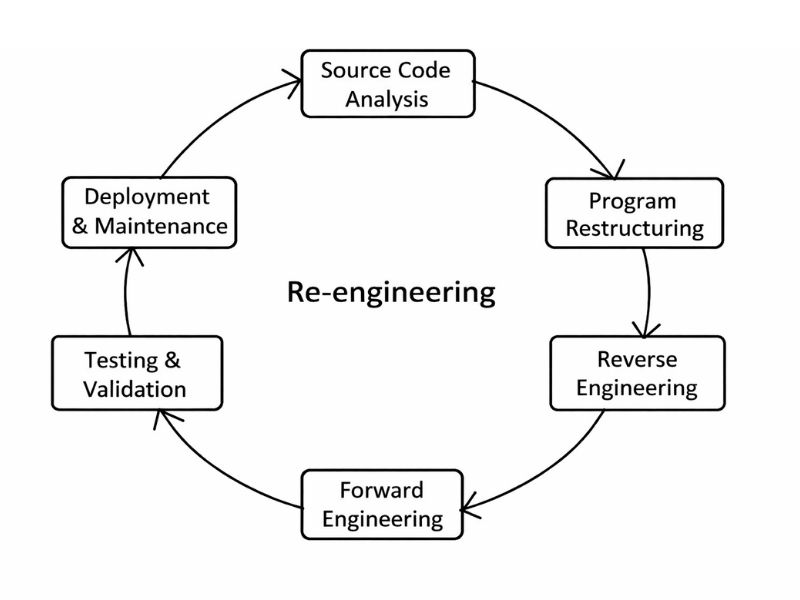
Main Phases (Steps) of Re‑Engineering
1. Source Code Analysis
यह phase सबसे पहला step है। इसमें पुराने software का source code, modules और documentation analyze किया जाता है।
Steps include
- System कैसे काम करता है, यह समझना
- Code में flaws और inefficiencies identify करना
- Redundant या duplicate modules ढूँढना
2. Program Restructuring (Code Restructuring)
इस phase में पुराने code को readable और maintainable structure में बदला जाता है।
Steps include
- Duplicate और redundant code हटाना
- Modules को logically reorganize करना
- Functions और classes को proper naming देना
- Data structures को modernize करना
3. Reverse Engineering
Reverse engineering का मतलब है, existing system के design और functionality को समझना।
Steps include
- पुरानी system का blueprint बनाना
- Documentation update करना
- Weak points और outdated modules identify करना
4. Forward Engineering
Forward engineering में analysis और redesign के आधार पर नया system develop किया जाता है।
Steps include
- New architecture adopt करना (Modular / Layered)
- Modern programming languages और tools use करना (Python, Java, Cloud Services)
- Continuous Integration & Deployment (CI/CD) pipelines implement करना
- Automated testing setup करना
5. Testing & Validation
Forward engineering के बाद नए system को thoroughly test करना बहुत जरूरी है।
Steps include
- Unit Testing, Integration Testing, System Testing
- Performance Testing और Load Testing
- User Acceptance Testing (UAT)
6. Deployment & Maintenance
Finally, नए system को deploy किया जाता है, और maintainable बनाया जाता है।
Steps include
- User training
- Backup और recovery plans
- Regular updates और monitoring
Advantages of Software Re‑Engineering (लाभ)
- Reduced Maintenance Costs : Poorly structured code और outdated documentation को improve करके maintenance कम होता है।
- Improved System Performance : Code optimization और architecture improvement से system fast और efficient बनता है।
- Connecting Legacy Systems with Modern Technology : Cloud, AI, Mobile Integration आदि implement करना आसान होता है।
- Improved Security and Reliability : Security loopholes fix होते हैं और system ज्यादा stable और reliable बनता है।
- Easier Future Upgrades : Modular और well-documented software से नए features add करना और scaling करना आसान होता है।
- Better User Experience : Modernized system users को smooth और fast experience देता है।
- Long-term Investment Profitable : Re‑Engineered software future-ready होता है और business goals जल्दी achieve होते हैं।
Disadvantages of Software Re‑Engineering (हानियाँ)
- High Initial Cost : Re‑Engineering में समय, manpower और resources की high investment होती है।
- Time-consuming Process : Analysis, redesign, testing और implementation में काफी समय लगता है।
- Risk of Introducing New Bugs : Code modification के दौरान नए bugs और errors आ सकते हैं।
- Requires Skilled Team : Experienced developers और analysts की जरूरत होती है।
- Incomplete Documentation Issues : अगर पुराने system की documentation poor है, तो re-engineering कठिन हो सकती है।
- Business Disruption : Re-engineering के दौरान system downtime या temporary disruption हो सकता है।
Conclusion (निष्कर्ष)
Re‑Engineering पुराने software को नया जीवन देने का तरीका है। यह सिर्फ bugs fix करना नहीं, बल्कि software को maintainable, efficient और future-ready बनाना है।
- इससे maintenance cost कम होती है और performance बढ़ती है।
- Legacy systems modern technology से जुड़ जाते हैं।
- Security और reliability improve होती है।
- Modular और well-documented system future upgrades आसान बनाता है।
FAQ (Frequently Asked Questions)
Q1. Re‑Engineering और Maintenance में क्या अंतर है?
- Maintenance सिर्फ छोटे बदलाव और bug fixing के लिए होता है।
- Re‑Engineering में पूरे software का analysis, redesign और modernization होता है।
Q2. कौन-कौन से software systems के लिए Re‑Engineering जरूरी है?
- Legacy systems जो outdated technology पर चल रहे हों।
- Poorly documented और complex systems।
- ऐसे systems जिनमें performance या security issues frequent हों।
Q3. Re‑Engineering में कितने phases होते हैं?
- Source Code Analysis
- Program / Code Restructuring
- Reverse Engineering
- Forward Engineering
- Testing & Validation
- Deployment & Maintenance
Q4. क्या Re‑Engineering हमेशा successful होता है?
- Mostly successful होता है अगर skilled team, proper planning और complete analysis हो।
- Poor documentation या rushed implementation से risks बढ़ सकते हैं।
Q5. Re‑Engineering क्यों costly हो सकता है?
- Initial phase में time, manpower और resources ज्यादा चाहिए।
- Large systems में testing और deployment time-consuming हो सकता है।