
Branch and Bound Method
Branch and Bound Method एक algorithmic technique है, जिसका उपयोग optimization problems में minimum या maximum optimal solution खोजने के लिए किया जाता है।
Table of Contents
Toggleइस Method में किसी बड़ी problem को छोटे-छोटे subproblems में divide किया जाता है, जिसे Branching कहा जाता है। इसके बाद हर subproblem के लिए एक upper या lower limit (Bound) तय की जाती है। जो subproblem optimal solution नहीं दे सकता, उसे आगे explore नहीं किया जाता और वहीं reject (prune) कर दिया जाता है।
Key Points (मुख्य बिंदु)
- Optimization Technique : Branch and Bound का उपयोग minimum cost या maximum profit जैसे problems के लिए किया जाता है।
- Branching Concept : Problem को छोटे-छोटे subproblems में divide किया जाता है, जिन्हें branches कहा जाता है।
- Bounding Concept : हर subproblem के लिए lower bound या upper bound calculate किया जाता है।
- Pruning : जिन branches से optimal solution solution नहीं मिल सकता, उन्हें बीच में ही eliminate (cut) कर दिया जाता है।
- Use of State Space Tree : पूरी problem को tree structure में represent किया जाता है।
- Efficient than Brute Force : यह method unnecessary calculations को avoid करती है।
- Guarantees Optimal Solution : सही bounding technique के साथ यह optimal solution प्रदान करती है।
- Common Applications : Traveling Salesman Problem (TSP), 0/1 Knapsack, Job Assignment Problem।
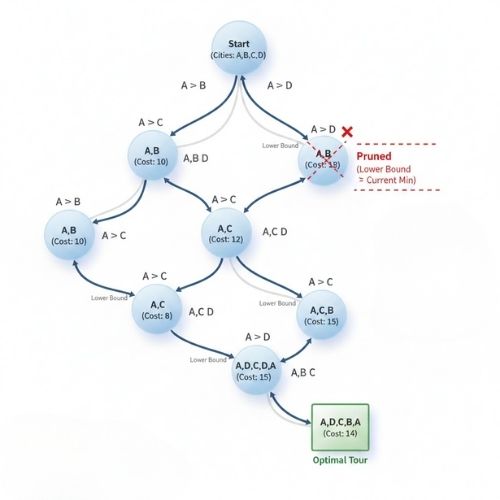
Why Do We Need Branch and Bound?
(Branch and Bound की आवश्यकता क्यों है?)
Computer Science में कई optimization problems होते हैं, जिनमें हमें best possible solution (optimal solution) की आवश्यकता होती है। लेकिन इन problems में possible solutions की संख्या बहुत ज्यादा होती है, जिससे उन्हें solve करना difficult हो जाता है। इसी challenge को effectively handle करने के लिए Branch and Bound Method को introduce किया गया।
मुख्य कारण
1. Brute Force Approach बहुत Slow होती है
- Brute force method में सभी possible solutions को check करना पड़ता है।
- जैसे Traveling Salesman Problem (TSP) में cities की संख्या बढ़ने पर routes की संख्या factorial (n!) में बढ़ जाती है, जो practically possible नहीं रहता।
2. Large Search Space की समस्या
- Complex optimization problems में search space बहुत बड़ा होता है।
- Branch and Bound method unnecessary paths को early stage पर ही eliminate कर देती है।
3. Time और Computational Resources बचाने के लिए
- सभी paths explore करने की जगह, यह method केवल promising (useful) paths पर focus करता है। इससे CPU time, memory और processing power की बचत होती है।
4. Optimal Solution की Guarantee के लिए
- Greedy और Heuristic methods fast होते हैं, लेकिन वे हमेशा optimal solution नहीं देते। Branch and Bound method proper bounding technique के साथ best solution की guarantee देती है।
5. NP-Hard Problems को Practically Solve करने के लिए
- Traveling Salesman Problem, 0/1 Knapsack Problem जैसे NP-Hard problems को brute force से solve करना almost impossible होता है।
- Branch and Bound method इन problems को practically solvable बनाती है।
6. Unnecessary Computation से बचाव (Pruning Concept)
- जिन paths या branches से अच्छा result नहीं मिल सकता, उन्हें बीच में ही prune (discard) कर दिया जाता है। इससे algorithm fast और efficient बन जाता है।
Basic Concepts of Branch and Bound (मुख्य अवधारणाएँ)
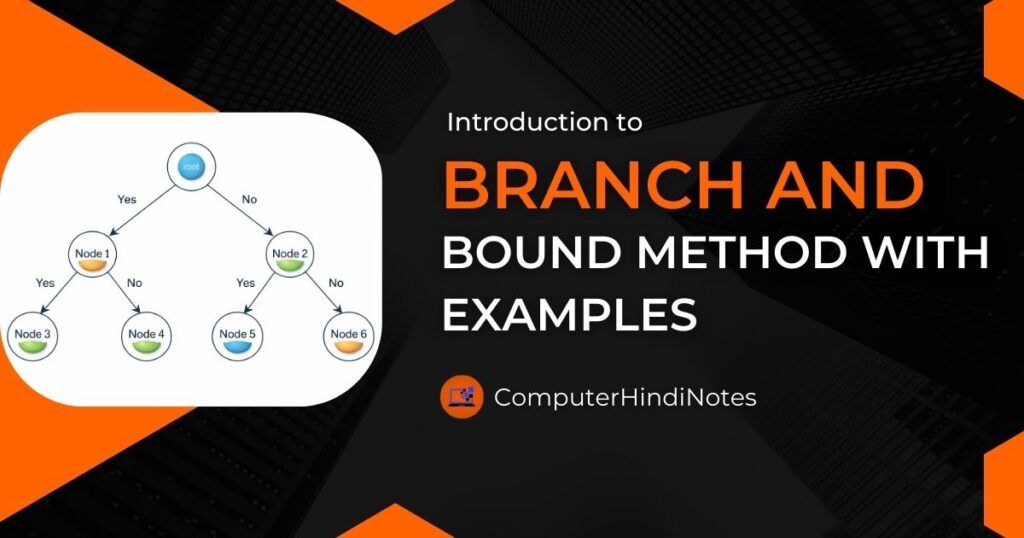
1. State Space Tree : Branch and Bound method में पूरी problem को tree structure के रूप में represent किया जाता है, जिसे State Space Tree कहते हैं।
Example :
- Root Node → original / initial problem को represent करता है
- Intermediate Nodes → partial solutions को दिखाते हैं
- Leaf Nodes → complete solutions को represent करते हैं
- Tree का हर node एक possible state या decision को दर्शाता है।
2. Branching (Branch बनाना) : Problem को छोटे–छोटे subproblems में divide करने की process को Branching कहते हैं। हर नए decision से एक नई branch create होती है।
Example :
- City A → City B जाना → एक branch
- City A → City C जाना → दूसरी branch
3. Bounding (Bound लगाना) : हर node के लिए एक bound value calculate की जाती है। यह bound यह बताती है कि उस path से minimum या maximum कितना अच्छा result मिल सकता है।
- Bound के प्रकार :
- Lower Bound → minimization problems के लिए
- Upper Bound → maximization problems के लिए
4. Pruning : अगर किसी node का bound, current best solution से खराब होता है, तो उस node को आगे expand नहीं किया जाता। इस process को Pruning कहते हैं।
- यही concept Branch and Bound method को fast और efficient बनाता है।
5. Selection Strategy : Branch and Bound में अगला node select करने के लिए अलग-अलग strategies use की जाती हैं:
- FIFO (Queue-based approach)
- LIFO (Stack-based approach)
- Least Cost / Best First Search
Types of Branch and Bound Methods (प्रकार)
Branch and Bound को मुख्य रूप से तीन प्रकार में बाँटा जाता है।
1. FIFO Branch and Bound (First In First Out)
- इस method में Queue data structure का use किया जाता है।
- जो node पहले generate होती है, उसे पहले expand किया जाता है।
- Search process level-wise होती है।
2. LIFO Branch and Bound (Last In First Out)
- इस method में Stack data structure का use होता है।
- जो node सबसे last में generate होती है, उसे पहले expand किया जाता है।
- Search process depth-wise होती है।
3. Least Cost (Best First) Branch and Bound
- इस method में Priority Queue का उपयोग किया जाता है।
- जिस node का cost / bound सबसे कम होता है, उसे पहले expand किया जाता है।
- यह सबसे effective और popular method है।
Examples of Branch and Bound Method
- Traveling Salesman Problem (TSP)
- 0/1 Knapsack Problem
- Job Assignment Problem
- Integer Programming Problem
- Circuit Board Design (VLSI)
- Network Routing Problem
Traveling Salesman Problem
Traveling Salesman Problem (TSP) एक classical combinatorial optimization problem है, जिसमें एक salesman को दी गई सभी cities को exactly once visit करना होता है और Last में starting city पर वापस लौटना होता है। इसका main objective यह होता है कि total travel cost या total distance minimum हो।
Characteristics of TSP (मुख्य विशेषताएँ)
1. Each City Visited Exactly Once
- TSP में salesman को हर city सिर्फ एक बार visit करना होता है।
- इससे redundancy और unnecessary travel बचता है।
2. Return to Starting
- Tour हमेशा circular होता है।
- Salesman Last में starting city पर वापस आता है।
3. Objective is Minimum Cost / Distance
- TSP का main goal total travel cost या distance minimize करना।
- किसी route को visit करना नहीं, बल्कि most efficient route select करना जरूरी है।
4. NP-Hard Problem
- TSP NP-Hard category में आता है।
- Cities की संख्या बढ़ने पर possible tours की संख्या factorial (n-1)! speed से बढ़ती है।
- Large input के लिए exact solution computationally expensive होता है।
5. Optimization Problem
- TSP केवल existence check करने की problem नहीं है।
- यह एक optimization problem है, जिसमें best possible solution (minimum distance/cost) खोजा जाता है।
Algorithm of TSP (Step-by-Step)
Step 1: Define Problem
- Identify all cities:
- Make a cost/distance matrix for all cities.
Step 2: Start from a City
- Choose a starting city (e.g., C1).
- Remaining cities = all other cities.
Step 3: Generate Possible Routes (Branching)
- From starting city, go to all possible next cities (create branches).
- Continue this for each city until all cities are visited.
Step 4: Calculate Cost for Each Route
- For every possible route, calculate total cost:
- Total Cost = distance(city1→city2) + … + distance(last city→starting city)
- Keep track of current minimum cost.
Step 5: Use Bound (Optional – Branch & Bound)
- Calculate lower bound for partial routes.
- If partial route cost exceeds current minimum, prune it (discard).
Step 6: Repeat for All Routes
- Explore all possible routes (or promising routes in Branch & Bound).
- Update minimum cost whenever a better route is found.
Step 7: Select Optimal Route
- After exploring all possibilities, choose the route with minimum total cost.
Step 8: Output
- Optimal Route (cities in order)
- Minimum Cost
Advantages of Traveling Salesman Problem (TSP)
1. Cost Minimization
- TSP का main objective है minimum distance या minimum cost find करना।
- इससे fuel, transportation cost और manpower बचता है।
2. Resource Optimization
- TSP solution से time, manpower और vehicles efficiently use होते हैं।
- बिना extra trips के maximum coverage possible होता है।
3. Time Efficiency
- Optimal route select करने से journey time minimum होता है।
- Time-bound deliveries या projects के लिए बहुत useful।
4. Better Planning and Decision Making
- Businesses और logistics companies data-driven planning कर सकती हैं।
- Strategic decision-making आसान हो जाता है।
5. Real-Life Applicability
- TSP solutions airline routing, manufacturing robots, network cabling, satellite scheduling जैसे fields में use होते हैं।
- Practical applicability के कारण यह computer science का महत्वपूर्ण topic है।
6. Testing Algorithms and AI Models
- TSP एक benchmark problem है optimization algorithms, heuristics और AI models test करने के लिए।
- Researchers इसे complex problem-solving skills improve करने के लिए use करते हैं।
Limitations of Traveling Salesman Problem (TSP)
1. Computational Complexity
- TSP एक NP-Hard problem है।
- Cities बढ़ने पर possible tours की संख्या factorial speed ((n-1)!) से बढ़ती है।
- Large input के लिए exact solution निकालना practically impossible हो जाता है।
2. Exact Solutions Not Always Feasible
- Real-life applications में huge number of cities होने की वजह से exact solution निकालना time-consuming होता है।
- इसलिए heuristics और approximation algorithms का use करना पड़ता है।
3. Assumption of Fixed Distances
- Classical TSP में assume किया जाता है कि distance/cost constant है।
- Reality में traffic, road conditions, weather और dynamic costs के कारण यह हमेशा true नहीं होता।
4. Not Always Unique Solution
- Multiple routes same minimum distance दे सकते हैं।
- Decision-making में ambiguity आती है।
5. Complexity in Dynamic Environments
- TSP assume करता है कि graph static है।
- Real-world में routes, traffic, delays dynamic होते हैं।
- Static TSP algorithms इस scenario में perfect नहीं रहते।