
Software Specifications (सॉफ्टवेयर स्पेसिफिकेशन्स)
Software Specifications वह document या description होता है, जो किसी software system के requirements, functionalities, behavior और constraints को clear और detailed define करता है।
यह developer और client दोनों के लिए software का blueprint प्रदान करता है।
Table of Contents
ToggleKey Points
- यह user और system की सभी requirements को clear और unambiguous बनाता है।
- Software के features और functionalities को define करता है।
- Performance, security, reliability, usability जैसे quality attributes को define करता है।
- Client और developer के बीच clear understanding establish करता है।
- Rework कम करके project cost और development time को save करता है।
- Software के modules, data flow और interactions को clearly define करता है।
- Project lifecycle में एक standard reference के रूप में काम करता है।
Phases of Software Specification (सॉफ्टवेयर स्पेसिफिकेशन के चरण)
Software Specification एक Process है, जो कुछ Steps/Phases में Complete होती है :
- Requirement Gathering Phase
- Stakeholders (Clients, Users, Managers) से Requirement Collect करना
- Techniques : Interviews, Questionnaires, Surveys, Existing System Study।
- Requirement Analysis Phase
- Collected Requirements को Analyze करना
- Conflicting Requirements Resolve करना
- Functional और Non-Functional Requirements Identify करना
- Specification Writing Phase
- Requirements को Clear और Structured तरीके से Document करना
- Use Cases, Diagrams (DFD, ERD), Tables और Examples Include करना
- Validation Phase
- Stakeholders और Developers से Review लेना
- Prototype या Mock-up बनाकर Confirm करना कि सभी Requirements सही हैं
- Maintenance and Updates Phase
- Software के Life Cycle में Requirements Update करना
- New Features Add करना या Old Features Modify करना
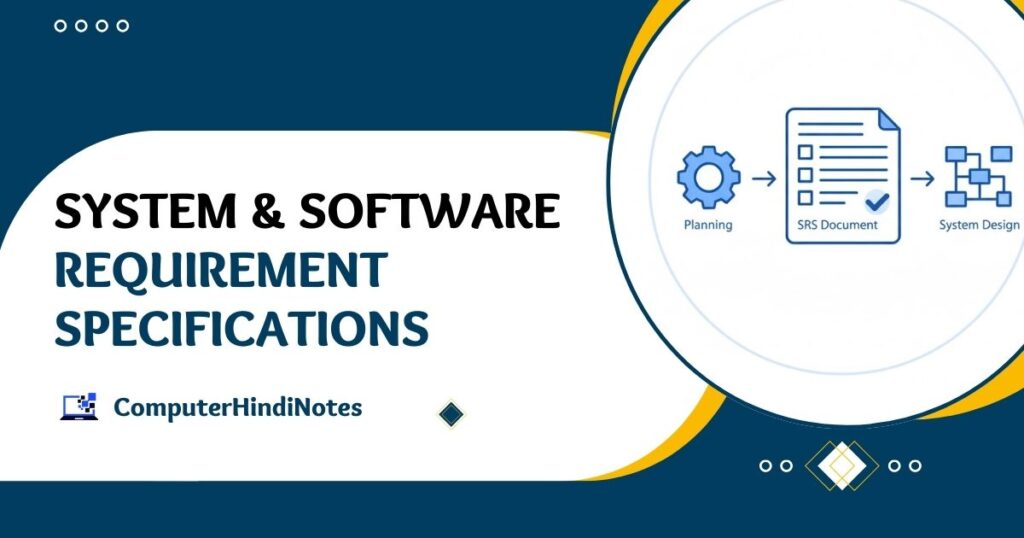
Software Requirement Specifications (SRS)
Software Requirement Specifications (SRS) एक document है, जो Software System की functional और non-functional requirements को clearly define करता है। यह बताता है, कि Software क्या करेगा, कैसे काम करेगा, और किन limits के साथ काम करेगा।
SRS का मुख्य उद्देश्य है, Development Process को Structured और Error-Free बनाना, जिससे Project सफल हो।
Key Points
- Stakeholders और Developers के बीच Misunderstandings कम हो जाती हैं।
- सही Requirements Document होने पर Developers सही Code लिख सकते हैं।
- Requirements Clear होने से Rework कम होता है, Budget और Time बचता है।
- Developers, Testers, Project Managers, और Clients के बीच Clear Understanding बनती है।
- Test Cases Requirement के अनुसार बनते हैं |
Key Components (प्रमुख घटक)
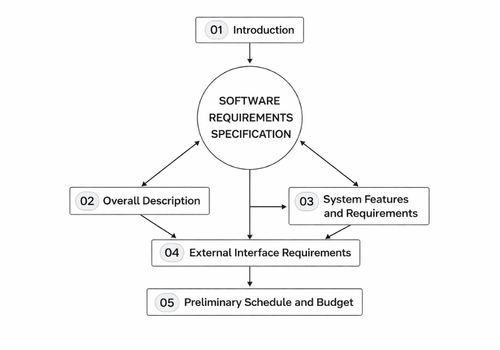
- Introduction
- Project का overview और objective बताना
- Target users और audience define करना
- Important definitions, acronyms, abbreviations Include करना
- Overall Description
- System का broad idea देना
- Includes :
- Product perspective (upgrade या new system)
- System interfaces (hardware, software, network)
- User characteristics (skill, experience, age)
- Operating environment (Mobile/Web/Desktop)
- Specific Requirements
- SRS का most important part
- Functional Requirements
- Software की activities और functions define करता है
- Example : Login / Signup, Payment Processing, Ticket Booking / Order Tracking
- Non-Functional Requirements
- Software की quality, performance, security, usability define करता है
- Example : App Load Time ≤ 2 seconds, Server Uptime 99.9%, Data Encryption
- External Interface Requirements
- APIs, Database, Third-party integration
- Example : Payment Gateway Integration
- System Models
- System behavior और data flow को visual form में दिखाना
- Common models : DFD, Use Case Diagram, ERD
- Constraints Ans Assumptions
- Constraints : System limitations (hardware, software, regulatory)
- Example : Payment must follow RBI Guidelines
- Assumptions : Design और operation में taken assumptions
- Example : Users के पास Internet connection होना चाहिए
- Traceability
- हर requirement testable और trackable हो |
- Requirement changes और updates आसानी से track हो |
Importance of SRS (SRS क्यों जरूरी है?)
- Clear Requirements
- SRS सभी Functional और Non-Functional Requirements को clearly define करता है।
- Confusion (ambiguity) खत्म हो जाती है।
- Better Developer–Client Communication
- Client की expectations और developer की understanding same हो जाती है।
- Misunderstanding और conflicts कम करता है
- Fewer Errors & Rework
- Client की expectations और developer की understanding same हो जाती है।
- Rework और बार-बार changes नहीं होते
- Saves Time & Cost
- SRS एक proper planning document होता है।
- Development पहले से planned रहती है।
- Easy Testing
- Test cases सीधे SRS से बनाए जाते हैं
- हर requirement testable होती है
- Helps in Maintenance & Updates
- SRS future developers के लिए reference document बनता है।
- New features add करना आसान होता है।
- Increases Project Success
- Industry में project failure का main reason unclear requirements मानी जाती हैं, जिसे SRS solve करता है।
- Legal & Contractual Reference
- Client और company के बीच agreement का हिस्सा बन सकता है।
- Disputes की स्थिति में proof document की तरह काम करता है।
Characteristics of a Good SRS (SRS की विशेषताएँ)
- Correct
- SRS में लिखी गई सभी requirements client की actual needs को represent करनी चाहिए।
- Assumption या guess based requirement नहीं होनी चाहिए
- Wrong requirement से गलत system develop हो सकता है
- Unambiguous
- हर requirement का केवल एक ही meaning निकलना चाहिए।
- Vague words जैसे fast, easy, good avoid करने चाहिए
- Clear और measurable language use हो
- Complete
- SRS में system की सभी Functional और Non-Functional requirements शामिल होनी चाहिए।
- Consistent
- SRS की कोई भी requirement दूसरी requirement से conflict नहीं करनी चाहिए।
- Same feature के लिए अलग-अलग rules नहीं होने चाहिए
- Verifiable / Testable
- हर requirement को test करके verify किया जा सके।
- Tester easily decide कर सके requirement satisfied हैं या नहीं
- Feasible
- Requirements time, budget और technology के अंदर possible होनी चाहिए।
- Unrealistic requirements project failure cause करती हैं
- Modifiable
- SRS को future में easily update किया जा सके।
- Proper numbering
- Section-wise structure
- SRS को future में easily update किया जा सके।
- Traceable
- हर requirement को उसके source, design और test case से track किया जा सके।
- Forward traceability
- Backward traceability
- हर requirement को उसके source, design और test case से track किया जा सके।
- Ranked / Prioritized
- Requirements को priority के आधार पर arrange किया जाता है।
- High Priority
- Medium Priority
- Low Priority
- Requirements को priority के आधार पर arrange किया जाता है।
- Understandable
- SRS ऐसी language में होनी चाहिए, जिसे developer और client दोनों समझ सकें।
Advantages of SRS (SRS के लाभ)
- Clear Requirements Definition
- SRS software/system की सभी requirements को clear और unambiguous रूप में define करता है।
- Developer को exactly पता होता है, क्या बनाना है?
- Confusion और guess work खत्म होता है।
- SRS software/system की सभी requirements को clear और unambiguous रूप में define करता है।
- Better Communication Between Client and Developer
- SRS एक common reference document की तरह काम करता है।
- Client की expectations clear रहती हैं।
- Developer की understanding same रहती है।
- SRS एक common reference document की तरह काम करता है।
- Reduces Errors at Early Stage
- Development शुरू होने से पहले ही missing requirements और errors identify हो जाते हैं।
- Saves Time and Cost
- Clear SRS होने से :
- Development fast होता है
- Unnecessary changes avoid होती हैं
- Overall project cost कम होती है
- Clear SRS होने से :
- Acts as a Legal Agreement
- SRS client और organization के बीच एक formal agreement की तरह काम करता है।
- Disputes और conflicts कम होते हैं
- Scope creep avoid होता है
- SRS client और organization के बीच एक formal agreement की तरह काम करता है।
- Useful for Testing and Validation
- Tester SRS के आधार पर :
- Test cases तैयार करता है
- Requirement verification करता है
- Tester SRS के आधार पर :
- Easy Maintenance and Future Enhancement
- Future में system update या modify करना easy हो जाता है।
- Clear documentation available रहती है
- New developer भी system समझ सकता है
Limitations of SRS (SRS की सीमाएँ)
- Time Consuming Process
- Proper और detailed SRS तैयार करने में काफी समय लग जाता है।
- Multiple meetings और discussions जरूरी होती हैं
- Difficult to Handle Requirement Changes
- एक बार जब SRS final हो जाती है, तब frequent changes handle करना Difficult हो जाता है।
- Small change के लिए भी document update करना पड़ता है
- Requires Skilled Analysts
- Effective SRS लिखने के लिए experienced System Analyst की जरूरत होती है।
- Technical knowledge जरूरी होती है
- Initial Cost High
- Requirement analysis और documentation phase में initial cost ज्यादा हो सकती है।
- Not Suitable for All Projects
- SRS हर type के project के लिए practical नहीं होती।
- Small projects में overhead बढ़ जाता है
- Over-Documentation Risk
- कभी-कभी SRS जरूरत से ज्यादा lengthy और complex हो जाती है।
- Important points identify करना मुश्किल हो जाता है
- Developers पूरी document पढ़ने से avoid करने लगते हैं
- Depends on User Understanding
- SRS की quality काफी हद तक client की clarity पर depend करती है।
- Client अगर clear नहीं है, तो requirements गलत capture होती हैं
Conclusion (निष्कर्ष)
Software Specifications और SRS किसी भी software project की foundation होते हैं।
यह software की सभी functional और non-functional requirements को clear, complete और unambiguous तरीके से define करता है।
SRS developer और client के बीच clear understanding बनाता है, जिससे errors, rework, time और cost कम होते हैं।
Testing, maintenance और future enhancements आसान हो जाते हैं।
इसलिए एक good quality SRS project की success के लिए बहुत जरूरी होता है।
Important Questions
Q1. Software Specification क्या है? इसके उद्देश्य क्या हैं?
- Software Specification एक document होता है, जो software system की requirements, functionalities, behavior और constraints को स्पष्ट रूप से describe करता है।
- इसका मुख्य उद्देश्य developer और client के बीच स्पष्ट समझ बनाना, errors पर काम करना और project को योजनाबद्ध तरीके से पूरा करना होता है।
Q2. Software Specification के चरण समझाइए।
- Software Specification के मुख्य चरण हैं :
- Requirement Gathering : Stakeholders से requirements एकत्र करना
- Requirement Analysis : Requirements का analyze और classify करना
- Specification Writing : Requirements को document form में लिखना
- Validation : Stakeholders से verify करना
- Maintenance & Updates : Changes और updates manage करना
Q3. SRS क्या है? इसके मुख्य components लिखिए।
SRS (Software Requirement Specification) एक document होता है, जो software की functional और non-functional requirements को डिटेल में बताता है।
इसके मुख्य components हैं :
- Introduction
- Overall Description
- Specific Requirements
- External Interface Requirements
- System Models
- Constraints & Assumptions
- Traceability
Q4. SRS के advantages और limitations बताएं।
- Advantages :
- requirements की clear definition
- Errors और rework कम होते हैं
- Time और cost दोनों बचते हैं
- Testing और maintenance आसान होता है
- Limitations :
- Time-consuming process
- Frequent changes are difficult
- Skilled analysts की आवश्यकता
- Small projects के लिए उपयुक्त नहीं