

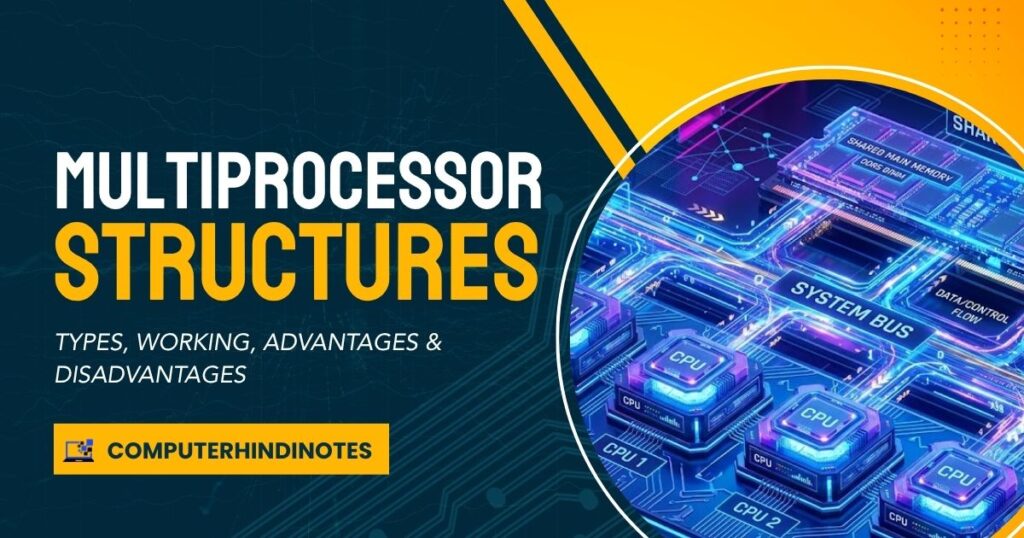
Multiprocessor Structures
Multiprocessor system में एक से अधिक processors (CPU) होते हैं। ये processors एक साथ काम करके अलग-अलग tasks को execute करते हैं। इससे system की speed और performance बढ़ जाती है।
Table of Contents
ToggleProcessors के बीच communication और memory access को manage करने के लिए अलग-अलग structures का उपयोग किया जाता है।
Multiprocessor Structures को सामान्यतः तीन मुख्य प्रकारों में divide किया जाता है:
- Bus-Based Multiprocessor Structure
- Crossbar Switch Multiprocessor Structure
- Multistage Network Multiprocessor Structure
Types of Multiprocessor Structures
1. Bus-Based Multiprocessor Structure
Bus-Based Multiprocessor Structure सबसे basic और traditional multiprocessor architecture माना जाता है। जिसमें कई processors एक single shared system bus के माध्यम से main memory और input-output devices से जुड़े होते हैं।
इस structure में communication के लिए केवल एक bus system का उपयोग किया जाता है। सभी processors इस bus के माध्यम से data और instructions को access करते हैं।
Bus-Based Multiprocessor की विशेषताएँ
- सभी processors एक shared communication bus का उपयोग करते हैं।
- Processors memory और I/O devices को bus के माध्यम से access करते हैं।
- Hardware design अपेक्षाकृत simple होता है
- Small multiprocessor systems में यह structure काफी popular है।
Bus-Based Multiprocessor Structure Components
1. Processor (CPU) : Processor (CPU) system का मुख्य computing unit होता है। यह instructions को execute करता है, और data processing का कार्य करता है।
Processor के मुख्य कार्य :
- Program instructions को execute करना
- Data को process करना
- Memory को access करना
- System operations को control करना
Bus-based multiprocessor system में एक से अधिक processors होते हैं, ये processors parallel processing करते हैं, इससे system की speed और efficiency बढ़ जाती है।
2. System Bus :
System Bus Bus-Based Multiprocessor Structure का communication backbone होता है। यह processors, memory और input/output devices के बीच data और control signals transfer करने का कार्य करता है।
System Bus के प्रकार
System Bus मुख्य रूप से तीन प्रकार की buses से मिलकर बना होता है :
- Data Bus : Data Bus का उपयोग system में data transfer करने के लिए किया जाता है।
- Address Bus : Address Bus memory के specific location को identify करने के लिए उपयोग की जाती है।
- Control Bus : Control Bus system में control signals भेजने का कार्य करती है। यह operations को manage करने में मदद करती है।
3. Main Memory : Bus-Based Multiprocessor Structure में Main Memory shared memory होती है। इसका अर्थ है, कि system के सभी processors एक ही memory को access कर सकते हैं।
Main Memory के मुख्य कार्य :
- Programs को store करना
- Data को store करना
- Processors को आवश्यक information provide करना
4. Cache Memory : Multiprocessor systems में Cache Memory processing speed को बढ़ाने में महत्वपूर्ण भूमिका निभाती है।
Cache memory एक high-speed memory होती है, जो frequently used data को store करती है।
Cache Memory के लाभ :
- CPU access time कम होता है
- System performance बढ़ती है
- Frequently used data जल्दी उपलब्ध हो जाता है
Bus-based multiprocessor system में हर processor की अपनी cache memory हो सकती है।
Bus-Based Multiprocessor Structure Working
Bus-Based Multiprocessor System की working को निम्न steps में समझा जा सकता है:
- User program system में load होता है।
- Operating System program को कई tasks या processes में divide करता है।
- अलग-अलग processors इन tasks को execute करते हैं।
- Processors System Bus के माध्यम से memory को access करते हैं।
- Data Bus data transfer करती है।
- Control Bus operations को manage करती है।
- Output Devices result को display करते हैं।
Advantages of Bus-Based Multiprocessor Structure
- Simple Design : यह architecture relatively simple होता है।
- Low Cost : Hardware components कम होने के कारण system की cost कम होती है।
- Easy Implementation : इस structure को implement करना आसान होता है।
- Easy Communication : Processors system bus के माध्यम से आसानी से communicate कर सकते हैं।
- Suitable for Small Systems : Small multiprocessor systems के लिए यह architecture काफी effective होता है।
Disadvantages of Bus-Based Multiprocessor Structure
- Bus Bottleneck : जब processors की संख्या बढ़ जाती है, तो bus traffic बढ़ जाता है।
- Limited Scalability : इस architecture में processors की संख्या बढ़ाना कठिन होता है।
- Performance Degradation : High load के समय system performance कम हो सकती है।
- Bus Contention : Multiple processors bus access करने की कोशिश करते हैं, जिससे delay हो सकता है।
2. Crossbar Switch Multiprocessor Structure
Crossbar Switch Multiprocessor Structure वह architecture है, जिसमें processors और memory modules के बीच crossbar switch network का उपयोग किया जाता है।
इस network में processors और memory modules के बीच direct switching connections होते हैं, जिससे कई processors एक ही समय में अलग-अलग memory modules को access कर सकते हैं।
Crossbar Switch Multiprocessor Structure Components
1. Processors (CPU) : Processors system के main computing units होते हैं।
इनका कार्य होता है :
- Instructions execute करना
- Data processing करना
- Memory access करना
- Programs को run करना
Crossbar switch architecture में processors simultaneously different memory modules को access कर सकते हैं।
2. Memory Modules : Crossbar switch architecture में memory को multiple memory modules में divide किया जाता है।
इससे फायदा यह होता है, कि :
- Different processors अलग-अलग memory modules access कर सकते हैं
- Memory access parallel हो जाता है
- System performance improve होती है
3. Crossbar Switch Network : Crossbar switch network इस architecture का सबसे महत्वपूर्ण भाग होता है।
यह network :
- Processors और memory modules के बीच switching connection establish करता है
- Data routing को control करता है
- Parallel communication allow करता है
Crossbar switch network को matrix structure के रूप में design किया जाता है।
Crossbar Switch Multiprocessor Structure Working
- Processor program instructions execute करना शुरू करता है।
- Processor memory से data request करता है।
- Crossbar switch network processor और required memory module के बीच connection establish करता है।
- Data memory से processor तक transfer होता है।
- Multiple processors एक ही समय में अलग-अलग memory modules access कर सकते हैं।
- Processing complete होने के बाद output devices result display करते हैं।
इस पूरी प्रक्रिया में parallel memory access system performance को बढ़ाता है।
Advantages of Crossbar Switch Multiprocessor Structure
- High-Speed Communication : Processors और memory modules के बीच direct connections होने के कारण communication बहुत fast होता है।
- Parallel Memory Access : Multiple processors एक ही समय में different memory modules access कर सकते हैं।
- No Bus Bottleneck : Bus-based architecture में bus traffic की समस्या होती है, लेकिन crossbar switch architecture में यह problem काफी कम होती है।
- Better Performance : High workload के समय भी system efficient रहता है।
- Suitable for High-Performance Systems : यह architecture supercomputers और advanced servers के लिए ideal होता है।
Disadvantages of Crossbar Switch Multiprocessor Structure
- High Hardware Cost : Crossbar switch network में बहुत सारे switching connections होते हैं, जिससे hardware cost बढ़ जाती है।
- Complex Design : इस architecture का hardware design काफी complex होता है।
- Maintenance Difficult : Large switching network होने के कारण system maintain करना difficult हो सकता है।
- Scalability Issues : अगर processors और memory modules की संख्या बहुत ज्यादा हो जाए तो crossbar switch network बहुत बड़ा और expensive हो जाता है।
3. Multistage Network Structure
Multistage Network Structure वह multiprocessor architecture है, जिसमें processors और memory modules के बीच communication के लिए multiple switching stages का उपयोग किया जाता है।
इस architecture में processors और memory modules सीधे connected नहीं होते, बल्कि data कई switching networks या stages से होकर गुजरता है।
Multistage Network Structure Components
1. Processors (CPU) : Processors system के main computing units होते हैं।
इनका कार्य होता है :
- Instructions execute करना
- Data process करना
- Memory access करना
- Programs run करना
Multiprocessor systems में कई processors parallel processing करते हैं।
2. Switching Stages : Multistage network architecture का सबसे महत्वपूर्ण भाग switching stages होते हैं। हर stage में कई switching elements (switches) होते हैं जो communication paths को control करते हैं।
इन switches का कार्य होता है :
- Data routing
- Path selection
- Communication control
Data processors से memory तक stage-by-stage travel करता है।
3. Switching Elements (Switches) : Switching elements छोटे hardware units होते हैं जो network में data routing को control करते हैं।
इनका कार्य होता है:
- Data packets को correct path पर भेजना
- Communication conflicts को manage करना
- Parallel data transfer allow करना
Multistage network में switches का combination network efficiency को बढ़ाता है।
4. Memory Modules : Multistage network structure में memory को कई memory modules में divide किया जाता है।
इससे :
- Multiple processors different memory modules access कर सकते हैं
- System performance improve होती है
- Data access faster हो जाता है
Multistage Network Structure Working
Multistage network multiprocessor system की working निम्न steps में समझी जा सकती है :
- Processor program instructions execute करना शुरू करता है।
- Processor memory से data request करता है।
- Data request switching network के first stage में प्रवेश करती है।
- Switching elements data को next stage तक route करते हैं।
- Data कई stages से होकर required memory module तक पहुंचता है।
- Memory module processor को data भेजता है।
- Processor data process करता है और result output device को भेजता है।
इस पूरी प्रक्रिया में communication stage-by-stage routing के माध्यम से होता है।
Advantages of Multistage Network Structure
- Better Scalability : इस architecture में processors और memory modules की संख्या आसानी से बढ़ाई जा सकती है।
- Lower Cost than Crossbar : Crossbar switch architecture की तुलना में hardware cost कम होती है।
- High Performance : Large multiprocessor systems में efficient communication संभव होता है।
- Parallel Communication : Multiple processors एक साथ different memory modules access कर सकते हैं।
- Suitable for Large Systems : यह architecture large-scale computing environments के लिए ideal होता है।
Disadvantages of Multistage Network Structure
- Complex Design : Switching network का design complex होता है।
- Routing Delay : Data कई stages से होकर गुजरता है जिससे delay हो सकता है।
- Blocking Problem : कभी-कभी network paths busy होने के कारण communication block हो सकता है।
- Difficult Control Mechanism : Network control system को manage करना difficult हो सकता है।
Conclusion (निष्कर्ष)
Multistage Network Structure multiprocessor architecture का एक powerful और scalable design है, जो large-scale computing systems में efficient communication प्रदान करता है।
इस architecture में processors और memory modules के बीच multiple switching stages होते हैं, जिससे data routing efficient हो जाती है, और system performance improve होती है।
यह architecture crossbar switch की high cost और bus-based architecture की limitations को balance करता है।
इसी कारण multistage network structures का उपयोग आज supercomputers, cloud computing platforms, artificial intelligence systems और scientific research environments में व्यापक रूप से किया जाता है।
FAQ (अक्सर पूछे जाने वाले प्रश्न)
1. Multistage Network Structure क्या है?
- Multistage Network Structure वह multiprocessor architecture है, जिसमें processors और memory modules के बीच communication के लिए multiple switching stages का उपयोग किया जाता है।
2. Multistage network architecture का मुख्य उद्देश्य क्या है?
- इसका मुख्य उद्देश्य large multiprocessor systems में efficient communication और scalability provide करना है।
3. Multistage network crossbar switch से कैसे अलग है?
- Multistage network में multiple switching stages होते हैं, जबकि crossbar switch में processors और memory के बीच direct connections होते हैं।
4. Multistage network में switching elements क्या होते हैं?
- Switching elements छोटे hardware units होते हैं, जो data routing को control करते हैं।
5. Multistage network architecture कहाँ उपयोग किया जाता है?
- Supercomputers
- Cloud computing data centers
- Artificial intelligence systems
- Telecommunications networks
6. Multistage network architecture का मुख्य लाभ क्या है?
- इसका मुख्य लाभ better scalability और lower cost compared to crossbar architecture है।
7. Multistage network architecture का मुख्य disadvantage क्या है?
- इसका मुख्य disadvantage complex design और routing delay है।