
Structured Software Engineering
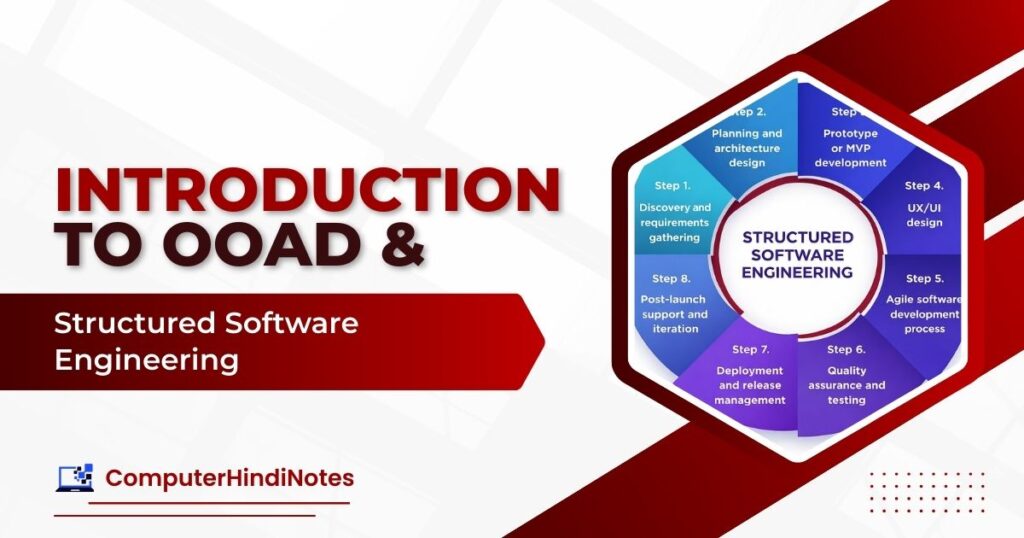
Structured Software Engineering एक Traditional Software Development Approach है, जिसमें Software को Modules और Functions के रूप में Divide किया जाता है। इसमें System का Focus Processes और Procedures पर होता है, न कि Objects पर।
Table of Contents
ToggleFeatures
- Top‑Down Approach : System को बड़े Modules से छोटे-छोटे Sub-Modules में Breakdown किया जाता है।
- Data और Functions Separate : Data और Functions को अलग रखा जाता है ताकि system organized और manageable रहे।
- Use of Flowcharts & Structure Charts : Software में Process और Data Flow को visualize करने के लिए flowcharts और structure charts का उपयोग होता है।
- Procedural Languages : मुख्यतः C जैसी procedural languages का उपयोग किया जाता है।
- Step-by-Step Execution : एक Process का output सीधे दूसरे Process में input के रूप में use किया जाता है।
Advantages
- Simple and Easy to Understand : छोटे और simple systems के लिए यह approach आसानी से समझी जा सकती है।
- Clear Functional Flow : System का functional flow step-by-step clear रहता है।
Limitations
- Difficult to Manage Complexity in Large Systems : बड़े और complex systems के लिए यह approach manage करना कठिन हो जाता है।
- Low Reusability : Modules और functions अलग होने से code का reuse करना कठिन होता है।
- Difficult to Model Real‑World Entities : Objects और real-world entities को model करना Difficult होता है।
Object Oriented Analysis and Design (OOAD)
Object‑Oriented Analysis and Design (OOAD) एक Modern Software Development Approach है, जिसमें System को Objects और Classes के perspective से Analyze और Design किया जाता है। इसका Main Goal है Complex Real‑World Problems को Simple, Modular और Reusable Components में Model करना।
OOAD को दो Main Phases में Divide किया जा सकता है :
- Object‑Oriented Analysis (OOA)
- Object‑Oriented Design (OOD)
1. Object‑Oriented Analysis (OOA)
Object‑Oriented Analysis (OOA) Object‑Oriented Software Development का पहला Step है। इसका मुख्य उद्देश्य है Problem Domain को समझना और Real-World Entities को Objects के रूप में Model करना।
Main Steps of OOA (Object-Oriented Analysis)
- Requirement Gathering : User और stakeholders से functional और non-functional requirements collect करना।
- Domain Analysis : System के real-world entities और उनके interactions को पहचानना।
- Object Identification : System में कौन-कौन से objects होंगे और उनका role क्या होगा।
- Define Relationships : Objects के बीच relationships और interactions Decide करना।
- Create Analysis Model : UML diagrams का use करके system को visual रूप में model करना।
Advantages of OOA (Object-Oriented Analysis)
- Real-World Mapping Easy – System को real-world entities और interactions के रूप में model करना आसान है |
- Clear Requirements Understanding – Requirements को जल्दी और साफ़ समझना possible होता है |
- Foundation for Reusable Design – Analysis phase reusable और modular design का base तैयार करता है।
- Manage Large and Complex Systems – बड़े और complex systems को effectively manage करना आसान है |
2. Object‑Oriented Design (OOD)
Object‑Oriented Design (OOD), Object‑Oriented Analysis (OOA) का अगला Step है। OOD में Analysis Phase में बनाए गए models को implementation-ready design में convert किया जाता है। इसका Main Focus है “How the system will do it”, यानी System के Architecture, Classes और उनके Interactions पर।
Main Objectives of OOD
- Refine Analysis Model : OOA में identified objects और relationships को detailed design में बदलना।
- Prepare System Architecture : Classes, Packages, Modules और उनके interactions define करना।
- Create Design Artifacts :
- UML Diagrams : Class Diagram, Sequence Diagram, Interaction Diagram, Activity Diagram।
- Design Patterns : Singleton, Factory, Observer आदि का use।
- Implementation Ready :
- Classes और objects के attributes & methods define करना।
- Interfaces, Abstract Classes और Data Encapsulation implement करना।
Advantages of OOD (Object-Oriented Design)
- Modular & Reusable Design : छोटे modules में divide करके reuse करना आसान है।
- Maintainable & Scalable Systems : System को आसानी से update और expand किया जा सकता है।
- Secure Data Handling (Encapsulation) : Data safe रहता है और unauthorized access रोका जाता है।
- Natural Mapping of Real-World Entities : Real-world objects और interactions का easy representation है।
Benefits of Object-Oriented Approach
- Reusability (Code पुनः उपयोग)
- एक बार कोई Class या Object Design कर लिया, इसे Multiple Projects या Modules में Use किया जा सकता है।
- Maintainability (आसान रख-रखाव)
- Modular Structure की वजह से software maintain करना आसान होता है।
- अगर कोई feature update या change करना हैतो केवल related Class/Module में बदलाव करें, बाकी system पर impact बहुत कम होता है।
- Scalability (System बड़ा करने में आसान)
- नए Features और Modules आसानी से Add किये जा सकते हैं।
- Classes और Objects Independent होने की वजह से System Flexible रहता है।
- Security (डेटा सुरक्षित)
- Encapsulation के कारण Data केवल Methods के Through Access होता है।
- Unauthorized Access या Data Corruption से System Secure रहता है।
- Real-World Mapping
- Objects और Classes Real-World Entities को Represent करते हैं।
- System Design Natural और Intuitive होता है।
- Flexibility & Polymorphism
- एक Interface Multiple Behavior को Handle कर सकता है।
- Improved Collaboration (Team Friendly)
- Modular Classes की वजह से Multiple Developers एक साथ अलग Modules पर Work कर सकते हैं।
Object-Oriented vs Structured Approach
Feature | Structured Approach | Object-Oriented Approach (OOAD) |
Basic Concept | Software को Functions/Procedures के आधार पर Divide करना | Software को Objects और Classes के आधार पर Model करना |
Focus | Functions और Process Flow | Objects और Real-World Entities |
Data Handling | Data और Functions अलग | Data और Behavior एक साथ (Encapsulation) |
Modeling | Flowcharts, DFDs, Structure Charts | UML Diagrams (Use Case, Class, Sequence, Activity) |
Reusability | Limited | High |
Abstraction | Limited | High |
Maintainability | Difficult in Large Systems | Easy due to Modular Classes |
Scalability | Low | High |
Real-World Mapping | Difficult | Easy & Natural |
Coupling | Tight Coupling | Loose Coupling |
Polymorphism | Not supported | Supported |
Example Languages | C, Pascal | Java, C++, Python |
Use Case | Small, Linear, Simple Systems | Large, Complex, Real-World Oriented Systems |
Advantages | Simple, Easy to Understand, Clear Functional Flow | Modular, Reusable, Maintainable, Secure, Realistic |
Limitations | Hard to maintain for Large Systems, Low Reusability | Requires Planning, Slightly Complex for Small Systems |
Conclusion
Structured Software Engineering और Object-Oriented Analysis & Design (OOAD) दोनों approaches का अपना महत्व है, लेकिन modern software development में OOAD ज्यादा preferred है।
- Structured Approach:
- Software को functions और modules के आधार पर divide किया जाता है।
- Simple और small systems के लिए suitable है।
- Limitations: Low reusability, difficult to manage large systems, real-world modeling कठिन है।
- OOAD Approach:
- Software को objects और classes के perspective से analyze और design किया जाता है।
- Complex और large systems के लिए ideal है।
- Benefits: High reusability, maintainability, scalability, secure data handling (Encapsulation), natural real-world mapping।
अक्सर पूछे जाने वाले प्रश्न (FAQ)
Q1. Structured Software Engineering क्या है?
- यह traditional software development approach है, जिसमें system को modules और functions में divide किया जाता है और focus processes और procedures पर होता है।
Q2. OOAD क्या है?
- Object-Oriented Analysis & Design (OOAD) एक modern approach है, जिसमें system को objects और classes के perspective से analyze और design किया जाता है।
Q3. OOA और OOD में क्या अंतर है?
- OOA (Analysis): System को समझना और real-world objects में map करना।
- OOD (Design): System को implementation-ready design में convert करना ।
Q4. Encapsulation क्या है?
- Data को केवल methods के through access करना। Example: Mobile phone के internal data (SMS, contacts) सिर्फ apps के जरिए access होते हैं।
Q5. Inheritance और Polymorphism क्या हैं?
- Inheritance: एक class दूसरे class के properties और methods inherit कर सकती है।
- Polymorphism: एक method या interface different objects के लिए अलग behavior दे सकता है।
Q6. UML क्या है?
- Unified Modeling Language – OOAD Models बनाने का Standard Visual Language है।