


Reliability Design
Reliability Design वह process है, जिसमें किसी system, product, software या algorithm को इस तरह design किया जाता है, कि वह specified time period तक दिए गए conditions में बिना failure के सही से काम करता रहे।
Table of Contents
ToggleMathematically, Reliability Function को इस प्रकार define किया जाता है:
- R(t)=P(system works successfully up to time t)
यहाँ R(t) किसी system के time t तक बिना failure काम करने की probability को represent करता है।
Algorithm Design & Analysis में Reliability Design का अर्थ है, कि algorithm की correctness, robustness और fault-tolerance को इस तरह design किया जाए कि वह unexpected inputs, errors या hardware/software failures होने पर भी proper और stable काम करता रहे।
Key Points
- Correctness Assurance : Algorithm हर possible valid input के लिए सही result produce करे।
- Fault Tolerance : System या Algorithm minor failures (जैसे memory error, partial data loss) के बिना काम करता रहे।
- Error Handling Mechanism : Proper error detection और exception handling techniques का use किया जाता है।
- Consistency of Output : Same input पर same और reliable output मिले।
- Redundancy Use : Critical operations के लिए backup logic या multiple approaches का उपयोग किया जाता है।
- Robustness : Algorithm invalid या unexpected input को भी safely handle कर सके।
- Performance Stability : Failure conditions में भी time complexity और performance drastically degrade न हो।
- Testing & Verification : Algorithm को different test cases, edge cases और worst-case scenarios पर test किया जाता है।
- Scalability Support : Input size बढ़ने पर भी reliability maintain रहे।
Why Reliability Design is Important? (क्यों महत्वपूर्ण है?)
- System Failure से बचाव : Reliability Design system को इस तरह तैयार करता है कि वह बार-बार fail न हो और stable काम करता रहे।
- Data Loss का Risk कम होना : Reliable system में data corruption या data loss की संभावना कम होती है, क्योंकि इसमें proper backup और recovery mechanisms होते हैं।
- Customer Trust बढ़ना : Consistently correct result देने वाला system users का trust build करता है।
- Safety-Critical Systems के लिए आवश्यक : Healthcare, aviation और defense जैसे fields में reliability life-critical होती है।
- Maintenance और Repair Cost कम होना : Failures कम होने से maintenance cost और repair effort घटता है।
- Business Continuity : Reliable systems continuous और uninterrupted service provide करते हैं।
Key Concepts of Reliability Design (मुख्य अवधारणाएँ)
- Reliability (R) : Reliability का अर्थ है कि कोई system, machine या software कितने समय तक बिना failure के सही Work करता है।
- Failure : जब system expected function perform नहीं करता, तो उसे failure कहते हैं।
- Mean Time Between Failures (MTBF) : MTBF दो failures के बीच का average time होता है।
- Formula: MTBF = Total operating time / Number of failures
- Mean Time To Repair (MTTR) : MTTR system के fail होने के बाद उसे repair करने में लगने वाला average time होता है।
- Availability : Availability बताता है कि system कितना समय usable रहता है।
- Formula: Availability = MTBF / (MTBF + MTTR)
- Failure Rate (λ) : Failure rate यह बताता है कि system कितनी बार fail होने की संभावना रखता है।
- Low failure rate = High reliability
- Redundancy : Redundancy का अर्थ है backup components का use करना। अगर एक component fail हो जाए, तो दूसरा काम करता है।
- Example : Dual servers, Power backup system
- Fault Tolerance : Fault Tolerance का अर्थ है कि system fault होने के बाद भी काम करता रहे।
- Example : Aircraft control system, Space mission software (ISRO)
Reliability Design Problem using Dynamic Programming
Dynamic Programming एक mathematical technique है| यह एक optimization problem है जिसमें system के multiple components/subsystems की reliability को limited budget और cost constraints के अंदर maximize करना होता है। इसे efficiently solve करने के लिए Dynamic Programming (DP) का उपयोग किया जाता है।
System Model in Reliability Design
System Model reliability design का core concept है, जिसमें यह define किया जाता है, कि system के components/subsystems आपस में किस तरह connected हैं, और उनका overall system reliability पर क्या effect पड़ता है। Reliability Design का main objective है, minimum cost / budget constraints के अंदर maximum system reliability achieve करना।
What is System Model? (सिस्टम मॉडल क्या है?)
System Model एक mathematical और logical representation होता है, जो यह explain करता है कि system में कितने components हैं, वे series, parallel या mixed configuration में कैसे जुड़े हैं, और हर individual component की reliability का overall system reliability पर क्या effect पड़ता है।
Types of System Models in Reliability Design (प्रकार)
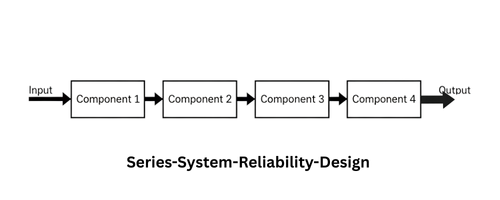
1. Series System Model
Reliability Design Problems में system को Series System के रूप में consider किया जाता है।
Total Reliability: system में n components हैं:
R(system)=R1×R2×R3×…×Rn
जहाँ हर device की अपनी reliability है।
Applications:
- Missile guidance system
- Assembly line machines
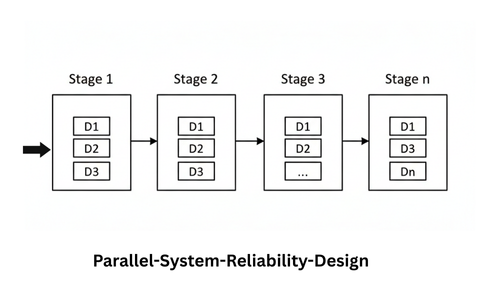
2. Parallel System Model
किसी stage पर Same devices लगाने से उस stage के fail होने की probability कम हो जाती है।
Stage Reliability (with Redundancy) : ϕi(mi)=1−(1−ri)mi
जहाँ r(i) हर device की individual reliability है और m(i) उस stage में लगे devices की संख्या है।
Applications :
- Banking systems
- Hospital life-support machines
Advantages of Reliability Design Problem using DP (लाभ )
- Optimal Solution Guarantee : DP हर stage में best choice select करता है और final solution guaranteed optimal होती है।
- Handles Budget/Cost Constraints : State में available budget consider होता है, जिससे total cost ≤ budget रहता है।
- Efficient for Large Systems : Brute force impossible होने पर भी DP time-efficient है और large systems में feasible है।
- Stage-wise Decision Making : हर stage में decision लेने के लिए previous stage का solution reuse करता है
- Reduces Computation : Repeated subproblems को store और reuse करता है, unnecessary calculations avoid होती हैं।
Limitations of Reliability Design Problem using DP (सीमाएँ)
- Memory Intensive : Large systems में DP table/budget/state store करने के कारण memory requirement high हो जाती है।
- Complex Implementation : Recurrence relation और state table design beginners के लिए challenging हो सकता है।
- Not Always Intuitive : Problem pattern समझना जरूरी है, नहीं तो DP solution design difficult हो सकता है।
- Specific Problem Type : DP उन problems में effective है जिनमें overlapping subproblems और optimal substructure Present हों।