

Software Process (सॉफ्टवेयर प्रोसेस क्या है?)
Software Process एक systematic way होता है, जिसमें software को design, develop, test, deploy और maintain किया जाता है।
Table of Contents
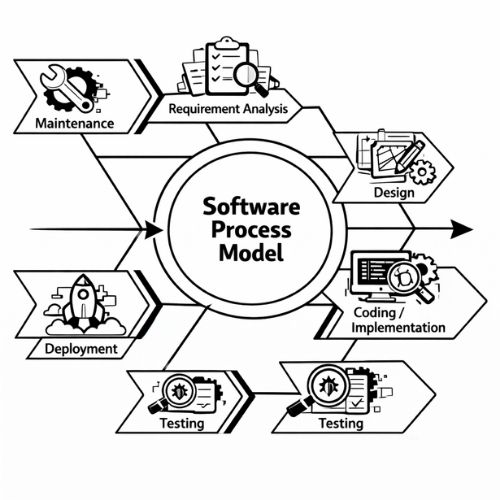
ToggleCommon Software Process Activities
- Requirement Analysis
- Design
- Coding / Implementation
- Testing
- Deployment
- Maintenance
Software Process Customization
(सॉफ्टवेयर प्रोसेस कस्टमाइजेशन)
Software Process Customization वह प्रक्रिया है, जिसमें किसी standard software development process model (जैसे Waterfall, Agile, Scrum, RUP आदि) को project की requirements, team की skills और organization के environment के अनुसार modify या tailor किया जाता है।
Key Points
- Standard software process को as-it-is follow नहीं किया जाता |
- Process को project-specific बनाया जाता है |
- Team experience और size को ध्यान में रखा जाता है |
- Cost, time और quality control में मदद मिलती है |
- Flexibility बढ़ती है और risks कम होते हैं |
- Customer requirements को better तरीके से handle किया जा सकता है |
- Software development ज्यादा effective और manageable बनता है |
Why Customization is Needed?
(Customization क्यों जरूरी है?)
Software development में हर project अपनी nature में unique होता है। इसलिए एक single standard software process को सभी projects पर लागू करना practical नहीं होता। इसी limitation को overcome करने के लिए Software Process Customization की आवश्यकता पड़ती है।
Key Reasons
- Every Project is Different
- हर project का size, complexity और objectives अलग-अलग होते हैं।
- एक small static website और एक large Banking system के लिए same development process effective नहीं हो सकता।
- Different Team Skills
- Experienced और skilled teams flexible processes (जैसे Agile) को आसानी से handle कर सकती हैं,
- जबकि new या less-experienced teams के लिए well-defined और structured process ज्यादा suitable होता है।
- Changing Customer Requirements
- कुछ clients detailed documentation और formal approvals prefer करते हैं,
- वहीं startups और product-based companies fast delivery और frequent changes चाहते हैं।
- Time and Cost Constraints
- Limited budget और strict deadlines वाले projects में heavy process follow करना possible नहीं होता, इसलिए process को simplify और tailor करना जरूरी हो जाता है।
- Technology Variation
- AI-based systems, Cloud applications, Mobile apps और Embedded systems हर technology domain के लिए अलग development approach की आवश्यकता होती है।
- Risk Management
- Mission-critical systems जैसे Banking, IRCTC, Medical या Defense software में extra testing, verification और reviews आवश्यक होते हैं।
- Better Quality and Productivity
- Customized software process से unnecessary activities reduce होती हैं |
- rework कम होता है और overall product quality व team productivity improve होती है।
Levels of Software Process Customization
(सॉफ्टवेयर प्रोसेस कस्टमाइजेशन के स्तर)
Software Process Customization को समझने के लिए इसे मुख्य रूप से तीन Levels में divide किया जाता है। हर level पर customization का scope और decision-making अलग होता है।
1. Organizational Level (संगठन स्तर)
इस level पर पूरी organization यह decide करती है, कि software development के लिए कौन-सा standard process framework follow किया जाएगा। यह customization का सबसे high-level होता है।
Key Points :
- Company-wide software process standards define किए जाते हैं
- ISO, CMMI जैसे international quality standards adopt किए जाते हैं
- Agile, Waterfall या Hybrid development model select किया जाता है
- Organization की culture और long-term goals के अनुसार process set किया जाता है
2. Project Level (प्रोजेक्ट स्तर)
इस level पर selected organizational process को specific project की जरूरत के अनुसार customize किया जाता है।
Key Points :
- Project के size, cost और complexity के अनुसार process modify किया जाता है
- Documentation का level decide किया जाता है
- Testing, reviews और milestones को project needs के अनुसार adjust किया जाता है
- Risk level के आधार पर extra activities add की जा सकती हैं
3. Team Level (टीम स्तर)
यह सबसे practical और execution-oriented level होता है, जहाँ development team अपने daily working style के अनुसार process में छोटे-छोटे changes करती है।
Key Points :
- Sprint duration या iteration length change की जाती है
- Daily stand-up meeting का timing और format adjust किया जाता है
- Team अपनी suitable tools और techniques choose करती है
- Coding, testing और collaboration practices customize की जाती हैं
Software Process Improvement (SPI)
(सॉफ्टवेयर प्रोसेस इम्प्रूवमेंट)
Software Process Improvement (SPI) वह continuous process है, जिसमें किसी organization के existing software development process को analyze किया जाता है, और उसे better quality, lower cost और faster delivery के लिए systematically improve किया जाता है।
Key Points
- SPI एक continuous activity है
- Existing software process का analysis और evaluation किया जाता है
- Errors, delays और inefficiencies को identify किया जाता है
- Quality और productivity improve करने पर focus होता है
- Cost और development time कम करने में मदद करता है
- Customer satisfaction बढ़ाने में सहायक होता है
- CMM, CMMI, ISO जैसे models SPI को support करते हैं
Why SPI is Important?
(Software Process Improvement क्यों जरूरी है?)
- Improves Software Quality
- Better process से bugs कम होते हैं और software ज्यादा reliable बनता है।
- Reduces Development Cost
- Rework कम होता है, जिससे extra cost बचती है।
- Faster and On-Time Delivery
- Improved planning और monitoring से delays कम होते हैं।
- Increases Customer Satisfaction
- High quality और timely delivery से customer खुश रहता है।
- Better Control and Predictability
- Project progress easily track किया जा सकता है।
- Enhances Team Productivity
- Clear process होने से developers confusion से बचते हैं।
- Supports Continuous Improvement
- Past mistakes से सीखकर future projects better बनते हैं।
- Competitive Advantage
- Market में organization की reputation strong होती है।
Models for Software Process Improvement
Software Process Improvement (SPI) को systematic और effective बनाने के लिए industry में कुछ standard models use किए जाते हैं। ये models organization को यह समझने में help करते हैं, कि उनका process अभी किस level पर है, और उसे कैसे improve किया जाए।
SPI Models
- Capability Maturity Model (CMM)
- Capability Maturity Model Integration (CMMI)
- ISO 9001 (Quality Management System)
- Agile-Based Improvement Models
Steps in Software Process Improvement
Software Process Improvement (SPI) एक systematic, structured और continuous activity है, जिसका उद्देश्य software development process की quality, efficiency और productivity को improve करना होता है। SPI को effective बनाने के लिए निम्नलिखित well-defined steps follow किए जाते हैं।
- Process Assessment : SPI का पहला step organization के current software process को analyze करना होता है।
Key Points :- Existing process कैसे work कर रहा है, इसका analysis करना
- Delays, defects और recurring issues identify करना
- Process की strengths और weaknesses detect करना
- Identify Problems : Assessment के बाद major problems और bottlenecks को clearly identify किया जाता है।
Key Points :- Frequent bugs और errors की पहचान
- Poor planning और unrealistic schedules
- Communication gaps और coordination issues
- Documentation की कमी
- Set Improvement Goals : organization यह decide करती है कि SPI से क्या achieve करना है।
Key Points :- Defects और rework को reduce करना
- Delivery time और schedule predictability improve करना
- Overall product quality और customer satisfaction बढ़ाना
- Plan Process Improvements : Identified problems को solve करने के लिए improvement strategies design की जाती हैं।
Key Points :- New tools, techniques और automation introduce करना
- Team ke liye training programs plan करना
- Existing process में required changes define करना
- Implement Changes : Planned improvements को actual software development process में apply किया जाता है।
Key Pointsc:- New workflows और practices adopt करना
- Updated standards और guidelines follow करना
- Teams को new process के according work करवाना
- Monitor and Measure: Implemented changes के impact को metrics और measurements के through evaluate किया जाता है।
Key Points :- Defect rate और error trends
- Delivery time और schedule performance
- Team productivity और efficiency level
- Review and Continuous Improvement: SPI एक one-time activity नहीं, continuous cycle होता है।
Key Points :- Regular reviews और audits conduct करना
- Team और customer से feedback collect करना
- Further improvements plan और implement करना
Benefits of Software Process Customization and Improvement (लाभ)
- Improved Software Quality
- Bugs और defects कम होते हैं
- Software ज्यादा reliable और stable बनता है
- Better Time Management
- Proper planning से delays reduce होते हैं
- Project time पर deliver होता है
- Cost Reduction
- Rework और wastage कम हो जाती है
- Overall development cost reduce होती है
- Higher Team Productivity
- Clear process से confusion नहीं रहता
- Team efficiently और fast work करती है
- Flexibility and Adaptability
- Changing requirements आसानी से handle होती हैं
- New technologies adopt करना आसान हो जाता है
- Better Risk Management
- High-risk areas पहले identify हो जाते हैं
- Project failures की chances कम होती हैं
- Improved Customer Satisfaction
- High quality software develop होता है और project on-time deliver किया जाता है
- Customer trust और satisfaction बढ़ती है
- Continuous Improvement Culture
- Organization learning-oriented बनती है
- Future projects ज्यादा successful होते हैं
- Competitive Advantage
- Market reputation strong होती है
- Business growth और competitiveness बढ़ती है
Challenges in Software Process Customization and Improvement (सीमाएं)
- Resistance to Change
- Employees नए process या improvements adopt करने में reluctant होते हैं।
- Old habits और comfort zones बदलना Difficult होता है।
- Lack of Management Support
- Top-level management का involvement जरूरी है।
- Without support, resources और tools नहीं मिलते, जिससे improvement fail हो सकती है।
- Improper Metrics and Measurement
- Process improvement तभी effective है जब performance accurately measure किया जाए
- Over-Customization
- बहुत अधिक changes से process complex और confusing हो जाती है |
- Standard process का purpose और benefits कम हो सकते हैं ।
- High Implementation Cost
- Process improvement में training, tools, और consultation costs होती हैं।
- Small organizations के लिए यह financial burden बन सकता है।
- Time-Consuming Process
- Analysis, planning, implementation और monitoring में समय लगता है।
- Immediate या short-term results तुरंत दिखाई नहीं देते।
- Technology Constraints
- पुरानी systems और legacy software changes को support नहीं करते।
- New tools और technologies adopt करना challenging हो सकता है।