
Software Process Models
Software Process Model एक structured methodology है, जो बताती है, कि Software Development Process को कैसे organize किया जाए। यह software बनाने के लिए step-by-step phases, procedures, और activities का roadmap provide करता है।
Table of Contents
ToggleKey Points
- Software Process Models यह सुनिश्चित करते हैं, कि development process organized, systematic और predictable रहे।
- हर model की अपनी strategy, phases sequence और working methodology होती है।
- सही model का selection project complexity, requirements की clarity और team size पर depend करता है।
Characteristics of Software Process Models
- Structured Approach
- Software development structured तरीके से होता है। हर phase का एक clear objective और deliverable होता है।
- Defined Phases
- हर model में phases अलग-अलग नाम और order में हो सकते हैं।
- जैसे : Requirement → Design → Implementation → Testing → Deployment → Maintenance।
- Predictability
- Process के अनुसार time, cost और resource का अनुमान आसानी से लगाया जा सकता है।
- Documentation & Quality Control
- Documentation heavy होती है। Bugs कम detect होते हैं, क्योंकि हर phase carefully review किया जाता है।
- Adaptability
- कुछ models जैसे Waterfall rigid होते हैं, और कुछ जैसे Prototyping या Agile flexible होते हैं।
- Project की requirement type के हिसाब से appropriate model choose किया जाता है।
Types of Software Process Models
- Linear Sequential Model (Waterfall Model)
- Prototyping Model
- Iterative Model / Incremental Model
- Spiral Model
- Agile Model
1. Linear Sequential Model (Waterfall Model)
Linear Sequential Model, जिसे Waterfall Model / SDLC Model कहा जाता है, एक traditional software process model है। इसमें development के सभी phases sequential order में follow किए जाते हैं। इसका मतलब है कि, एक phase तब तक complete नहीं होता जब तक उसका work पूरा न हो जाए, और उसके बाद ही Next phase start होता है।
यह model structured और easy-to-manage होता है, लेकिन changes या requirement updates को handle करना Difficult होता है।
Key Points :
- हर phase का input अगले phase के लिए output बनता है।
- User involvement केवल initial phases (Requirement Analysis) में होता है।
- Requirement clear और fixed होनी चाहिए।
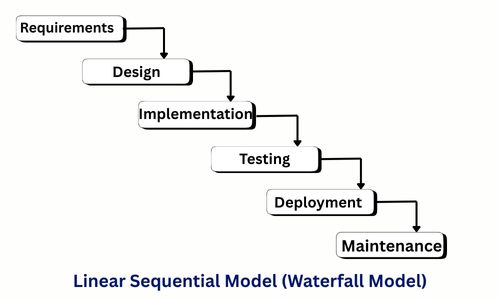
Linear Sequential Model (Waterfall Model) – Phases
- Requirement Analysis Phase
- इस phase में client या end-user की exact requirements समझी और document की जाती हैं।
- यह phase future development के लिए foundation का काम करता है।
- System / Software Design Phase
- Requirement को actual system blueprint में convert किया जाता है।
- इस phase में software architecture, modules, database design, UI design और data flow decide किए जाते हैं।
- Implementation / Coding Phase
- इस phase में developers actual program / software code लिखना शुरू करते हैं।
- सभी developers design documents और guidelines को follow करते हैं।
- Testing / Verification Phase
- इस phase का मुख्य उद्देश्य software को errors, bugs और defects के लिए verify करना है।
- Ensure करना कि software requirement specification को पूरा करता है |
- Deployment / Installation Phase
- इस phase में software को real या production environment में install किया जाता है।
- साथ ही software को end users के लिए accessible और usable बनाया जाता है।
- Maintenance / Support Phase
- Deployment के बाद software को smoothly run करने के लिए maintain किया जाता है।
- User feedback और bugs के अनुसार updates और improvements implement किए जाते हैं।
Advantages of Waterfall Model (लाभ)
- Simple And Easy to Understand
- Process step-by-step होता है, इसलिए beginners और students के लिए समझना आसान है।
- Well-Structured and Disciplined Approach
- हर phase का output अगले phase के लिए clearly defined होता है।
- Documentation heavy होती है।
- Early Requirement Documentation
- Requirement Analysis phase में user की सभी requirements document हो जाती हैं।
- Client को project plan और scope clear हो जाता है।
- Easy to Manage
- Phases clear होने की वजह से progress monitoring और project management आसान होता है।
- Project manager को पता होता है कि कौन सा phase कब complete होगा।
- Good for Small & Simple Projects
- जब requirements fixed और clear हों, तो Waterfall model बहुत effective होता है।
- Sign-off at Each Phase
- हर phase complete होने पर client / stakeholder approval लिया जाता है।
- यह accountability और project tracking में मदद करता है।
Limitations of Waterfall Model (सीमाएं)
- Rigid and Inflexible
- Requirement phase complete होने के बाद changes करना difficult और costly होता है।
- Late Testing
- Testing phase coding के बाद आता है, इसलिए errors late-stage में detect होते हैं।
- Bugs fix करना costly हो सकता है।
- Customer Feedback Late
- Client final software तभी देख पाता है जब पूरा project develop जाता है।
- Project के बीच में requirements बदलना Dificult और costly होता है। इससे customer dissatisfaction का risk बढ़ जाता है।
- Not Suitable for Large/Complex Projects
- Complex projects में requirement changes common होते हैं।
- Waterfall model ऐसे cases में high risk होता है।
- Assumes Requirements Are Clear and Fixed
- Real world में requirements dynamic होती हैं।
- Maintenance Cost Can Be High
- Deployment के बाद required changes expensive हो सकते हैं।
Prototyping Model
Prototyping Model एक Software Process Model है, जिसमें final software develop करने से पहले उसका एक prototype (working sample / demo version) बनाया जाता है, जिससे user अपनी requirements को practically देख सके, समझ सके और feedback दे सके।
Key Points
- Prototype मतलब software का sample / demo version होता है।
- Final product से पहले prototype develop किया जाता है।
- User prototype देखकर feedback provide करता है।
- Requirements को clear और refine करने में help मिलती है।
- User involvement high होता है।
- Changes और modifications easy और flexible होते हैं।
- Wrong या unclear requirements early stage में identify हो जाती हैं।
Why Prototyping Model is Needed?
Prototyping Model Software Development में इसलिए जरूरी होता है क्योंकि कई बार projects में Starting में user और developer दोनों को शुरू में exact requirements clear नहीं होतीं। इस model में पहले एक sample version (Prototype) बनाया जाता है, जिससे user को software का idea मिल जाता है।
मुख्य कारण (Key Reasons)
- कई users अपनी requirements को clear words में explain नहीं कर पाते। Prototype देखने के बाद उन्हें समझ आता है कि क्या useful है और क्या नहीं।
- Prototype से user को software का look, working flow और features का clear idea मिल जाता है, जो documents से possible नहीं होता।
- Developer और user के बीच regular interaction होने से communication gap कम हो जाता है और misunderstanding avoid होती है।
- User prototype देखकर early stage पर feedback दे देता है, जिससे गलत requirements जल्दी identify हो जाती हैं।
- Initial phase में changes करना easy और low-cost होता है, जबकि final product के बाद changes expensive होते हैं।
- Continuous feedback और improvements की वजह से final software user expectations के ज्यादा close होता है।
- Requirements clear होने और early validation की वजह से project failure का risk काफी कम हो जाता है।
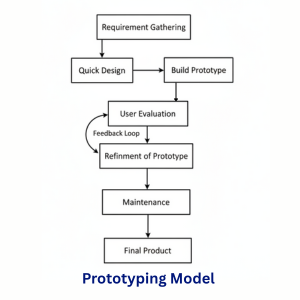
Prototyping Model - Phases
- Requirement Gathering (Initial Requirement Collection)
- इस phase में user से basic requirements collect की जाती हैं।
- Requirements बहुत detailed नहीं होतीं, बल्कि software का rough idea लिया जाता है|
- Quick Design (Prototype Design)
- Collected requirements के आधार पर एक quick और simple design तैयार किया जाता है।
- इस design में mainly UI, input-output flow और basic screens शामिल होते हैं।
- Build Prototype (Prototype Development)
- इस phase में actual software नहीं, बल्कि एक working model (prototype) develop किया जाता है।
- Prototype user को software का look और working समझाने के लिए बनाया जाता है।
- User Evaluation & Feedback
- User prototype को check और use करता है।
- User अपनी likes, dislikes और required changes के बारे में feedback देता है।
- Refine Prototype / Improve Requirements
- User feedback के आधार पर prototype को modify और improve किया जाता है।
- इस process से requirements clear, correct और final बनती है
- Develop Final System
- Approved और refined prototype के आधार पर actual software system develop किया जाता है।
- Proper coding, design और documentation follow की जाती है।
- Testing & Maintenance
- Final software को bugs और errors के लिए test किया जाता है।
- Deployment के बाद maintenance, updates और user support provide किया जाता है।
Advantages of Prototyping Model (लाभ)
- User की requirements clearly understand हो जाती हैं।
- High user involvement होने से user satisfaction बढ़ता है।
- User और developer के बीच communication improve होती है।
- Wrong requirements early stage में identify हो जाती हैं।
- Changes करना easy और flexible होता है।
- Final software user expectations के ज्यादा close होता है।
- New, complex और innovative systems के लिए बहुत useful होता है।
Limitations of Prototyping Model (सीमाएं)
- Process time-consuming हो सकता है।
- Repeated changes के कारण development cost बढ़ सकती है।
- User कई बार prototype को ही final product समझ लेता है।
- Proper documentation weak रह सकती है।
- Very small projects के लिए suitable नहीं होता।
- Too much user feedback से scope creep की problem हो सकती है।