
Rapid Application Development Model
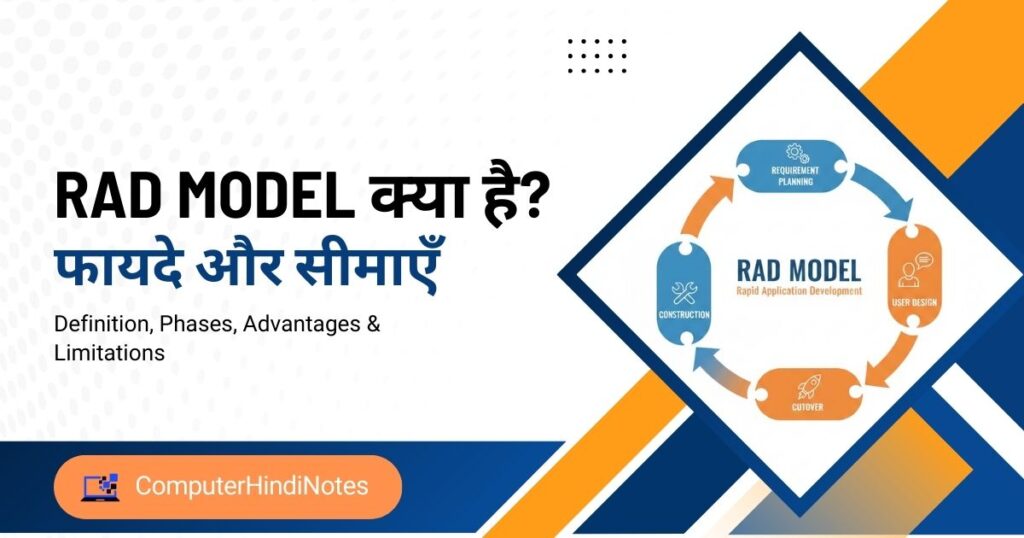
RAD Model (Rapid Application Development Model) एक Incremental software development process model है, जो rapid prototyping और iterative delivery पर आधारित होता है। इसमें software को कम समय (short time) में develop किया जाता है, by using rapid prototyping, reusable components और continuous user feedback।
Table of Contents
Toggleइसका main goal है, software Fast और कम cost में deliver करना, बिना quality compromise किए।
Key Points
- Rapid (Fast) Development पर focus करता है।
- Software को short time में develop और deliver किया जाता है।
- Prototype का extensively use होता है।
- Reusable components से development time कम होता है।
- High user involvement process का important part होता है।
- Process iterative और flexible होता है।
- Working software ज्यादा important होता है, documentation limited रहती है।
- Small to medium size projects के लिए ज्यादा suitable होता है।
Why RAD Model is Used?
(RAD Model क्यों उपयोग किया जाता है?)
- Fast Software Development
- RAD Model का main objective software को कम समय में develop करना होता है।
- Traditional models (जैसे Waterfall) की तुलना में RAD में development fast होती है।
- Quick Delivery to Market
- RAD Model का use तब किया जाता है जब product को कम समय में market में launch करना जरूरी हो।
- Fast development की वजह से business जल्दी users तक पहुँच सकता है और competition में advantage मिलता है।
- High User Involvement
- User पूरे development process में actively participate करता है।
- Continuous feedback से software user requirements के according बनता है।
- Easy Handling of Changes
- RAD Model flexible होता है।
- Requirement changes को आसानी से accept और implement किया जा सकता है।
- Use of Reusable Components
- Already developed software components को reuse किया जाता है।
- इससे development time और cost दोनों reduce होते हैं।
- Better Productivity
- Parallel development और automated tools की वजह से productivity high रहती है।
- Multiple modules एक साथ develop किए जा सकते हैं।
- Reduced Development Risk
- Frequent user feedback से risks early stage में identify हो जाते हैं।
- Wrong requirements जल्दी correct हो जाती हैं।
- Suitable for Time-Bound Projects
- RAD Model उन projects के लिए सबसे suitable होता है जहाँ deadline बहुत strict होती है।
- fast development और parallel work होने से project को fixed time limit के अंदर successfully complete किया जा सकता है।
- Working Software is Priority
- RAD Model में documentation से ज्यादा working software को importance दी जाती है।
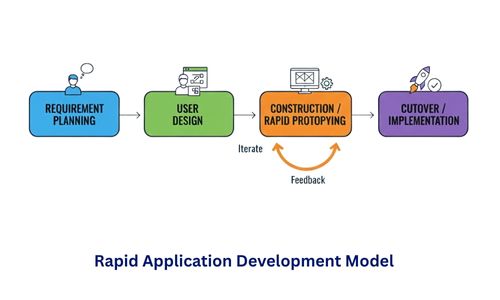
RAD Model - Phases
- Requirement Planning Phase
- Project का overall goal, scope और constraints clearly define करना।
- यह decide करना कि software कितने time में और किन major features के साथ develop होगा।
- Users, managers और developers के बीच initial planning और agreement करना।
- User Design Phase
- Users के साथ मिलकर system design और prototypes तैयार करना।
- User requirements को visual form में दिखाना जिससे feedback जल्दी मिल सके।
- Continuous interaction से changes और improvements immediately apply करना।
- Construction Phase
- Approved prototype के आधार पर actual coding और development करना।
- Reusable components, tools और frameworks का use करके fast development करना।
- Parallel development से time बचाना और productivity बढ़ाना।
- Cutover Phase
- Software को production environment में deploy करना।
- Testing, data conversion, user training और system changeover करना।
- End users के लिए system को fully operational बनाना।
Advantages of RAD Model (लाभ)
- Very Fast Development
- Parallel module development और reusable components की वजह से software जल्दी तैयार होता है।
- Example: Startup mobile app, MVP launch within weeks।
- High User Involvement
- User पूरे development process में actively participate करता है।
- Feedback directly software में implement किया जाता है।
- Flexibility and Easy Changes
- Requirement या design changes easily accept किए जा सकते हैं।
- Reusable Components
- Already developed modules reuse होते हैं जिससे time और cost बचती है।
- Improved Productivity
- Multiple teams parallel काम करते हैं जिससे fast progress और productive होती है।
- Reduced Development Risk
- Frequent prototypes और user feedback से errors early stage में detect होते हैं।
- Quick User Feedback
- Prototype देखकर user changes suggest कर सकता है, final software user expectations के करीब होता है।
Limitations of RAD Model (सीमाएँ)
- Not Suitable for Large & Complex Projects
- जब project के modules tightly integrated हों, RAD difficult और risky होता है।
- High Dependency on Skilled Developers
- Rapid development और parallel work के लिए experienced team जरूरी होती है।
- User Availability Required
- Continuous feedback के बिना process effective नहीं होता।
- Infrastructure Intensive
- Strong hardware और software tools चाहिए।
- Cost Can Be High
- Multiple iterations और prototypes से development cost increase हो सकती है।
- Poor Documentation Risk
- Working software पर ज्यादा focus जिससे documentation कम prepare होती है।
Conclusion (निष्कर्ष)
RAD Model एक तेज़ और user-centric software development approach है जो prototyping और iterative delivery पर आधारित है। यह model कम समय में quality software प्रदान करता है, लेकिन यह तभी प्रभावी होता है जब requirements स्पष्ट हों और user लगातार available हो।
Important Questions?
Q.1 RAD Model क्या है?
- RAD Model (Rapid Application Development) एक software development model है जिसमें fast development के लिए prototyping, reusable components और user involvement का उपयोग किया जाता है।
Q.2 RAD Model के मुख्य phases कौन-कौन से हैं?
- RAD Model के चार मुख्य phases होते हैं :
Requirements Planning
User Design
Construction
Cutover
Q.3 RAD Model किन projects के लिए suitable होता है?
- RAD Model छोटे और medium size projects के लिए उपयुक्त होता है जहाँ requirements clear हों और जल्दी software deliver करना जरूरी हो।
Q.4 RAD Model के फायदे क्या हैं?
RAD Model के प्रमुख फायदे हैं :
Fast development
High user involvement
Early working prototype
Reusable components का उपयोग
Q.5 RAD Model की सीमाएँ क्या हैं?
- RAD Model की limitations में high skilled team की जरूरत, large projects के लिए unsuitable होना और user availability पर dependency शामिल है।