
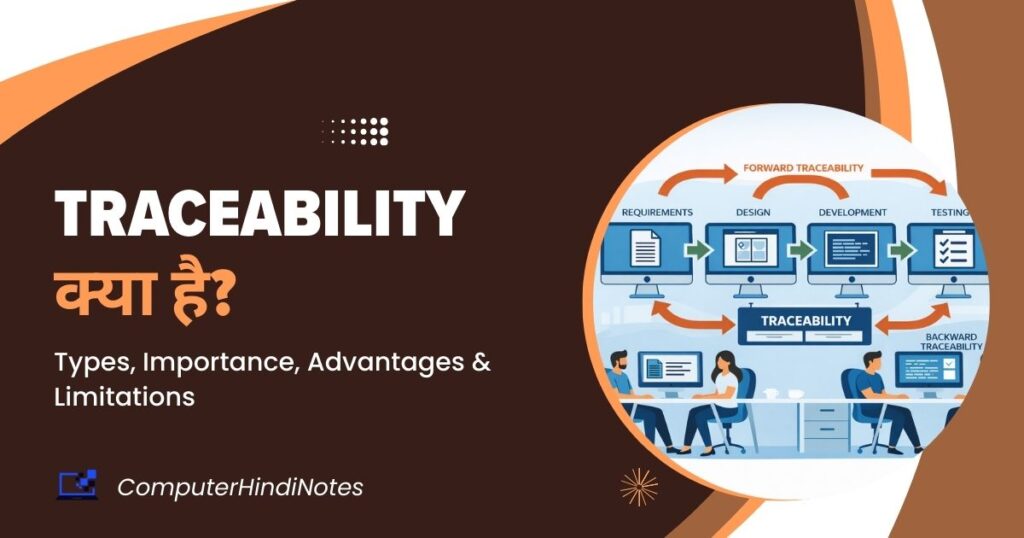
Traceability (Traceability क्या है?)
Traceability वह process है, जिसमें किसी भी requirement को उसके source से लेकर final implementation और testing तक track किया जाता है। इससे यह सुनिश्चित होता है, कि हर requirement सही तरह से design, develop और test की गई है, और कोई भी requirement miss या change बिना notice के नहीं हुई है।
Table of Contents
ToggleKey Points
- End-to-End Tracking : हर requirement और feature को शुरुआत से अंत तक follow किया जाता है।
- Forward & Backward Analysis :
- Forward : Requirement से final product तक trace करना।
- Backward : Product या bug से original requirement तक trace करना।
- Change Impact : किसी भी change का effect दोनों directions में पता चलता है।
- Completeness : Ensure करता है कि कोई requirement miss न हो और सभी properly tested हों।
- Quality & Accountability : errors जल्दी identify होते हैं और हर step के लिए जिम्मेदार व्यक्ति स्पष्ट रहता है।
Types of Traceability (Traceability के प्रकार)
Traceability मुख्य रूप से तीन प्रकार की होती है :
1. Forward Traceability
Forward Traceability वह process है, जिसमें Requirement से शुरू होकर Product के अंतिम stage तक हर step को track किया जाता है।
Flow : Requirement → Design → Code → Testing → Final Product
Purpose
- Verify करना कि सभी requirements implement हुई हैं।
- Confirms कि कोई requirement miss नहीं हुई।
- Development process में progress track करने में मदद करता है।
2. Backward Traceability
Backward Traceability वह process है, जिसमें final product या output से शुरू होकर उसके original requirement तक trace किया जाता है।
Flow : Product/Feature/Bug → Code → Design → Requirement
Purpose
- किसी bug या defect का source पता करने में मदद करता है।
- यह confirm करता है कि implemented feature सही requirement से linked है।
- Helps in compliance and audit
3. Bidirectional Traceability
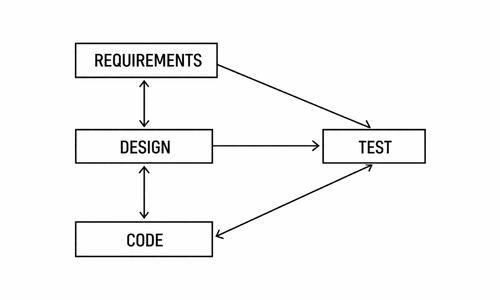
Bidirectional Traceability वह process है जिसमें Forward और Backward Traceability दोनों शामिल होती हैं।
Flow : Requirement ↔ Design ↔ Code ↔ Test Cases ↔ Product
Purpose
- हर requirement और feature को end-to-end track करना।
- किसी भी change का impact दोनों directions में पता करना।
- Ensure करना कि कि कोई भी requirement miss न हो और सभी properly tested हों।
Importance of Traceability (Traceability क्यों जरूरी है?)
- Quality Assurance
- Traceability से पता चलता है, कि हर requirement properly implement और tested हुई है।
- Errors या missing features जल्दी identify किए जा सकते हैं।
- Error / Bug Tracking
- अगर किसी product या software में bug आता है, तो traceability मदद करता है root cause तक पहुँचने में।
- Backward Traceability के जरिए हम जान सकते हैं कि bug किस requirement या code module से जुड़ा है।
- Compliance & Audit
- कई industries में standards and regulations mandatory हैं, जैसे ISO, FDA, CMMI।
- Traceability ensures कि product या process इन regulations को पूरा करता है।
- Change Management
- जब requirements बदलती हैं, तो traceability से impact analysis आसान होता है।
- Developers, testers और project managers को पता रहता है, कि कौन से modules प्रभावित होंगे।
- Accountability & Transparency
- Traceability से यह पता चलता है कि कौन सा developer, designer या tester किस step के लिए responsible है।
- Organizational transparency बढ़ती है और errors के लिए accountability clear होती है।
- Risk Reduction
- Early stage पर issues identify होने से project failure या product recalls कम होते हैं।
- Customer / User Trust
- जब products या services traceable और accountable हों, तो customer trust बढ़ता है।
Advantages of Traceability (लाभ)
- Quality Improvement
- Traceability से हर requirement और feature की tracking possible होती है।
- Missed या incomplete features जल्दी identify किए जा सकते हैं।
- Error / Bug Detection
- Backward Traceability से bugs या defects का source जल्दी पता चलता है।
- Helps in Change Management
- Requirement या process में बदलाव होने पर impact analysis आसान होता है।
- Regulatory Compliance
- ISO, FDA, CMMI जैसी standards को पूरा करना आसान।
- Accountability & Transparency
- Development, testing और production में हर step responsible व्यक्ति से linked होता है।
- Organizational transparency बढ़ती है।
- Customer / User Trust
- Traceable processes से users का भरोसा बढ़ता है।
- Risk Reduction
- Early stage पर errors और missing features identify होते हैं।
- Expensive recalls या failures कम होते हैं।
Limitations of Traceability (सीमाएँ)
- Large Data Handling
- बड़े projects में लाखों requirements, test cases और code modules को track करना complex होता है।
- Proper Documentation Required
- Traceability तब ही effective होती है जब documentation पूरी और accurate हो।
- गलत या incomplete documentation से traceability fail हो सकती है।
- Time Consuming
- Requirement mapping, RTM बनाना और updates maintain करना काफी time-consuming process है।
- Cost
- Tools और software (जैसे Jira, DOORS, TestRail) expensive हो सकते हैं।
- Training & Skill Requirements
- Proper traceability implement करने के लिए developers और testers trained होने चाहिए।
- Complexity in Large Projects
- Multi-team और multi-module projects में dependencies track करना challenging होता है।