
Test Techniques
Test Techniques वो systematic methods होते हैं, जिनसे test cases design किए जाते हैं, और software को evaluate किया जाता है।
Table of Contents
ToggleKey Points :
- Test Techniques decide करती हैं, कि कौन सा part test करना है, और कैसे test करना है।
- ये techniques software के requirements, design, code, और user interactions सभी levels पर काम आती हैं।
- Proper test techniques use करने से testing time और cost दोनों बचती हैं।
Importance of Test Techniques (महत्व)
1. Early Defect Detection
- Proper test techniques use करने से bugs software के early stages में detect हो जाते हैं।
- Early detection मतलब fixing cost कम और time बचता है।
2. Improved Software Quality
Test Techniques software की reliability, security और performance improve करती हैं।
3. Systematic & Structured Testing
- बिना techniques के testing random और incomplete हो सकती है।
- Techniques ensure करती हैं, कि सभी modules और functionalities cover हों।
4. Cost and Time Efficiency
Early defect detection और structured testing से production में costly errors नहीं आते।
5. Better Test Coverage
Test Techniques use करके all possible inputs, conditions और paths test होते हैं।
6. Risk Reduction
- Critical applications जैसे Banking, Healthcare, Railway Booking, Space Missions में bugs failure या data loss का कारण बन सकते हैं।
- Proper Test Techniques से high-risk areas पहले test किए जाते हैं।
7. Knowledge Sharing & Learning
- Static techniques जैसे Code Review, Inspection से team members experience share करते हैं।
Main types of testing techniques
(Testing Techniques के मुख्य प्रकार)
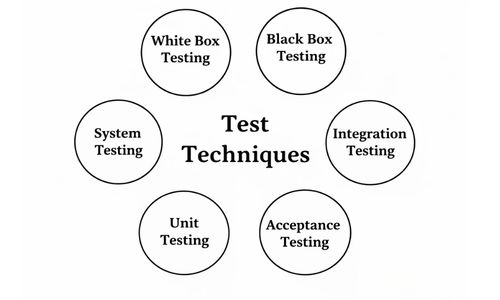
1. Black-Box Testing
Black-Box Testing एक software testing technique है, जिसमें tester application के internal code, logic या structure को देखे बिना केवल उसके input और output behavior को check करता है। इसमें focus होता है कि software user की requirements के अनुसार सही result दे रहा है या नहीं।
Key Points
- Tester को source code या internal structure की knowledge नहीं होती।
- Testing user requirements और specifications के basis पर की जाती है।
- Focus सिर्फ Input → Process → Output behavior पर होता है।
- इसे Functional Testing या Behavioral Testing भी कहा जाता है।
- Manual और Automation दोनों तरह से की जा सकती है।
- Real user scenarios (Login, Payment, Form Submission आदि) को test किया जाता है।
Main Black-Box Test Techniques
Black-Box Testing में कुछ standard और widely used techniques होती हैं :
No. | Test Technique | Definition | Example |
1. | Equivalence Class Partitioning (ECP) | Input data को समान behavior वाले groups (classes) में divide करके हर class से एक value test की जाती है। | Age limit 18–60 है: 25 (valid), 15 (invalid), 65 (invalid) |
2. | Boundary Value Analysis (BVA) | Input range की minimum और maximum limit के पास की values को test किया जाता है क्योंकि errors अक्सर boundary पर आते हैं। | ATM limit ₹100–₹10,000: 99, 100, 101, 9999, 10000, 10001 |
3. | Decision Table Testing | Multiple conditions और उनके combinations के आधार पर output verify किया जाता है। | Loan approval: Salary, CIBIL Score और Age के combination से decision |
4. | State Transition Testing | System के एक state से दूसरे state में जाने के behavior को test किया जाता है। | Ticket Status: Booked → Confirmed → Cancelled |
5. | Use Case Testing | User के end-to-end workflow के अनुसार testing की जाती है। | Flipkart: Login → Search → Add to Cart → Payment |
6. | Cause-Effect Graphing | Input conditions (cause) और output results (effect) के relation के आधार पर test cases design किए जाते हैं। | Banking system में wrong PIN डालने पर account lock होना |
7. | Error Guessing | Tester अपने experience से संभावित error scenarios का अंदाजा लगाकर testing करता है। | Blank password, special characters, very large input डालकर test करना |
Advantages and Disadvantages of Black-Box Testing
Advantages | Disadvantages |
User perspective से testing होती है, इसलिए real-life scenarios cover होते हैं। | Internal code और logic की testing नहीं हो सकती । |
Tester को programming knowledge की जरूरत नहीं होती। | Logical errors या hidden paths miss हो सकते हैं। |
Requirements और specifications के अनुसार functional testing आसान होती है। | 100% test coverage achieve करना मुश्किल होता है। |
Test cases जल्दी design किए जा सकते हैं। | Complex systems में सभी input combinations test करना कठिन होता है। |
Automation tools (Selenium, JMeter, etc.) से आसानी से automate किया जा सकता है। | Performance और security issues पूरी तरह detect नहीं हो पाते। |
End-user satisfaction और usability check होती है। | Boundary और corner cases कभी-कभी छूट जाते हैं। |
2. White-Box Testing
White-Box Testing एक software testing technique है, जिसमें tester को program के internal code, logic, structure और control flow की पूरी जानकारी होती है, और उसी के आधार पर testing की जाती है। इसमें यह check किया जाता है कि code के अंदर के सभी paths, conditions, loops और statements सही तरीके से execute हो रहे हैं या नहीं।
इसे Structural Testing, Glass Box Testing, Clear Box Testing भी कहा जाता है।
Key Points
- Tester को source code की knowledge होती है।
- Program की logic, loops, conditions और paths को test किया जाता है।
- Focus होता है, code coverage पर (Statement, Branch, Path Coverage)।
- Mostly developers या technical testers द्वारा किया जाता है।
- Unit Testing और Integration Testing में ज्यादा उपयोग होता है।
- Security testing और performance optimization में भी helpful है।
White-Box Testing Test Techniques
No. | Test Technique | Definition | Example |
1. | Statement Coverage | Program के हर statement को कम से कम एक बार execute करवाना। | Login program में सभी lines run हों – if, else, print, return |
2. | Branch Coverage (Decision Coverage) | Program के हर decision (True/False) को test करना। | if (marks ≥ 40) Pass else Fail – दोनों conditions test करना |
3. | Path Coverage | Program के सभी possible execution paths को test करना। | ATM program में सही PIN, गलत PIN, तीन बार गलत PIN – सभी paths |
4. | Condition Coverage | Complex conditions के हर part (True/False) को verify करना। | if (age>18 AND citizen=true) – दोनों conditions अलग-अलग check |
5. | Loop Coverage | Loops (for, while) को 0, 1 और multiple times execute करके test करना। | Shopping cart loop: 0 item, 1 item, many items |
6. | Data Flow Testing | Variables के definition और usage को track करके errors ढूँढना। | Balance variable initialize हुआ या नहीं, सही जगह use हुआ या नहीं |
7. | Control Flow Testing | Program के flow of control (sequence, selection, iteration) को verify करना। | IRCTC booking flow में हर step सही order में execute हो रहा है या नहीं |
Advantages and Disadvantages of White-Box Testing
Advantages | Disadvantages |
Internal code और logic की deep testing होती है। | Source code की knowledge जरूरी होती है। |
Hidden bugs और logical errors आसानी से detect हो जाते हैं। | Non-technical testers के लिए difficult होती है। |
Code coverage (statement, branch, path) ensure होती है। | Time-consuming process हो सकता है। |
Early stage पर defects मिल जाते हैं (Unit Testing में)। | Large and complex programs में सभी paths test करना मुश्किल। |
Security loopholes और performance issues identify होते हैं। | Test case design complex और costly हो सकता है। |
Code optimization और quality improvement में मदद मिलती है। | User perspective से testing नहीं होती। |
Developers के लिए debugging आसान हो जाती है। | 100% path coverage practically possible नहीं। |
3. Unit Testing
Unit Testing software testing का सबसे पहला और basic level है, जिसमें program के छोटे-छोटे parts यानी units (functions, methods, modules, classes) को अलग-अलग test किया जाता है ताकि यह verify हो सके कि हर unit अपने आप में सही तरीके से काम कर रहा है या नहीं।
Key Points
- यह Software Testing का पहला level होता है।
- हर function, method या module को individually test किया जाता है।
- Mostly developers द्वारा perform की जाती है।
- Bugs को early stage पर पकड़ने में मदद करती है।
- White-Box Testing technique ज्यादा use होती है।
- Automation tools जैसे JUnit, NUnit, TestNG से आसानी से की जाती है।
- Debugging आसान हो जाती है क्योंकि error का exact location पता चल जाता है।
Software Testing Techniques
No. | Testing Technique | Definition | Example |
1. | Black-Box Testing | इसमें tester को internal code की जानकारी नहीं होती, वह सिर्फ input और output के आधार पर software को test करता है। | IRCTC website पर ticket book करके check करना कि सही result आ रहा है या नहीं। |
2. | White-Box Testing | इसमें tester को program के अंदर के code, logic और structure की पूरी जानकारी होती है और उसी के आधार पर testing की जाती है। | किसी function के if-else, loops और conditions को code देखकर test करना। |
3. | Grey-Box Testing | यह Black-Box और White-Box दोनों का combination है, जिसमें tester को partial internal knowledge होती है। | Database structure जानकर web application के forms और APIs को test करना। |
Advantages and Disadvantages of Unit Testing
Advantages (लाभ) | Disadvantages (हानियाँ) |
Bugs early stage पर detect हो जाते हैं। | केवल छोटे units test होते हैं, पूरे system का behavior नहीं। |
Debugging आसान हो जाती है क्योंकि error का exact location पता चलता है। | Integration errors (modules के बीच) नहीं मिलते। |
Code quality और reliability improve होती है। | Test cases लिखने में time और effort लगता है। |
Changes करने पर regression जल्दी check हो जाता है। | Complex logic के लिए test case design मुश्किल हो सकता है। |
Automation tools (JUnit, NUnit) से fast testing possible है। | Non-technical लोग Unit Testing नहीं कर सकते। |
Future maintenance आसान हो जाती है। | Mock objects और test environment setup करना costly हो सकता है। |
4. Integration Testing
Integration Testing वह software testing level है, जिसमें अलग-अलग developed और unit tested modules को आपस में जोड़कर (integrate करके) उनके interaction, data flow और interfaces को test किया जाता है। इसका main goal यह check करना होता है, कि modules मिलकर सही तरह से काम कर रहे हैं, या नहीं।
Key Points
- Unit Testing के बाद perform की जाती है।
- Modules के बीच data communication और interface को check किया जाता है।
- Focus होता है interaction और integration errors पर।
- Mostly Black-Box और Grey-Box approach use होती है।
- Real-life flows जैसे Login → Payment → Confirmation को test किया जाता है।
Types of Integration Testing
- Top-Down Testing – Top-level modules पहले integrate और test होते हैं, फिर धीरे-धीरे lower-level modules जोड़े जाते हैं।
- Bottom-Up Testing – Lower-level modules पहले integrate और test होते हैं, फिर higher-level modules जोड़े जाते हैं।
- Big Bang Testing – सभी modules को एक साथ integrate करके end-to-end test किया जाता है।
- Sandwich (Hybrid) Testing – op-Down और Bottom-Up दोनों methods का combination।
Advantages and Disadvantages of Integration Testing
Advantages (लाभ) | Disadvantages (हानियाँ) |
Interface और data flow errors जल्दी मिल जाते हैं। | Setup और environment complex हो सकता है। |
Modules की compatibility verify होती है। | Debugging मुश्किल होती है क्योंकि multiple modules involved होते हैं। |
System Testing का risk कम हो जाता है। | Test cases design करना time-consuming होता है। |
Real user scenarios को validate किया जा सकता है। | Big systems में integration sequence manage करना difficult। |
End-to-end process का confidence बढ़ता है। | Big Bang approach में defect isolation कठिन। |
5. System Testing
System Testing एक high-level software testing है, जिसमें पूरा developed और integrated software system as a whole test किया जाता है, ताकि यह verify किया जा सके कि system user requirements और specifications के अनुसार काम कर रहा है, या नहीं।
Key Points
- यह Integration Testing के बाद perform की जाती है।
- Complete system का functional और non-functional behavior test किया जाता है।
- Mostly Black-Box Testing approach use होती है।
- User और business requirements के आधार पर test cases design किए जाते हैं।
- Real-life scenarios और end-to-end workflows validate होते हैं।
Types of System Testing
No. | Type | Definition |
1 | Functional Testing | System के सभी functions और features specification और requirements के अनुसार काम कर रहे हैं या नहीं verify करना। |
2 | Performance Testing | System की speed, response time, scalability और stability check करना। |
3 | Security Testing | System secure है या नहीं, unauthorized access और vulnerabilities detect करना। |
4 | Usability Testing | System user-friendly और easy-to-use है या नहीं check करना। |
5 | Compatibility Testing | Software अलग-अलग browsers, OS और devices पर proper work कर रहा है या नहीं test करना। |
6 | Recovery Testing | System crash या failure के बाद recover हो पा रहा है या नहीं check करना। |
7 | Regression Testing | Software में नए changes के बाद existing functionality सही तरीके से work कर रही है या नहीं verify करना। |
Advantages and Disadvantages of System Testing
Advantages | Disadvantages |
पूरा system user perspective से test होता है। | Testing time और effort ज्यादा लगता है। |
Functional और non-functional aspects दोनों cover होते हैं। | Complex systems में defects locate करना difficult। |
Business requirements और specifications verify होती हैं। | Costly process हो सकता है। |
End-to-end workflow validate होती है। | Automation tools setup करना challenging। |
Bugs production में जाने से पहले detect होते हैं। | Dependent on environment and integrated modules। |
6. Other Specialized Testing Types
No. | Type | Definition |
1 | Alpha Testing | Developer’s environment में internal users द्वारा software को test करना ताकि major bugs पकड़े जा सकें। |
2 | Beta Testing | Real users द्वारा real environment में software को test करना ताकि feedback और real-world defects मिले। |
3 | Acceptance Testing (UAT) | Verify करना कि system user requirements और business needs को पूरा कर रहा है या नहीं। |
4 | Smoke Testing | Major functionalities का quick check करना कि system basic level पर work कर रहा है या नहीं। |
5 | Sanity Testing | Minor changes या bug fixes के बाद system की critical functionalities को verify करना। |
6 | Exploratory Testing | Tester बिना pre-defined test cases के, system explore करके bugs detect करता है। |
7 | Ad-hoc Testing | Informal testing, बिना planning के random testing करके defects ढूँढना। |
8 | Compatibility Testing | Software को different hardware, OS, browser और network conditions में check करना। |
9 | Localization Testing | Software को specific region, language और culture के अनुसार check करना। |
10 | Internationalization (i18n) Testing | Software की capability check करना कि वह multiple languages और regions में काम कर सकता है। |
Conclusion (निष्कर्ष)
Software Testing एक systematic और planned process है, जो केवल bugs ढूँढने के लिए नहीं, बल्कि software की quality, reliability और user satisfaction सुनिश्चित करने के लिए होती है।
- Early defect detection से production में costly errors बचते हैं।
- Structured testing approaches (Black-Box, White-Box, Unit, Integration, System) software को robust और maintainable बनाती हैं।
- Testing techniques developers और testers दोनों के लिए debugging और quality improvement आसान बनाती हैं।
- Functional और non-functional aspects दोनों verify होते हैं।
- End-to-end workflows validate होने से real user satisfaction बढ़ती है।
FAQ (Frequently Asked Questions)
Q1. Black-Box और White-Box Testing में क्या अंतर है
- Black-Box Testing : केवल software के input और output को test किया जाता है, internal code की knowledge जरूरी नहीं।
- White-Box Testing : software के code, logic और सभी execution paths को test किया जाता है; internal structure पता होना चाहिए।
Q2. Unit Testing क्यों जरूरी है?
- हर छोटे module या unit को अलग से test करना। इससे bugs जल्दी detect होते हैं और debugging आसान हो जाती है।
Q3. Integration Testing का मुख्य उद्देश्य क्या है?
- अलग-अलग modules के बीच interaction, data flow और interface सही तरह से काम कर रहे हैं या नहीं verify करना।
Q4. System Testing में क्या check किया जाता है?
- पूरा software system user requirements और specifications के अनुसार काम कर रहा है या नहीं। इसमें functional और non-functional aspects दोनों शामिल होते हैं।
Q5. Black-Box Testing की मुख्य techniques कौन-कौन सी हैं?
- Equivalence Class Partitioning (ECP)
- Boundary Value Analysis (BVA)
- Decision Table Testing
- State Transition Testing
- Use Case Testing
Q6. Specialized Testing के उदाहरण क्या हैं?
- Alpha Testing
- Beta Testing
- User Acceptance Testing (UAT)
- Smoke Testing
- Sanity Testing
- Compatibility Testing
FAQ (Frequently Asked Questions)
Q1. Black-Box और White-Box Testing में क्या अंतर है
- Black-Box Testing : केवल software के input और output को test किया जाता है, internal code की knowledge जरूरी नहीं।
- White-Box Testing : software के code, logic और सभी execution paths को test किया जाता है; internal structure पता होना चाहिए।
Q2. Unit Testing क्यों जरूरी है?
- हर छोटे module या unit को अलग से test करना। इससे bugs जल्दी detect होते हैं और debugging आसान हो जाती है।
Q3. Integration Testing का मुख्य उद्देश्य क्या है?
- अलग-अलग modules के बीच interaction, data flow और interface सही तरह से काम कर रहे हैं या नहीं verify करना।
Q4. System Testing में क्या check किया जाता है?
- पूरा software system user requirements और specifications के अनुसार काम कर रहा है या नहीं। इसमें functional और non-functional aspects दोनों शामिल होते हैं।
Q5. Black-Box Testing की मुख्य techniques कौन-कौन सी हैं?
- Equivalence Class Partitioning (ECP)
- Boundary Value Analysis (BVA)
- Decision Table Testing
- State Transition Testing
- Use Case Testing
Q6. Specialized Testing के उदाहरण क्या हैं?
- Alpha Testing
- Beta Testing
- User Acceptance Testing (UAT)
- Smoke Testing
- Sanity Testing
- Compatibility Testing